
USDA AWA License
A verifiable federal Animal Welfare Act license number you can check before paying a cent.
CITES Appendix I · USA-Hatched · Closed-Band Documented
Every African Grey we place is hatched and hand-raised in our USDA-licensed Midland, Texas aviary — never wild-caught.
Here we explain exactly what captive-bred means, why it produces a healthier, tamer, fully legal companion, and how our CITES Appendix I paperwork proves it for the specific bird you bring home.
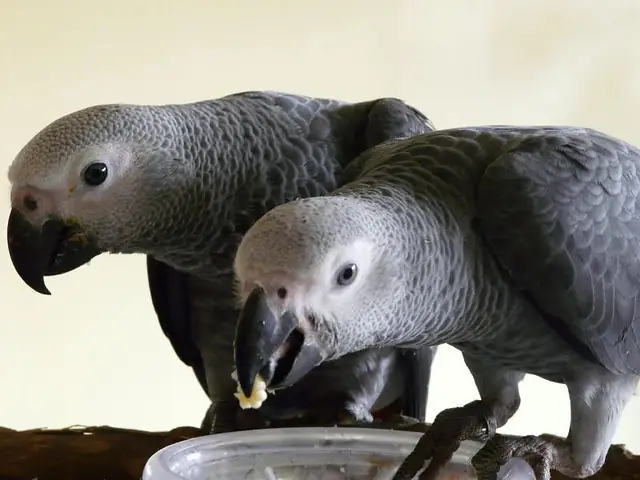
The short version
Every Congo and Timneh Grey we place is hatched and hand-raised in our USA aviary — never wild-caught, never imported.
Each bird carries an individual CITES Appendix I captive-bred certificate proving its legal origin.
A seamless closed band and hatch certificate are the physical proof a chick was aviary-raised, not poached.
We hold a verifiable USDA Animal Welfare Act license you can check before you pay anything.
Each Grey ships with a PCR DNA sexing certificate and a board-certified avian-vet health certificate.
We hand-feed every chick through the full weaning window, the period that makes a captive-bred bird tame and talkative.
Mark & Teri Benjamin have raised captive-bred African Greys in their Midland, TX home for over a decade.
Captive-bred Appendix I birds are legal to own and transfer domestically in the USA with proper documentation.
Proof, Not Promises
A captive-bred claim is only worth the paperwork behind it. Each Grey we place leaves home with all four of these in your hands before any deposit — the opposite of how a scam operates.
A verifiable federal Animal Welfare Act license number you can check before paying a cent.
An individual captive-bred certificate for your exact bird — never wild-caught, never imported.
A PCR DNA sexing certificate plus a board-certified avian-vet exam with PBFD & Polyomavirus screening.
A closed band, a hatch certificate, and a written health guarantee back every captive-bred Grey.
Captive-Bred · The Full Picture
7 sections · what captive-bred means, the proof, and the birds
Definition
A captive-bred African Grey is a bird that was hatched from parents already living in legal captivity and raised entirely inside an aviary — it has never been taken from the wild, never been illegally trapped, and never crossed a border in a smuggler's crate.
The African Grey (Psittacus erithacus) is native to the rainforests of West and Central Africa, and as the World Parrot Trust species encyclopedia documents, decades of trapping for the pet trade pushed wild populations into steep decline.
Captive breeding exists precisely so that families can keep this remarkable parrot without touching a single wild bird.
Here at C.A.Gs, captive-bred is not a marketing word — it is our entire operation. Every Congo and Timneh Grey we place is hatched in our Midland, Texas home, hand-fed by our family from a few weeks old, and weaned under our roof.
Because we slip a seamless closed band onto each chick's leg in its first weeks, that band physically cannot be added to a wild adult later — it is permanent, tamper-evident proof of where and when the bird was hatched.
Pair that band with a hatch certificate and an individual CITES Appendix I certificate, and the bird's captive-bred origin is documented from the first day of its life.
This matters legally as much as it matters ethically. African Greys were uplisted to CITES Appendix I at CoP17, effective January 2017, which bans commercial trade in wild-caught birds worldwide.
A captive-bred Grey, by contrast, is legal to own and transfer domestically in the United States with proper documentation — which is exactly why the paperwork detailed on our CITES documentation guide travels with every Grey we sell.
Run a finger around the band before you pay anything. A genuine closed band is one seamless ring with no gap, hinge, or solder line — it slid over a chick's foot in its first weeks and physically cannot be fitted to an adult bird.
If you feel a split or see a clamp mark, you are looking at an open band, which proves nothing about origin.
Ours carry an identifier we record at banding, and we read it back to you on a live video call with the bird in frame — so the band you inspect on arrival is the band you saw before your deposit.
The band number must match the hatch certificate and the CITES paperwork word for word.
Walk away, and read our scam-prevention guide before you contact another seller.
Side by Side
This is not an academic distinction — it shapes the legality, health, and temperament of a bird you may live with for 40 to 60 years.
Importing a wild-caught African Grey into the USA is a federal crime, and the welfare gap is just as stark.
| What It Affects | Captive-Bred (What We Place) | Wild-Caught (Illegal in USA) |
|---|---|---|
| Legal status | Legal to own & transfer with CITES docs | Federal crime to import or sell |
| Temperament | Socialized to people from hatching | Fearful from capture; may never fully tame |
| Health & disease risk | Avian-vet checked, PBFD/Polyoma screened | Often carry psittacosis & other disease |
| Talking ability | Develops naturally with socialization | Frequently inhibited by trauma & fear |
| Documentation | CITES cert, closed band, hatch cert, DNA | Falsified papers or none at all |
| Effect on wild flocks | Removes any incentive to poach | Drives an Endangered species toward collapse |
Because wild African Greys are now listed as Endangered, the only ethical bird is a documented captive-bred one — and verifying that status is the single best way to protect yourself from fraud.
If a deal sits far below our $1,500 floor or a seller dodges the paperwork question, read our guide to avoiding African Grey scams before you send a cent.
Our Process
Mark and Teri Benjamin have captive-bred African Greys in Midland, Texas since 2014, under a USDA Animal Welfare Act license.
Our breeding pairs — both Congo and Timneh — descend from established USA captive bloodlines with full CITES traceability, so the captive-bred chain runs unbroken from grandparent to chick. We deliberately raise just these two species, and fewer of them well, rather than churning out volume.
We call this in-home routine the C.A.Gs Grey Method: every chick is pulled for hand-feeding at a few weeks old and handled daily by multiple family members through the full 12–16 week weaning period. This window is everything — it is when a young Grey's brain decides what counts as "safe" and "family."
A bird raised by human hands during this period treats people as its flock — which is the entire reason a hand-raised captive-bred Grey bonds and talks the way it does, and a wild-caught bird, having missed that window in the forest canopy, never quite can.
Before any Grey leaves us, it is closed-banded, hatch-certified, PCR DNA-sexed, examined by a board-certified avian veterinarian — with PBFD and Polyomavirus screening — and matched to its individual CITES Appendix I certificate.
You can read more about that genetic step on our DNA-tested African Grey page, and you can verify our credentials any time on our trusted breeders page before you ever send a deposit.
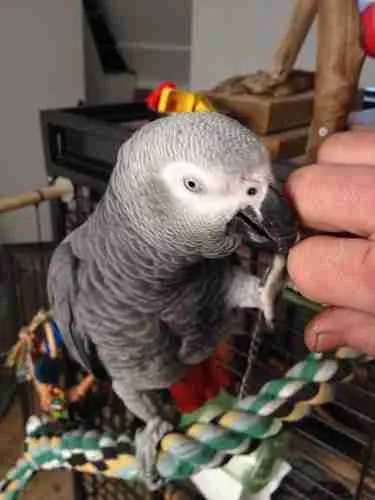
Why It Matters
Choosing a documented captive-bred Grey is the rare decision that is better for the buyer and better for the wild flocks at the same time. Here is what it gives each.
Compare Our Captive-Bred Greys
Both of our Greys carry the exact same captive-bred guarantee — CITES Appendix I documentation, a closed band, PCR DNA sexing, and an avian-vet health certificate. The difference is personality and size, not paperwork. Here is our Congo and our Timneh side by side.
| Feature |  Congo African GreyCongo Grey The classic, dramatic talker Congo African GreyCongo Grey The classic, dramatic talker |  Timneh African GreyTimneh Grey Calmer, earlier to bond Timneh African GreyTimneh Grey Calmer, earlier to bond |
|---|---|---|
| Species | Psittacus erithacus | Psittacus timneh |
| Size | 12–14 in · 400–600 g | 9–11 in · 275–375 g |
| Tail color | Scarlet red | Maroon / dark crimson |
| Lifespan | 40–60 years | 40–60 years |
| Talking ability | ★★★★★ exceptional | ★★★★☆ excellent, earlier |
| Talking onset | ~12 months | ~4–6 months (earlier) |
| Temperament | Confident, dramatic | Calmer, steadier |
| Best for | Experienced owners | First-time owners |
| Price (from C.A.Gs) | $1,700–$2,500 | $1,500–$1,600 |
| Available now | Roys · Amie · Bery · Jins/Jeni | Elad · Evie |
| PCR DNA sexed | Yes | Yes |
| CITES docs | Appendix I, captive-bred | Appendix I, captive-bred |
Explore the Difference
"Captive-bred" is one of three promises every C.A.Gs Grey carries at once. Follow whichever one matters most to you — each page explains how we deliver it and the documentation that proves it.
Every bird is PCR DNA-sexed, so you know exactly which Grey you are bringing home.
Hand-fed and fully weaned in our home — the reason a captive-bred Grey is tame and talkative.
The larger, bolder red-tailed Grey — from $1,700, captive-bred and fully documented.
The calmer, earlier-talking maroon-tailed Grey — from $1,500, same captive-bred standard.
This Week's Aviary
Every Congo and Timneh below is a real bird we are hand-raising right now — captive-bred, PCR DNA-sexed, avian-vet checked, CITES Appendix I documented, and fully weaned. No bait listings.
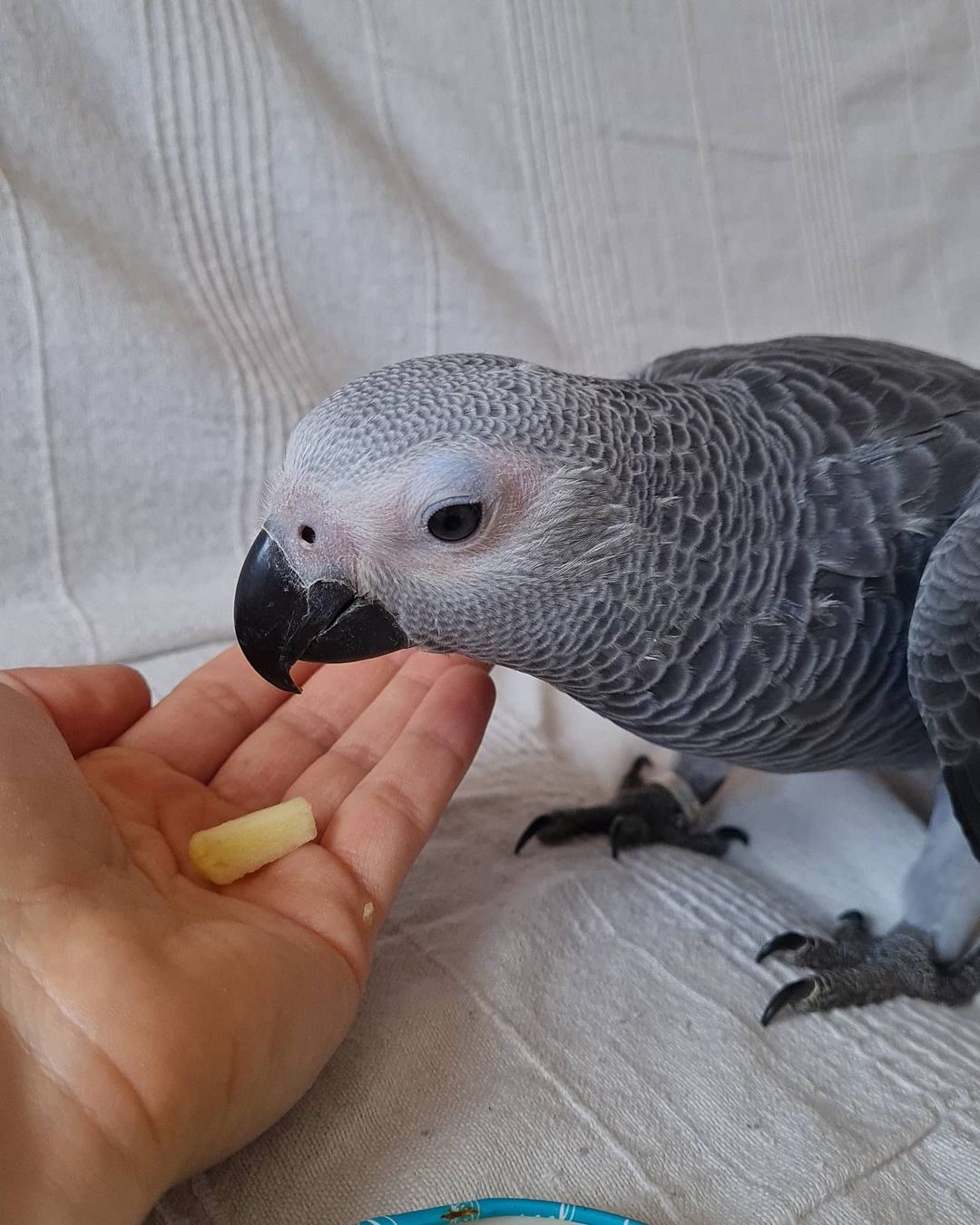 Baby Boy Midland, TX
Male · 4 mo · Congo African Grey
"Hand-raised in our home from day one."
Hand-raised male Congo, 4 months old — captive-bred, DNA-sexed, vet-checked, and CITES-documented before he ever ships.
Ships nationwide · $185 airport · $350 home
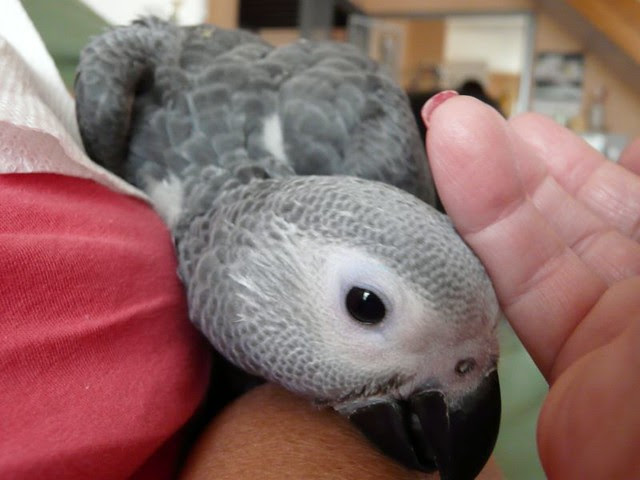 New Arrival Midland, TX
Female · 3 mo · Congo African Grey
"Socialized by our whole family."
Premium hand-raised female Congo, 3 months old. Closed-banded, hatch-certified, CITES Appendix I documented.
Ships nationwide · $185 airport · $350 home
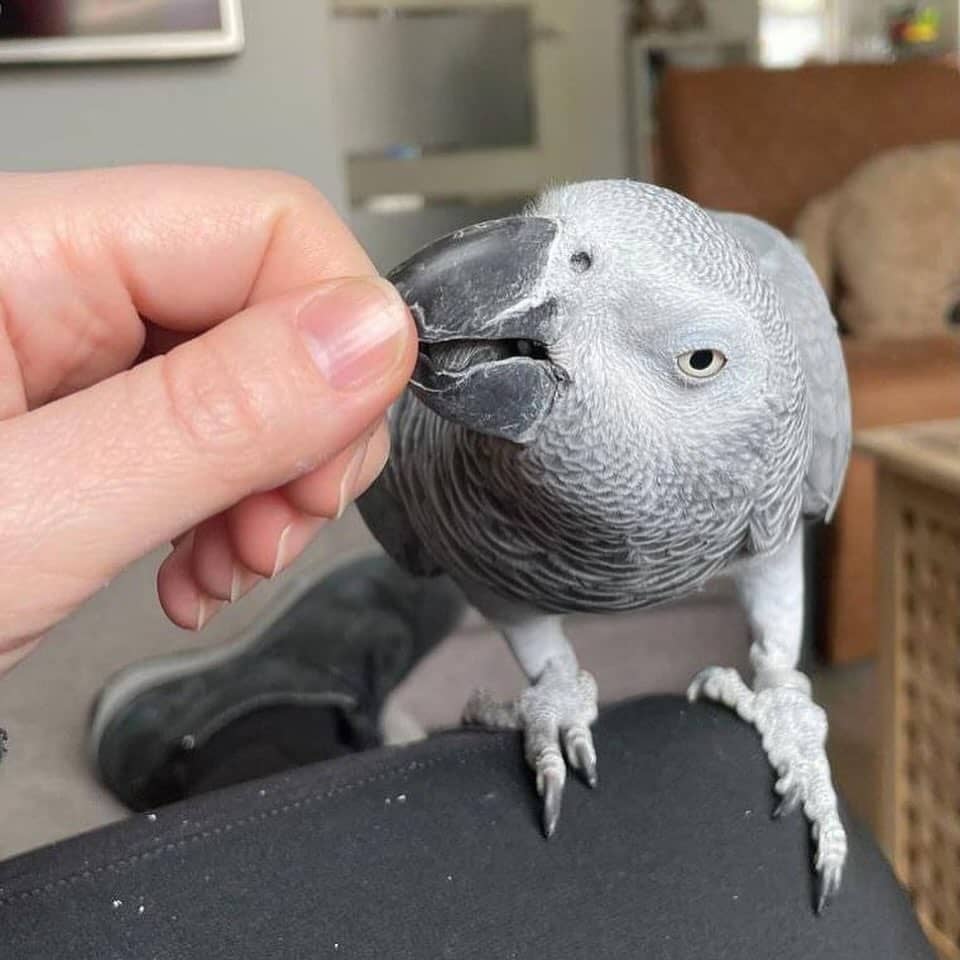 Best Value Midland, TX
Female · 1 yr · Congo African Grey
"Gentle, settled, paperwork in hand."
Soft temperament, easy to handle. 1-year-old captive-bred female Congo with full health and CITES documentation.
Ships nationwide · $185 airport · $350 home
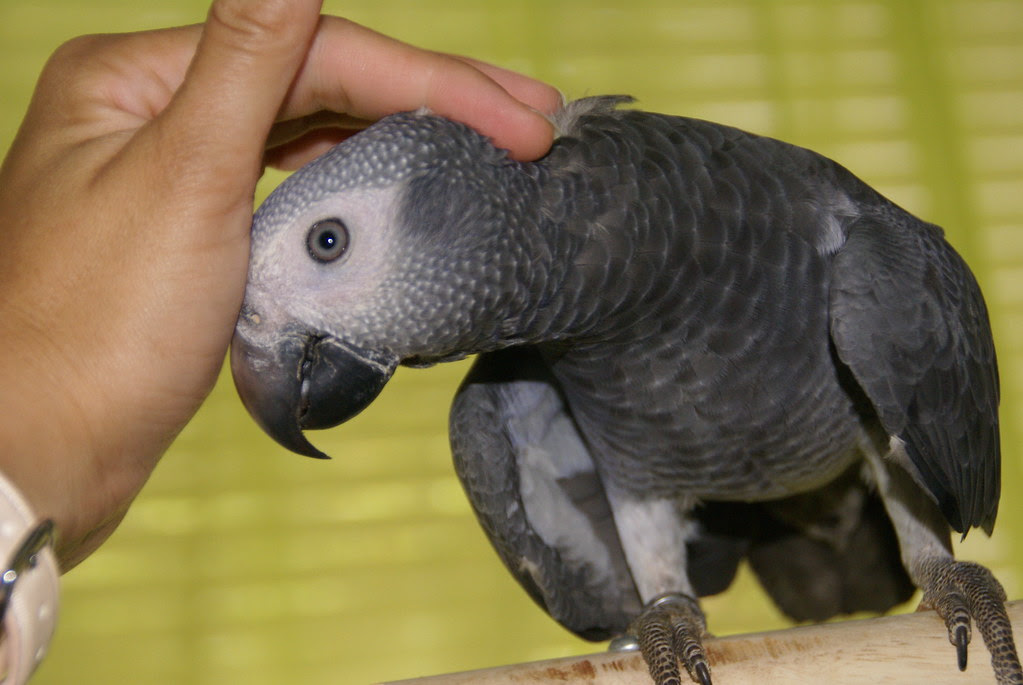 Timneh Midland, TX
Male · 5 mo · Timneh African Grey
"Smaller bird, same documentation standard."
Hand-raised male Timneh, 5 months old. DNA-sexed, avian-vet certified, captive-bred and never wild-caught.
Ships nationwide · $185 airport · $350 home
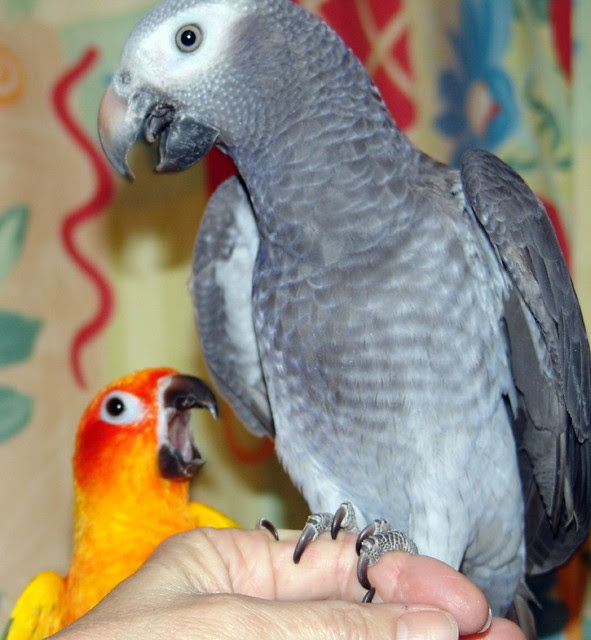 Timneh Midland, TX
Female · 6 mo · Timneh African Grey
"Calm, clever, ready to come home."
Hand-raised female Timneh, 6 months old. Closed band, hatch certificate, and CITES Appendix I paperwork included.
Ships nationwide · $185 airport · $350 home
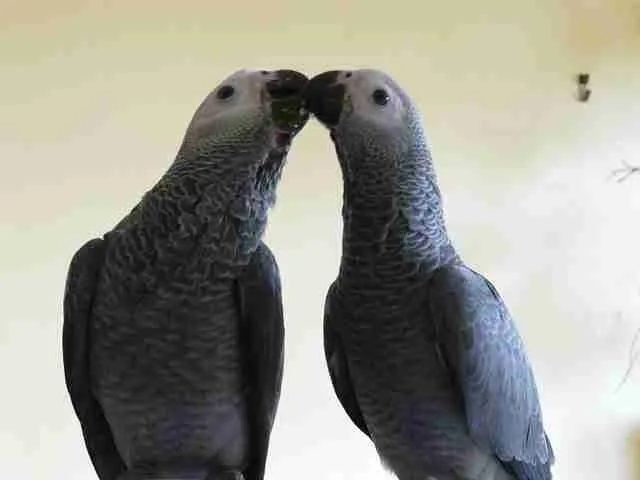 Must-Go Pair Midland, TX
Pair · 4–6 mo · Congo African Grey
"Two bonded birds, one documented package."
Unrelated captive-bred pair, offered together. Jins (male, 6mo) + Jeni (female, 4mo). Both hand-raised and fully documented.
Ships nationwide · $185 airport · $350 home
Captive-Bred Beyond the Chicks
Every part of our program is captive-bred — never wild-caught. That includes our captive-bred African Grey eggs for keepers who incubate at home, and our aviary-bred breeding pairs for breeders building an ethical line. Both come from our own closed aviary with the same closed bands and CITES Appendix I paperwork as our hand-raised babies.
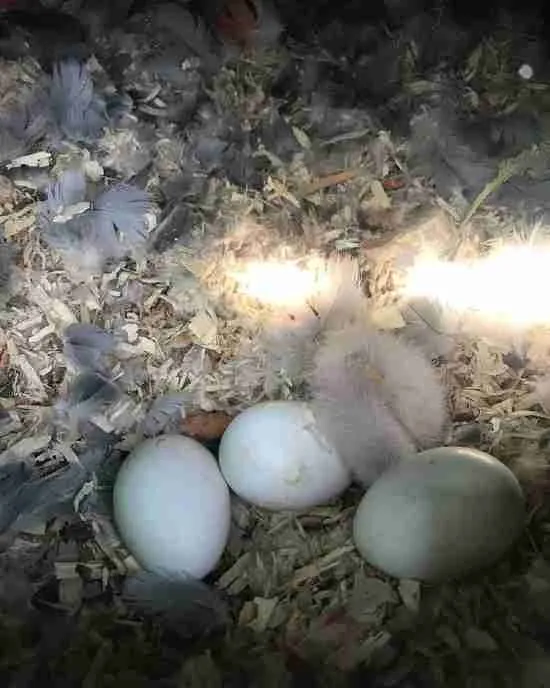
Candled, fertility-checked Congo & Timneh eggs from our own pairs — $95 each, free US shipping on five or more. Never wild-collected.
View captive-bred eggs →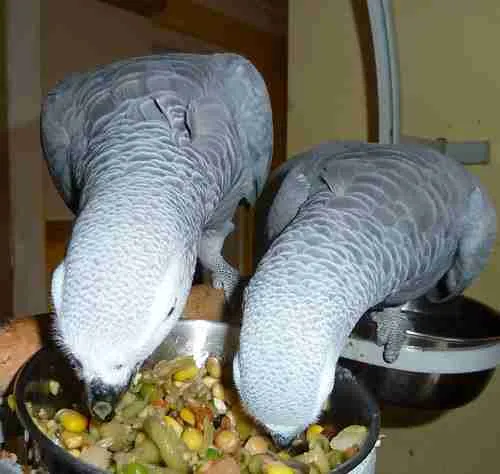
Closed-banded, proven African Grey pairs raised in our aviary — from $3,000, fully CITES-documented for serious breeders.
View breeding pairs →Want proof of origin on an egg order or a pair? Ask C.A.Gs below — the documentation travels with every one.
Captive-Bred · Questions
Captive-bred means the bird was hatched from parents already living in legal captivity and raised entirely in an aviary — never taken from the wild. Here at C.A.Gs, every Congo and Timneh Grey is hatched in our USDA-licensed Midland, Texas home and hand-fed by our family from a few weeks old.
Because the African Grey (Psittacus erithacus) is listed on CITES Appendix I, a captive-bred bird carries Appendix I documentation, a closed band, and a hatch certificate proving it was aviary-raised, not wild-caught.
Yes — 100%. Every Grey we place is U.S. captive-bred and hand-raised in our home, never wild-caught and never imported.
We can prove it for the specific bird you reserve with a CITES Appendix I captive-bred certificate, a closed band number, a hatch certificate, a PCR DNA sexing certificate, and a board-certified avian-vet health certificate. You receive that paperwork before any deposit changes hands.
Yes. African Greys were uplisted to CITES Appendix I at CoP17 (effective January 2017), which bans commercial trade in wild-caught birds — but captive-bred African Greys are legal to own and transfer domestically within the United States with proper documentation.
The closed band and hatch certificate that travel with every C.A.Gs Grey establish its captive-bred origin, so your ownership rests on solid legal ground.
Significantly. A hand-raised captive-bred Grey is socialized to people during the critical first 12–16 weeks of life, so it is calmer, more trainable, and far more likely to talk.
Wild-caught birds are traumatized by capture and transport, often never fully tame, and frequently carry diseases such as psittacosis that can infect other birds in the home.
Beyond the welfare difference, importing a wild-caught African Grey into the USA is illegal — so a captive-bred bird is the only ethical and lawful choice.
Ask for the documents and check the band. A genuinely captive-bred Grey has a seamless closed band (slipped on as a chick and impossible to fit on an adult), an individual CITES Appendix I captive-bred certificate, and a hatch certificate naming the breeder.
A verifiable USDA Animal Welfare Act license is the final tell. If a seller cannot produce a CITES certificate for that exact bird — not a generic letter — treat it as a red flag and read our guide to avoiding African Grey scams before paying.
Wild African Grey numbers have fallen sharply across West and Central Africa, which is exactly why the species was moved to CITES Appendix I and is now listed as Endangered.
Choosing a documented captive-bred bird removes any incentive to poach from the wild — every dollar that goes to a licensed captive breeder is a dollar that does not fund trapping.
Buying captive-bred protects both your future companion and the wild flocks it descends from.
Our 25-question African Grey FAQ covers the rest — pricing, shipping, talking ability and daily care included.
Still verifying us? See the CITES Appendix I documentation that travels with every Grey, learn how scammers fake captive-bred claims in our scam-avoidance guide, and our trusted breeders page explains why families pick us.
Bring One Home
Every Grey from C.A.Gs is hatched and hand-raised in our family home, PCR DNA-sexed, avian-vet certified, and placed with full CITES Appendix I captive-bred documentation — never wild-caught, paperwork in your hands before any deposit.
Tell us about your home and which Grey caught your eye in the form below, and Mark or Teri will reply within 24 hours. Still deciding? Compare our Congo and Timneh Greys — both meet the same captive-bred standard.
We review every application. Expect a response within 24 hours.