
- Home
- African Grey Parrot FAQ
FAQ Pillar · 25 Buyer Questions · Answered by Our Aviary
African Grey Parrot FAQ — Every Buyer Question, Answered Honestly
Buying an African Grey is a 40-to-60-year decision, and the questions deserve straight answers — not sales copy.
Here at C.A.Gs in Midland, Texas, we hand-raise CITES Appendix I documented, captive-bred Congo and Timneh Greys under a USDA AWA license, and these are the 25 questions buyers actually ask us, grouped by topic: pricing, legality and paperwork, talking ability, daily care, health and shipping.
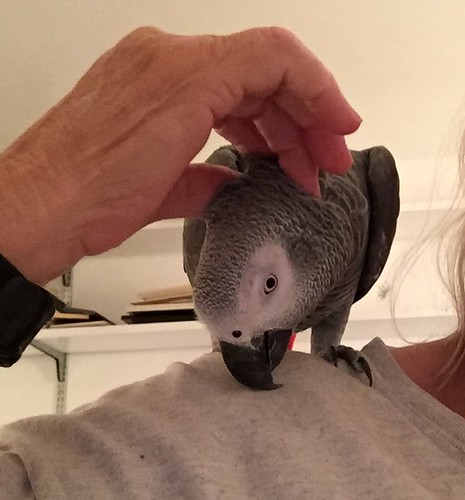
The short answers
What Should an African Grey Buyer Know First?
Timnehs from $1,500, Congos from $1,700 ($2,300–$2,500 as babies) — anything dramatically cheaper is a scam signal, not a deal.
African Greys are CITES Appendix I (since Jan 2017); only documented captive-bred birds are legal to own and transfer in the USA.
CITES captive-bred certificate, hatch certificate + closed band, PCR DNA sexing certificate, board-certified avian-vet health certificate.
A socialized Grey learns hundreds of words and uses them meaningfully — the best talker of any companion parrot.
A Grey can live up to 60 years in human care — plan for the whole life, including who cares for the bird after you.
IATA-compliant on Delta, United or American — $185 to your nearest airport or $350 to your door, weather-checked first.
Still Have Questions? Get Our Answers, Plus Clutch Alerts
Join the list for straight answers on owning a Grey and early word on every new Congo or Timneh chick.
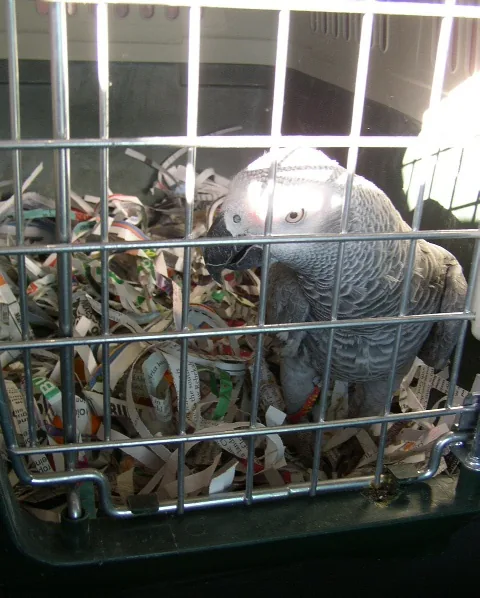
 Answers and availability
The Questions Settled, the Bird Still to Come
Once your questions are answered, the next step is timing. We email you the moment a hand-raised Grey is ready to reserve.

Buying & Pricing
How Much Does an African Grey Cost — and How Do You Buy One?
Here at C.A.Gs a captive-bred Congo African Grey runs $1,700 (adult) to $2,500 (baby), a Timneh runs $1,500–$1,600, and a $200 deposit reserves your bird — with the full documentation packet shown before you pay anything.
Here at C.A.Gs a baby Congo African Grey is $2,300–$2,500, an adult Congo is $1,700, and a Timneh African Grey is $1,500–$1,600; our bonded pair, Jins and Jeni, goes home together for $3,500. Every price already includes the PCR DNA sexing certificate, hatch certificate and avian-vet health certificate — no add-on paperwork fees.
For first-year and lifetime numbers, our African Grey price guide lays out the complete cost honestly.
Because no one can legally breed, hand-raise, screen and document an African Grey at that price — a sub-$1,500 “Grey” is a wild-caught bird, a sick bird, or no bird at all.
Our scam-avoidance guide walks through the tells: stock photos, wire-transfer-only payment, and “free parrot, just pay shipping” bait. Honest pricing exists because real costs — avian-vet care, DNA labs, CITES paperwork — exist.
The Congo African Grey is the larger variant — 400–600 grams, light silver plumage, a cherry-red tail — while the Timneh African Grey is smaller and darker with a maroon tail, a generally steadier temperament, and an earlier start to talking.
Both are equally intelligent, equally long-lived, and carry identical documentation here at C.A.Gs. If you are deciding, our Congo vs Timneh comparison goes variant by variant.
A $200 deposit holds your chosen Grey, and we never release a chick before it is fully weaned and vet-cleared — typically 12–16 weeks old.
Start through our inquiry form with the variant and sex you are hoping for, and Mark or Teri will reply within 24 hours with what is available now and what is coming from the next clutch.
Honestly, the “better” sex is the one whose personality fits your home — individual temperament differences between Greys are far larger than sex-based ones.
Because males and females look identical, every bird we place is PCR DNA-sexed with the laboratory certificate included. Our male vs female African Grey guide explains what sexing does and does not predict.
Legality & CITES
Are African Greys Legal — What CITES Paperwork Should You Expect?
A captive-bred African Grey is fully legal to own and transfer within the United States with proper documentation. The species is CITES Appendix I (effective January 2017), which bans trade in wild-caught birds — not documented captive-bred ownership.
Yes — a captive-bred African Grey is legal to own and transfer domestically with proper paperwork.
On the official CITES appendices, the species was uplisted to Appendix I at CoP17, effective January 2017 — a change that ended commercial trade in wild-caught Greys while leaving documented captive-bred birds unaffected.
Every Grey we place is U.S. captive-bred, never wild-caught, so your ownership is clean from day one.
Four documents travel with every bird: a CITES Appendix I captive-bred certificate, a hatch certificate recording the closed-band number, a PCR DNA sexing certificate from an avian laboratory, and a board-certified avian-vet health certificate — backed by our 72-hour written guarantee.
Our CITES documentation guide explains what each paper proves, and you see the packet before any deposit changes hands.
Ask for the breeder's USDA Animal Welfare Act license number and verify it, then insist on bird-specific paperwork — a CITES captive-bred certificate tied to a closed-band number, not a generic PDF.
On our trusted breeders page we show exactly what verifiable looks like; a seller who stalls on documents or asks for gift cards or crypto is exhibiting the red flags our scam guide catalogs.
A closed band is a seamless metal ring slipped over a chick's foot in its first weeks of life — it physically cannot be fitted to an adult bird, which makes it tamper-evident proof the Grey was aviary-raised.
The band number is recorded on the hatch certificate, tying the captive-bred paper trail to the actual bird in front of you, not just to a document.
Talking & Intelligence
Can African Greys Really Talk — and How Smart Are They?
African Greys are the most accomplished talking parrots on Earth: a socialized Grey learns 100–1,000 words and uses them in context — genuine comprehension, documented across three decades of research with a Congo Grey named Alex.
Yes — and it is more than mimicry. As the World Parrot Trust species profile notes, African Greys are renowned for using human words in correct context.
Dr. Irene Pepperberg's research with Alex showed a Grey identifying colors, shapes and quantities. Our own talking Congo, Maxy, greets visitors by name — the everyday version of what the research proved.
Our complete species guide covers the famous mind in depth.
A well-socialized African Grey typically builds a working vocabulary of 100 to 1,000 words, plus household sounds — the microwave, the doorbell, your ringtone — reproduced with uncanny accuracy.
The deciding factors are early hand-raising, daily conversation and consistent social time, which is why a chick socialized by a whole family from a few weeks old has such a head start.
Timnehs are usually the early talkers, often producing first clear words at four to six months; Congos typically start closer to their first birthday and then accelerate.
Before real words you will hear practice mumbling — quiet, garbled rehearsal, often at dusk. Patience, repetition and talking to your Grey like a member of the household do more than any training gadget.
African Greys are sensitive, brilliant birds that need daily interaction, enrichment and a steady routine, so they reward committed owners more than casual ones.
That said, a prepared first-timer often does very well starting with a calm, hand-raised Timneh.
We talk through your home and schedule before placing any bird, and our honest pros and cons page will tell you plainly if a Grey is the wrong fit.
Care & Diet
What Do African Greys Eat — and What Does Daily Care Involve?
A healthy African Grey eats a 60–70% formulated pellet base with fresh vegetables and limited fruit, lives in a cage of at least 24 x 24 x 36 inches, and needs 2–4 hours of daily interaction plus 10–12 hours of dark sleep.
The foundation is a formulated, dye-free pellet at roughly 60–70% of daily intake, rounded out with leafy greens, fresh vegetables and a smaller share of fruit; seed-only diets cause serious deficiencies and shorten lives.
Our African Grey diet guide covers the nutrition science, and the best-food guide compares pellet options — every chick also goes home on its current food to keep the transition gentle.
Avocado is the headline danger — genuinely toxic to parrots — followed by chocolate, caffeine, alcohol, onion, garlic, and heavily salted or sugary human food.
Fumes matter as much as food: overheated non-stick (PTFE) cookware releases vapor that can kill a bird in minutes, so the cage never belongs in or beside the kitchen. When in doubt, leave it out and ask your avian vet.
Plan on 24 x 24 x 36 inches as the absolute minimum, with 3/4-to-1-inch bar spacing and horizontal bars for climbing — and bigger is always better for a bird this active.
Placement counts too: a social room at or below eye level, away from drafts, direct sun and kitchen fumes. Our complete care guide covers setup, perches and placement room by room.
Budget 2–4 hours of genuine social interaction plus supervised out-of-cage time every day — Greys are flock animals, and chronic isolation shows up as screaming, anxiety or feather damage.
A predictable routine and 10–12 hours of dark sleep keep a Grey calm and confident. Our African Grey care hub gathers everything we publish on daily life with a Grey.
African Greys are unusually prone to calcium deficiency, and the body needs vitamin D3 — made in response to UV-B light — to absorb the calcium it gets.
Window glass blocks UV-B, so safe natural sunlight or an avian full-spectrum lamp plus calcium-rich greens close the gap. It is one of the quiet differences between a Grey that thrives for decades and one that develops problems by ten.
Health & Lifespan
How Long Do African Greys Live — and How Do We Keep Them Healthy?
African Grey parrots live 40–50 years in the wild and up to 60 in human care. Every Grey we place is PBFD and Polyomavirus screened by a board-certified avian veterinarian and covered by our 72-hour written guarantee.
African Greys live 40–50 years in the wild and up to 60 years in human care with sound nutrition, annual avian-vet exams and daily enrichment — one of the longest-lived companion parrots there is.
That longevity makes a Grey a genuine multi-decade commitment; many owners name a future caretaker. Our dedicated African Grey lifespan guide covers what shortens and what extends those years.
Every bird is screened for PBFD (Psittacine Beak and Feather Disease) and Polyomavirus and examined by a board-certified avian veterinarian before it ships, with psittacosis awareness built into our aviary protocol.
The health certificate travels with the bird, and our written health guarantee spells out the 72-hour window in plain terms — you know exactly what we stand behind.
Yes — a general small-animal vet is not a substitute, because parrots instinctively hide illness until it is advanced.
Through the Association of Avian Veterinarians directory you can find a qualified avian vet near you; we recommend locating one before your bird arrives so the first wellness exam — the one that activates the guarantee — is booked on day one.
Feather-destructive behavior is almost always a symptom, not a quirk — boredom, stress, isolation, poor diet or an underlying medical issue turning that powerful problem-solving mind on itself.
The fix starts with a vet check to rule out illness, then daily enrichment and social time. Our guide to taming and bonding with a Grey covers the trust-building that prevents it in the first place.
Shipping & Delivery
How Does C.A.Gs Ship African Greys — and Is It Safe?
We ship nationwide two ways: $185 to your nearest major airport or $350 for home delivery — IATA-compliant live-animal transport on Delta, United or American, weather-checked at both ends before any bird flies.
Yes — we ship to all 50 states. Airport-to-airport delivery is $185, and door-to-door home delivery is $350, both IATA-compliant on Delta, United or American live-animal cargo.
We book direct flights wherever possible and never ship in temperature extremes. Buyers who would rather meet us can also arrange pickup or local handoff from Midland, Texas.
Handled correctly, yes.
IATA Live Animals Regulations govern crate size, ventilation and handling, and we add our own rules on top: early-morning departures in hot months, direct routes, weather checks at both origin and destination, and a delay — never a gamble — if conditions are wrong.
Decades of airline live-animal programs exist precisely because this is a routine, regulated process.
Take your Grey to an avian vet within 72 hours of arrival — that exam activates our written guarantee — and call us immediately if anything seems off; do not wait to see if symptoms pass.
We stay reachable for the life of the bird, and what buyers say in our African Grey reviews reflects how we handle the after, not just the sale.
Go Deeper
Didn't Find Your Question — Where Should You Read Next?
This page is the short-answer hub; every topic above has a full deep-dive behind it.
Start with the complete species guide for the whole bird in one read, the care guide for day-to-day life, the price guide for the money, or the scam-avoidance guide before you pay anyone a deposit — including us.
And if your question isn't covered anywhere, ask it in the form below; we answer every inquiry personally within 24 hours.
How Should You Use This FAQ While Comparing Breeders?
As a checklist. Every short answer above — the price floor, the CITES paperwork, the health screening, the fixed shipping cost — is a question you can put to any seller.
A legitimate breeder answers all of them the way we just did; a scammer stalls on the first one.
Which Answer Do Buyers Quote Back to Us Most?
The payment one. "Reversible payment only — never Zelle, CashApp, or gift cards to a stranger" has saved more of our readers' money than any other line on this page.
Bookmark It for After the Bird Arrives
Half the questions above are post-purchase — diet, cage, taming, vet schedule.
Your First-Year Quick Reference
The same page that vetted your breeder becomes the quick-reference for your first year.
What's the One Question Buyers Forget to Ask?
"What is this bird eating right now?" Owners obsess over price and paperwork, then improvise the diet on day one — when matching the exact pellet and chop the Grey already knows is what prevents a stressful, food-refusing first week.
We Answer It Before You Ask
Every C.A.Gs Grey goes home with its current diet written down and a starter supply, so the food never changes on moving day.
Can You Ask Us a Question That Isn't Here?
Absolutely — this FAQ covers the common ones, but real buying decisions have specifics. Mark & Teri answer diet, behavior, shipping, and availability questions directly, before and long after a purchase.
A Real Person, Not a Script
You're talking to the breeders who raised the bird, so the answer fits your situation rather than a generic template.
How Soon Should You Ask These Questions?
Before you pay a deposit, not after. The questions on this page are most powerful as a screen — a legitimate breeder welcomes every one of them up front, which is exactly when they protect you most.
Front-Load the Hard Ones
Ask the payment, paperwork, and health-screening questions first — if those answers don't satisfy you, the rest of the conversation never needs to happen.
Do These Answers Apply to a Timneh Too?
Almost entirely — pricing differs slightly, but the CITES status, health screening, shipping, and care answers are the same for a Timneh African Grey as for a Congo.
One FAQ, Both Subspecies
Where a Congo and a Timneh genuinely differ, we say so on our Congo vs Timneh comparison — everything else on this page covers both.
One More Common Question
Do You Sell Only Single Birds — or Eggs and Breeding Pairs Too?
We get this one a lot, so here's the short answer: alongside our hand-raised chicks, here at C.A.Gs we also sell fertile African Grey eggs by the clutch and established breeding pairs for experienced keepers. Eggs are $95 each (free US shipping on five or more) and proven pairs run $3,000 to $5,500 — both captive-bred and CITES Appendix I documented.
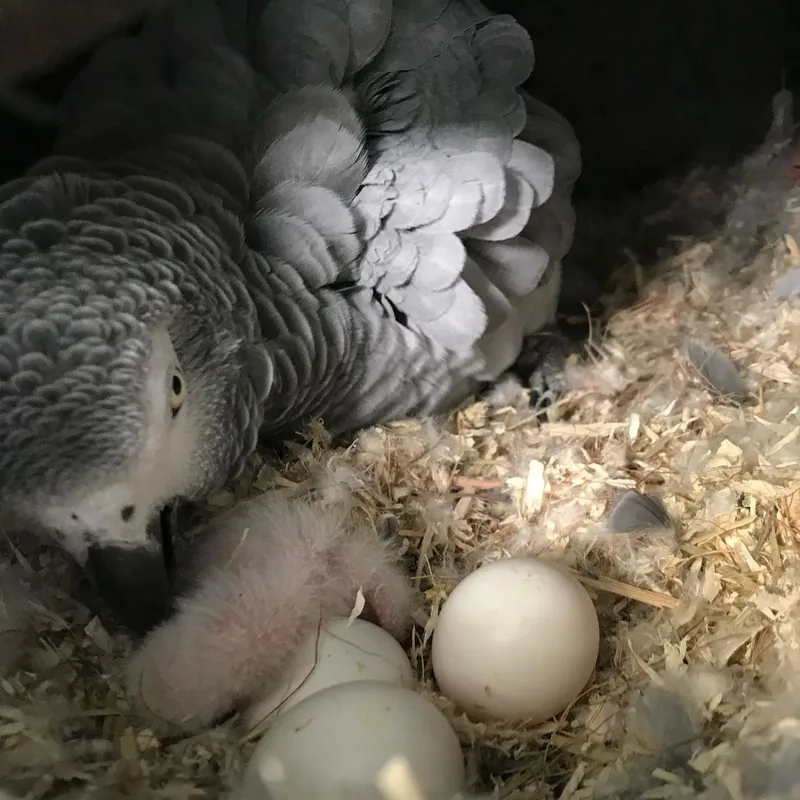
Fertile African Grey Eggs
Candled, fertility-checked Congo & Timneh eggs sold by the clutch — $95 each, free US shipping on five or more.
See egg availability →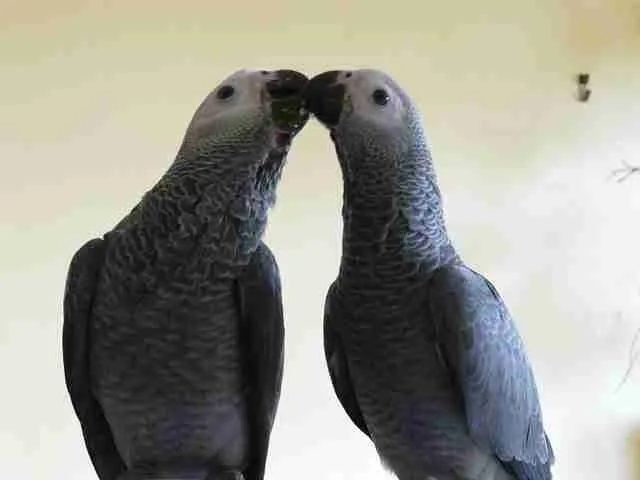
Established African Grey Breeding Pairs
Closed-banded, proven African Grey pairs for experienced breeders — from $3,000, fully CITES-documented with clutch history on request.
See breeding pairs →Have a question about an egg order or a pair? Ask us below — same 24-hour reply.
Ask Mark & Teri
Have a Question This FAQ Didn't Answer?
Every African Grey from C.A.Gs is hatched and hand-raised in our Midland, Texas home — captive-bred, PCR DNA-sexed, vet-certified, and placed with complete CITES Appendix I documentation, shipped nationwide ($185 airport / $350 home).
Tell us your question, or your home and whether a Congo or Timneh fits, and we will reply within 24 hours.
Adopt an African Grey — Inquiry Form
We review every application. Expect a response within 24 hours.