- Home
- Comparisons
- African Grey Pros and Cons
The talker, the mess and the 40-year promise — weighed honestly
African Grey Parrot Pros and Cons: An Honest Owner's Decision Guide
For the right home, few birds come close; for the wrong one, few cost more heartache. We raise and place these parrots — so instead of the dream, here are the real trade-offs, side by side.
See Pros vs Cons Is a Grey Right for You?
Breeder-writtenNo hype, both sidesSelf-assessment inside
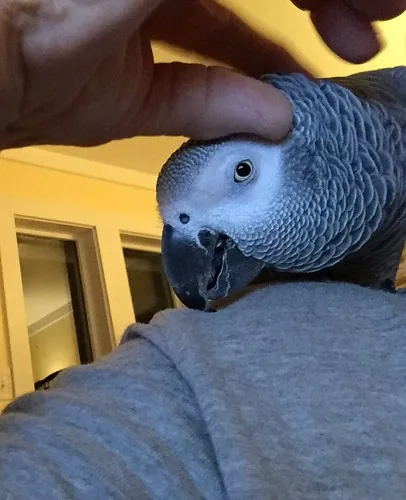
Are African Greys Good Pets, Honestly?
Quick answer: Yes — for a prepared, home-a-lot owner who treats it as a 40–60 year commitment, an African Grey is one of the most rewarding companion birds alive, with talking, intelligence and a bond few pets match. No — for a busy, travelling, noise-sensitive or impulse buyer, because the same intelligence that makes a Grey extraordinary makes it demanding, sensitive and easy to fail. The pros are real; so are the cons. This page weighs both, then hands you a self-assessment so you decide for the right reasons.
Our full African Grey comparison hub maps how this decision fits alongside the species and variant guides, if you are still weighing which grey — or whether a grey at all — belongs in your home. From here on, we take the pros and cons one honest column at a time.

African Grey Pros and Cons at a Glance

Here is the whole decision on one scale before we unpack it. Read the two columns as a pair — every pro on the left has a cost on the right, and no honest breeder pretends otherwise.
- Talking ability and mimicry that stands alone among parrots
- Problem-solving intelligence compared to a young child
- A companion bond that can genuinely last decades
- A hand-raised, socialized temperament you can build on
- Captive-bred and CITES-documented, so the sale is legal and traceable
- A 40–60 year commitment that can outlive the buyer
- Hours of attention and enrichment, every single day
- One-person bonding and jealousy that sharpen at maturity
- Powder-down dander that matters for allergy-sensitive homes
- Feather plucking, hard bites and real vet cost when needs go unmet
The Numbers That Should Drive Your Decision
Eight figures, screenshot-ready — the facts a pros-and-cons list turns on. Every number below traces to our own aviary, documented species research, or a public source we name; nothing here is a guess wearing a fact's clothing.
What Are the Biggest Pros of Owning an African Grey?
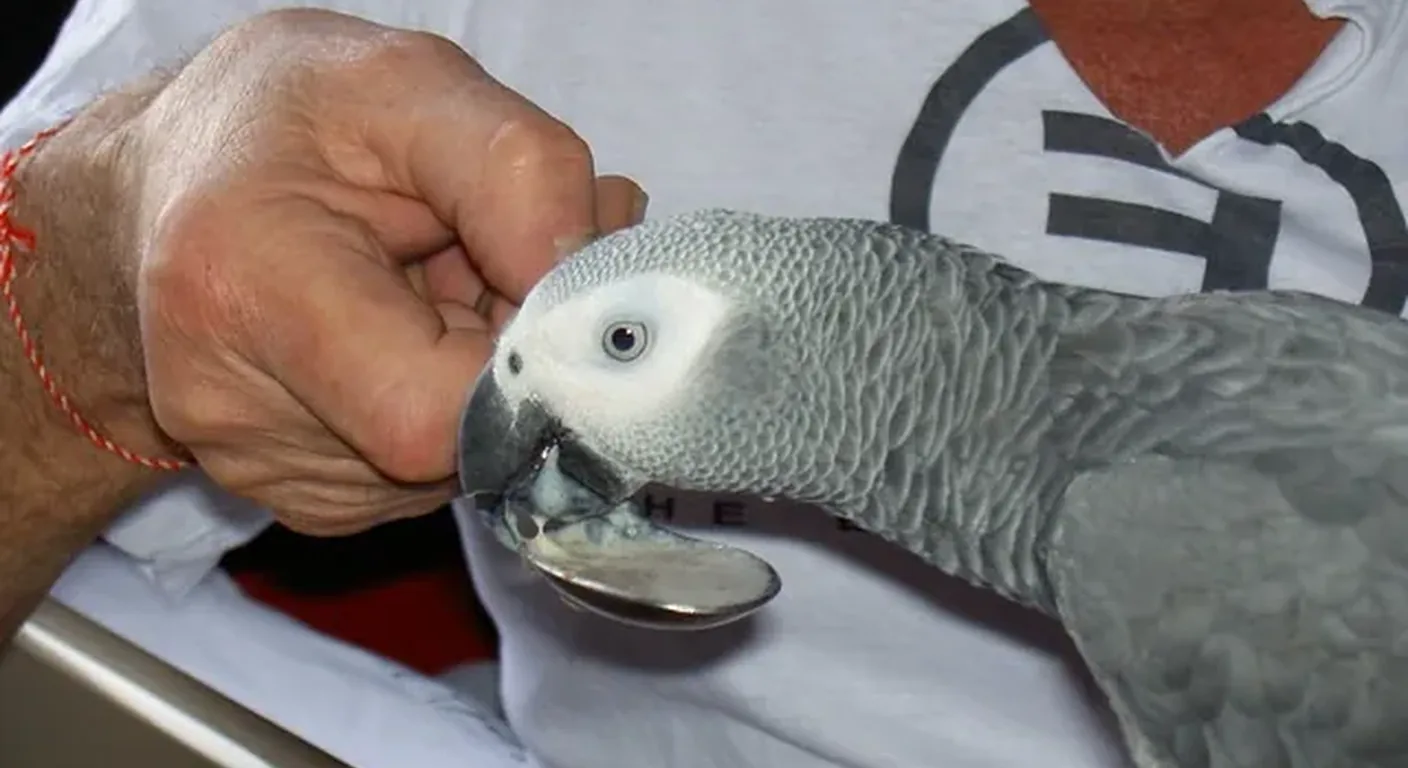
Ask any long-time owner why they chose an African Grey and the answers repeat: the talking, the mind behind it, and a bond that deepens for decades. These are the pros that survive contact with real ownership — each one true, each one earned.
Intelligence on the Level of a Young Child
The headline pro is cognition. African Greys reason, categorize and even grasp concepts of number and absence in a way no other companion bird matches — the reason they anchor almost every "smartest parrot" list and why our African Grey facts guide keeps returning to their problem-solving.
What the Alex Studies Actually Showed
Dr. Irene Pepperberg's decades with a Grey named Alex documented labelling, counting and a working grasp of "none" — cognition once thought impossible in a bird, and the scientific backbone under the species' reputation.
Breeder note: what problem-solving looks like day to day
In our aviary it shows up as puzzle toys solved in minutes, locks worked open, and chicks that learn a household's routine faster than we would like. Intelligence is a pro and a responsibility in the same breath — a bored genius invents its own entertainment.
Citation: The Alex Foundation / Dr. Irene Pepperberg
The Alex Foundation ↗ publishes the primary research on African Grey cognition if you want the science rather than the summary.
Talking Ability That Stands Alone
Greys are the benchmark talkers of the parrot world — clear mimicry, large vocabularies, and a knack for using words in context that startles first-time owners. It is the single trait buyers ask about most.
Why Mimicry Varies From Bird to Bird
Not every Grey becomes a chatterbox, and honesty matters here: some stay quiet mimics of household sounds while others build hundreds of words. Personality, socialization and household noise all shape it, which is why we never promise a specific vocabulary on a specific bird.
A Companion Bond That Can Last Decades
Handled well, a Grey forms one of the deepest human-animal bonds in aviculture — a bird that greets you, seeks your shoulder and reads your mood. A hand-raised, socialized start, the standard behind every hand-raised African Grey we place, is what makes that bond reliable rather than a gamble.
Trainability and a Documented, Socialized Temperament
Intelligence cuts both ways: a Grey that learns to pluck can also learn to step up, tolerate a towel and take medication calmly. The raw material is there — the pro is only realized in a home willing to do the work.
What Are the Real Cons of Owning an African Grey?
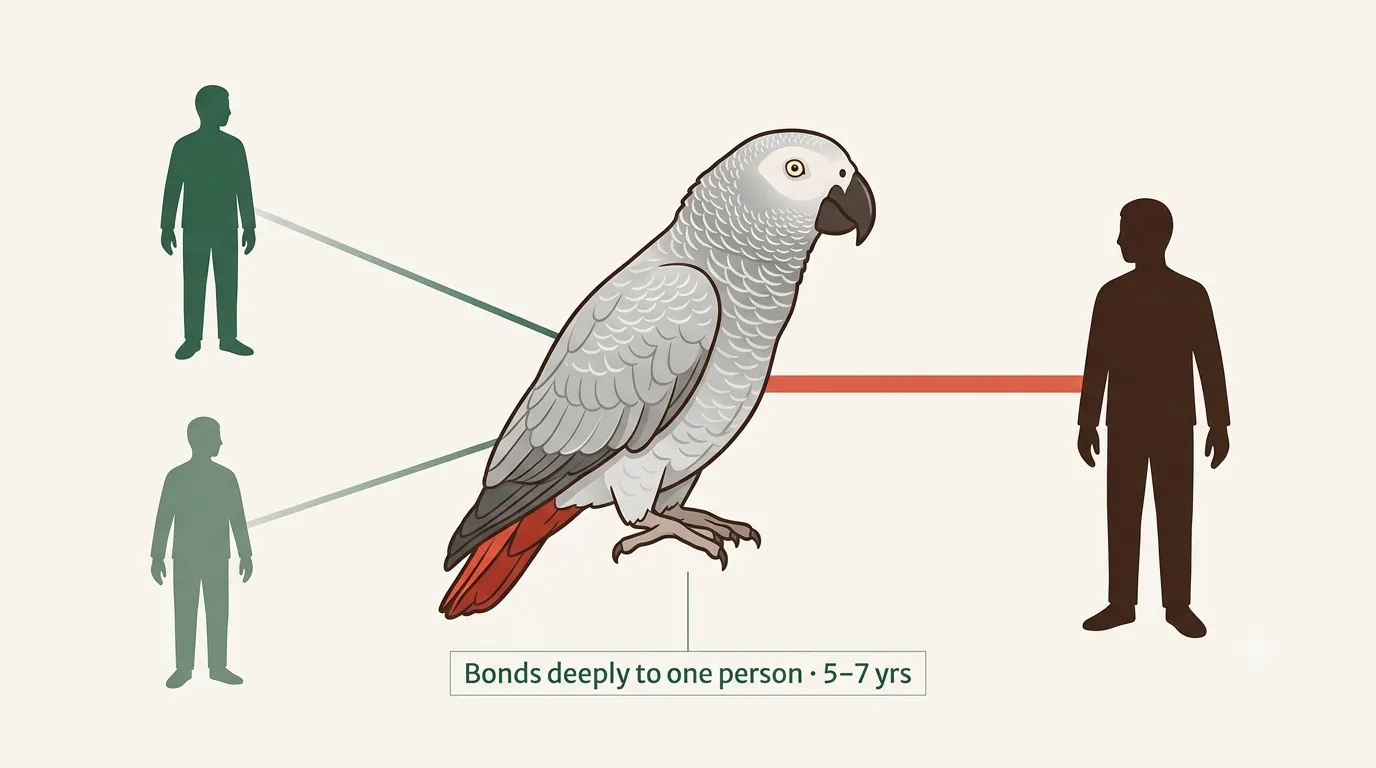
This is the section pet-brand blogs skip. These are not reasons to avoid a Grey — they are the reasons a Grey lands in the wrong home and then a rescue. Read them before you fall for the talking videos.
A 40 to 60 Year Commitment
A Grey is not a decade-long pet; it is a life partner that can outlive the person who bought it. That single fact reshapes the whole decision.
Planning for a Bird That Can Outlive You
Serious owners name a caretaker, budget for decades of care, and treat the purchase like adopting a long-lived dependent. Our African Grey lifespan and care guide covers the succession planning most buyers never think to do.
Breeder note: why we ask about your long-term plans
When a buyer cannot answer "who takes this bird if your life changes in fifteen years?", that is information. We would rather have the awkward conversation now than take the bird back at twenty.
Data note: where the 40–60 year figure comes from
Avian references and veterinary sources place a well-cared-for Grey's lifespan at roughly 40–60 years in captivity; the low end reflects preventable disease, not the ceiling of the species.
Hours of Attention and Enrichment Every Day
Greys are flock animals with a child's cognition, and isolation is the single biggest driver of screaming and plucking. Several hours a day of interaction, out-of-cage time and foraging is the baseline — our African Grey care guide lays out what that actually looks like. An empty house ten hours a day is the wrong environment.
One-Person Bonding and Jealousy at Maturity
A Grey often chooses one person and defends that bond, nipping others as it matures — a real friction point in family homes.
What Changes at Five to Seven Years Old
Sexual maturity sharpens territoriality and moodiness; the sweet baby bird develops opinions. Understanding sex-linked behaviour, which our male vs female comparison covers, helps set expectations.
Citation: sexual maturity and behaviour change
Avian behaviour references tie the onset of hormonal, one-person behaviour in Greys to roughly five to seven years of age — normal development, not a defect.
Powder-Down Dander and the Dust Reality
Greys are powder-down birds: they produce a fine feather dust that conditions their plumage and coats the room around them.
Is an African Grey Bad for Allergies?
For a dust- or asthma-sensitive household it can be a genuine problem. Frequent bathing, an air purifier and regular cleaning manage it for most, but anyone with a serious respiratory sensitivity should spend real time around a Grey first.
Feather Plucking, Hard Bites, and Cost
An unmet Grey can pluck itself bare, and a Grey beak delivers a serious bite. Neither is inevitable, but both are real, and avian veterinary care is not cheap.
Why Sensitive Greys Pluck
Plucking is usually a response to change or under-stimulation, not a random flaw — which means it is largely preventable and always worth a vet workup once it starts.
Breeder note: change is usually the trigger
We see it after moves, new pets or a schedule upheaval far more than from any single cause. Stability and enrichment are the cheapest medicine a Grey owner has.
Citation: feather-destructive behaviour in Greys
Lafeber's avian resources ↗ and most avian-vet references frame feather-destructive behaviour as multifactorial, with environment and stress leading the list.
Is an African Grey Right for You?
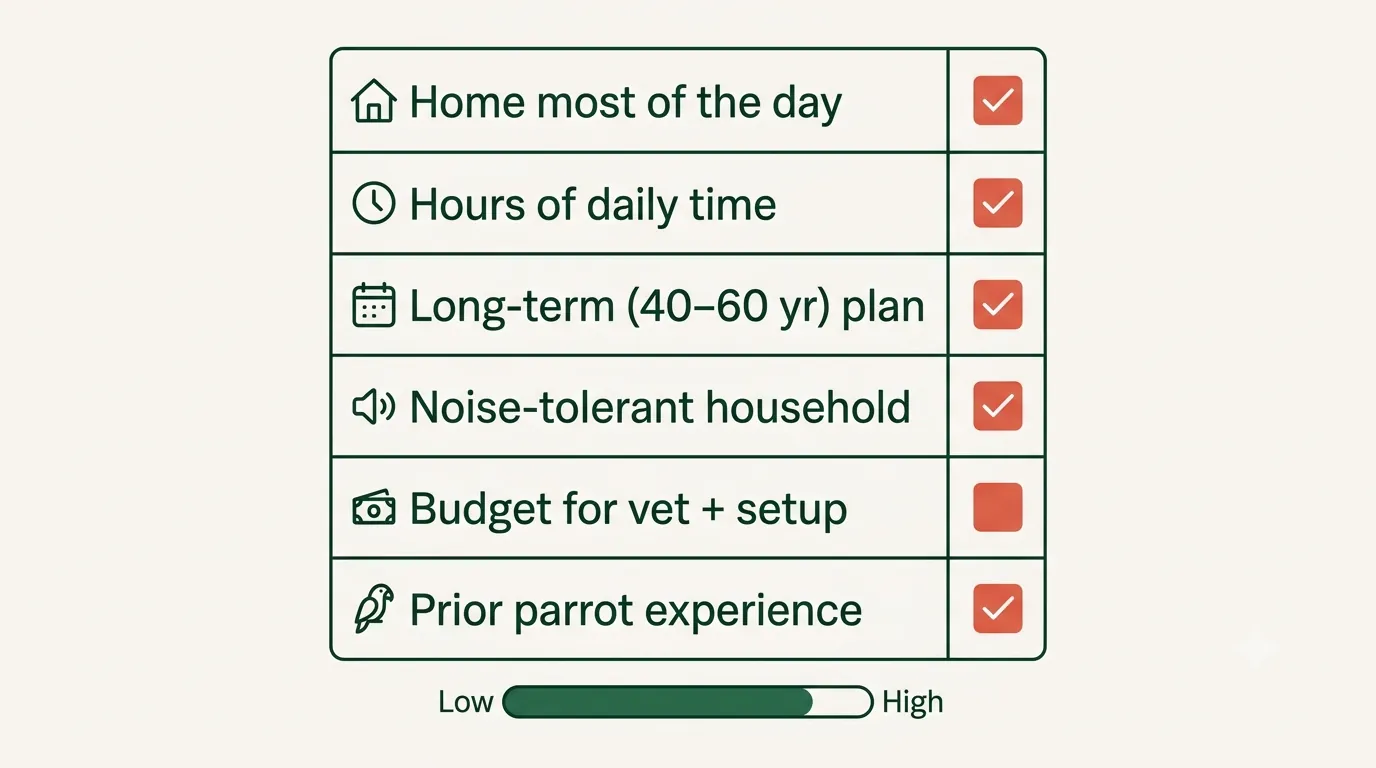
The question behind every pros-and-cons list is personal: would an African Grey actually thrive in your home, with your hours and your noise tolerance? The self-assessment below turns the honest answer into ten minutes of thinking instead of ten years of regret.
Score Your Household Honestly
No breeder can tell you whether a Grey fits your life — but six honest questions can. Tick the ones that are genuinely true for your household, then read your score. There are no wrong answers, only a clearer decision.
Time, Home, Budget, and Noise Questions
The four that sink most placements are time at home, daily attention, the decades-long horizon, and honesty about noise and dust. If those four are shaky, the other two rarely save it.
How to Read Your Score
Five or six ticks and a Grey is a realistic, rewarding choice. Three or four and it is a maybe worth closing the gaps first. Two or fewer, and the kind thing — for you and the bird — is to wait or choose a lower-need companion.
Breeder note: the honest cutoff
We have gently talked buyers out of a Grey more than once. A sale we turn down beats a bird we take back — that is the whole point of a self-assessment you fill in before you fall in love with a photo.
Who Should NOT Get an African Grey?
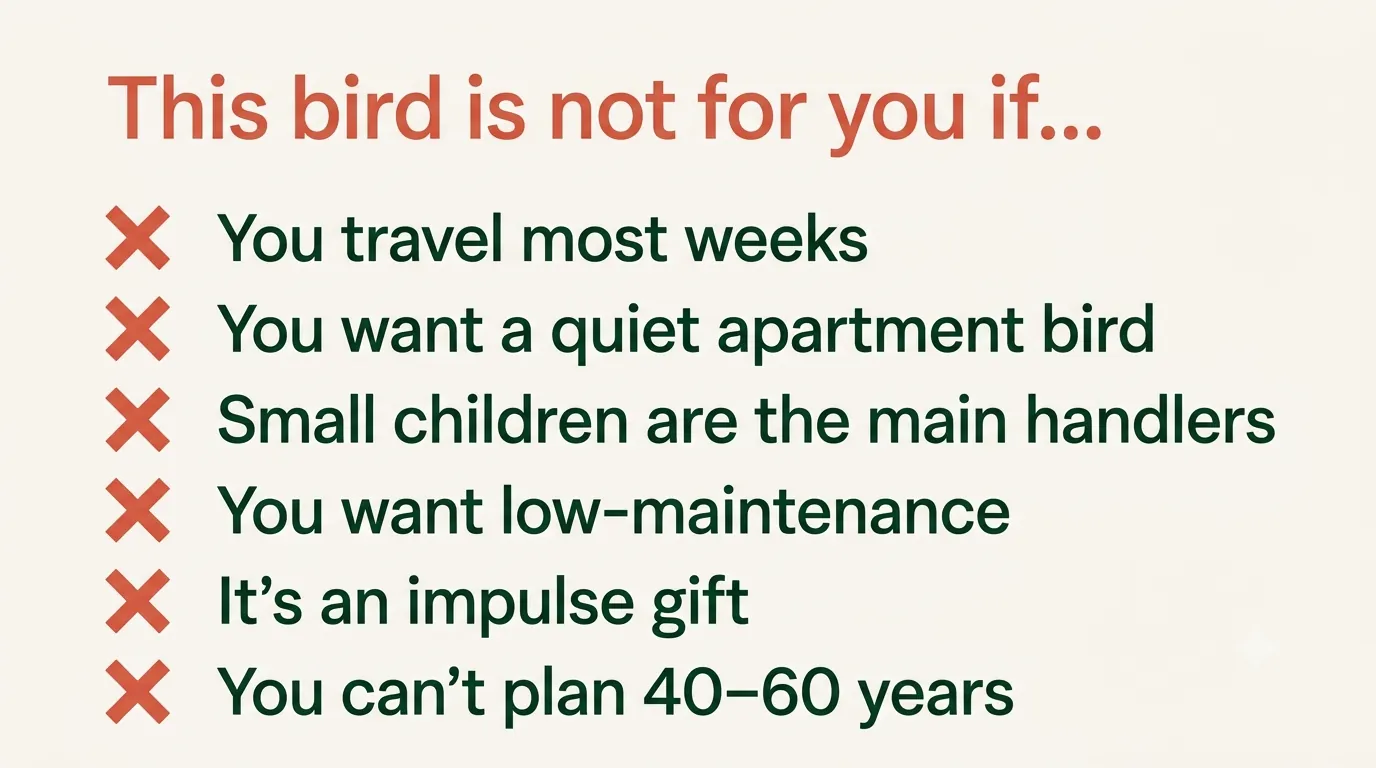
We turn buyers away more often than people expect, because a Grey in the wrong home becomes a plucking, screaming, rehomed bird. If any of the profiles below describes your household today, the kindest decision is a different pet — or a later date.
Households This Bird Will Struggle In
The honest disqualifiers, said plainly. This bird is not for you if you travel most weeks, want a quiet apartment pet, expect small children to be the main handlers, want something low-maintenance, are buying an impulse gift, or cannot plan four decades ahead. None of that makes you a bad owner — it makes a Grey the wrong bird.
- You travel most weeks or work long days away from home
- You want a quiet, hands-off apartment pet
- Small children will be the primary handlers
- You want a low-maintenance, forgiving first pet
- Someone is home for most of the day
- You accept a decades-long, evolving commitment
- You have done the research or have parrot experience
- You budget for enrichment, good food and an avian vet
The Impulse-Buy Warning
The most common failed placement starts with a talking video and a "let's just do it" decision. A Grey bought on impulse is the Grey most likely to end up plucked, screaming or rehomed. If any part of this decision feels rushed, that feeling is the answer.
Who Actually Thrives With an African Grey?
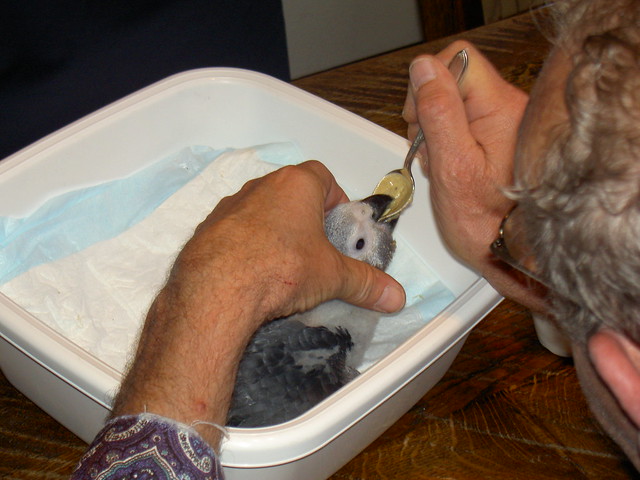
The flip side matters just as much: certain households and African Greys fit like lock and key. If you recognise yourself below, a Grey is not a gamble for you — it is arguably the best companion bird you could choose.
The Owners Who Do Best
Flip every disqualifier and you get the owner who flourishes. In our placements, the happiest homes share a shape — present, patient, and honest with themselves about the work before the bird ever arrived.
What They Have in Common
Retirees and work-from-home owners, experienced bird keepers, and calm adult households top the list. So do people open to an older rehomed bird; our African Grey adoption page frames when a settled adult beats a baby for the right owner.
The Households That Thrive
Present most of the day, tolerant of noise and mess, financially steady, and treating the bird as a decades-long family member rather than a novelty — that is the profile, again and again.
Breeder note: what we see in our real placements
The owners who send us the happiest year-two updates are rarely the ones who wanted the flashiest talker. They are the ones who wanted a companion and understood, going in, exactly what that would cost in time.
Should African Greys Even Be Kept as Pets?
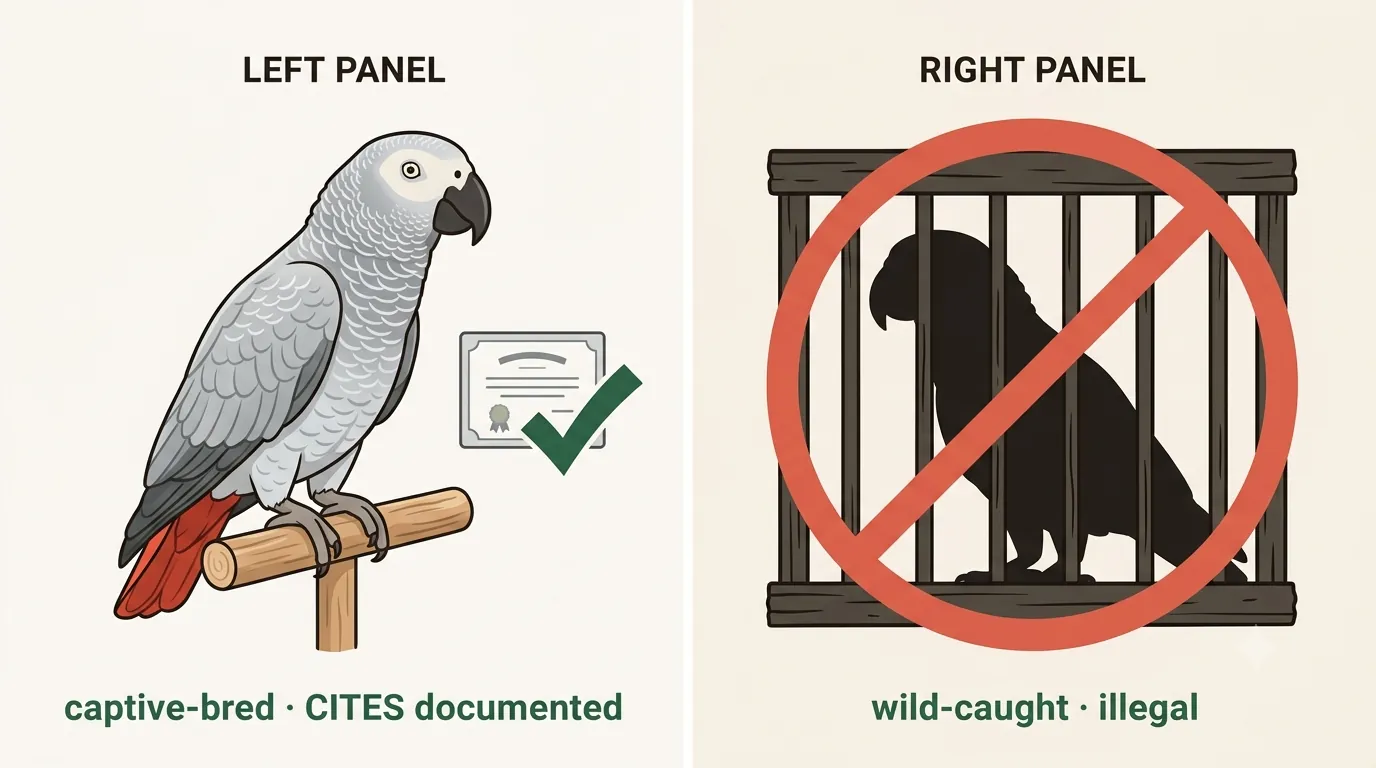
It is a fair challenge, and conservation groups raise it for good reason: wild African Grey populations are endangered precisely because of trapping for the pet trade. The honest answer separates wild-caught birds from documented captive breeding — completely.
The Wild-Capture Argument, Taken Seriously
It is a fair question, and welfare groups raise it honestly: wild African Grey populations have been hit hard by trapping, and the species is genuinely threatened. We will not wave that away — a wild-caught bird in the pet trade is a real harm, and no breeder worth trusting pretends otherwise.
Captive-Bred Is the Opposite of Wild-Caught
The distinction is the whole answer. A documented, captive-bred Grey was hatched in a home aviary, takes no bird from the wild, and stands apart from the trapping that harms wild flocks — the same logic behind every captive-bred African Grey we raise.
What Captive-Bred, CITES-Documented Actually Means
Because the African Grey sits at CITES Appendix I, captive-bred paperwork is what makes a domestic sale legal at all. Our CITES documentation page walks the full paper trail — a closed leg band, hatch record and captive-bred certificate that a wild-caught bird can never produce.
Citation: CITES Appendix I and captive-bred status
CITES ↗ lists the African Grey (Psittacus erithacus) on Appendix I, the framework under which captive-bred birds are legally kept and wild-caught trade is prohibited.
How Do African Greys Compare to Other Parrots?
Weighing a Grey against a macaw, cockatoo or Amazon? Each rival wins a different category — size, cuddliness, song — while the Grey holds talking and cognition. Here is the short field guide before the dedicated comparisons.
Quick Fit Against Macaws, Cockatoos, Amazons and Timnehs
If the cons have you weighing a different bird, here is the honest fit at a glance — the Grey is the talking specialist, but it is not the quietest, biggest or cuddliest option. Tap any species for the full head-to-head.
| Parrot | Talking | Noise | Best-fit home |
|---|---|---|---|
| Timneh African Grey | Excellent | Moderate | Calmer, apartment-friendlier grey |
| Macaw | Good | Very loud | Space, bite-force and volume tolerant homes |
| Cockatoo | Fair | Extremely loud | Cuddle-seekers who can handle demand |
| Amazon Parrot | Good | Loud, seasonal | Outgoing homes ready for hormonal seasons |
The pattern is clear: choose a Grey for talking and cognition, a Timneh for a calmer version of the same bird, and a macaw, cockatoo or amazon only if their size, volume or temperament genuinely suits your home better.
Still Weighing It Up?
One short, honest note when a documented, hand-raised Grey opens for reservation — no pressure.
Are African Greys Good for Beginners?
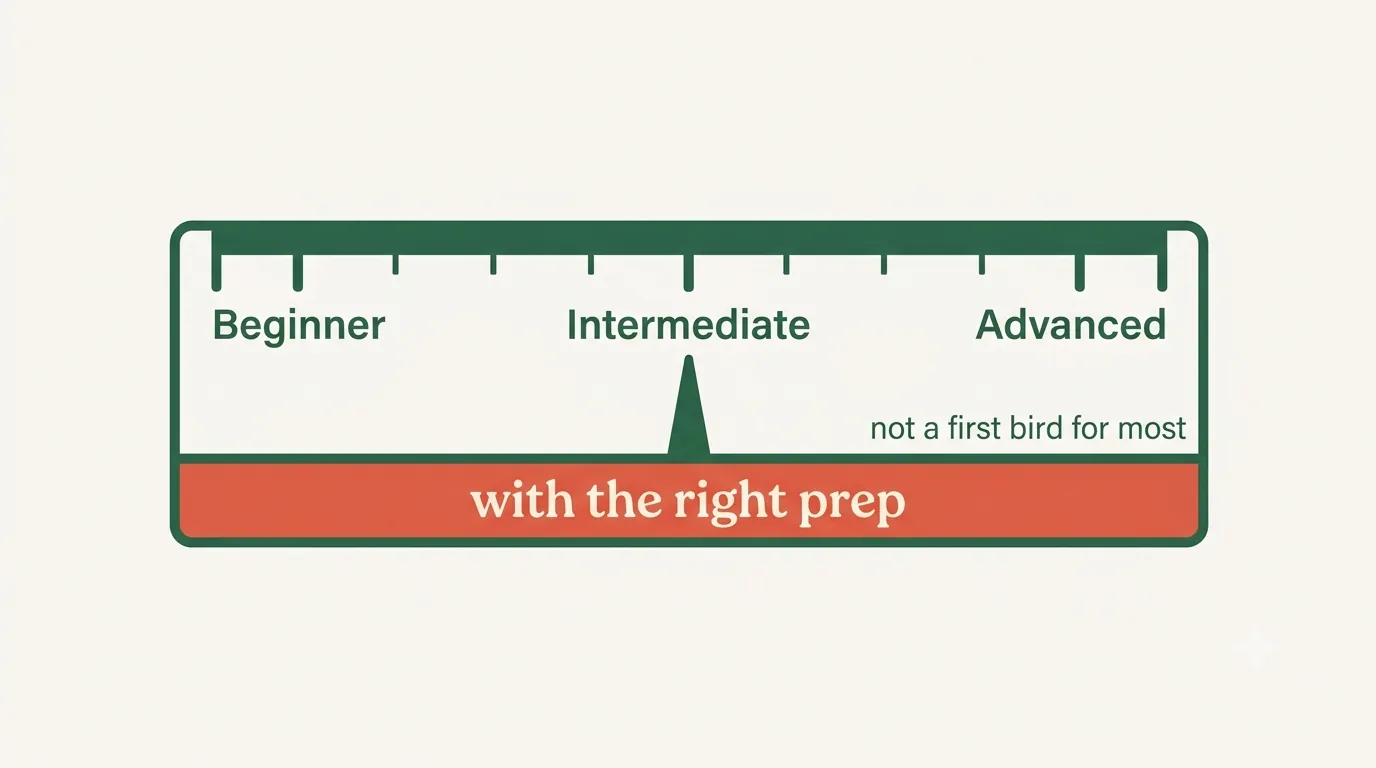
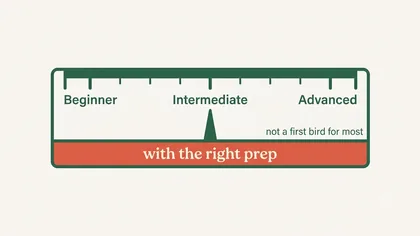
Can a first-time bird owner handle an African Grey? Our honest answer: rarely — a Grey punishes under-preparation like no other companion parrot. But rarely is not never, and the difference is preparation you can actually measure.
The Short Answer for First-Time Owners
The verdict: for most first-timers, an African Grey is an intermediate-to-advanced bird, not a starter pet — its intelligence and sensitivity punish under-preparation. A committed beginner who has genuinely done the homework can still succeed. Because experience level deserves its own honest treatment, our full guide on whether an African Grey suits a first-time owner covers it properly rather than us repeating it here.
What Does an African Grey Really Cost?

The purchase price is the smallest number in African Grey ownership. Between the cage, the avian vet, the diet and forty-plus years of upkeep, the real question is whether the lifetime budget fits — so here it is, itemised the way we lay it out for our own buyers.
Purchase, First Year, and Lifetime
Our African Grey price guide breaks it down bird by bird, but the shape is simple: a documented Congo runs $1,700–$3,500 and a Timneh $1,500–$1,600 from a licensed U.S. breeder, before $185 airport or $350 home-delivery shipping — then cage, quality food, enrichment and avian-vet care every year after. Cost is a con most buyers underestimate.
Why a Suspiciously Low Price Is a Warning
Price is a signal, not just a number. A Congo advertised at $800 is not a bargain a real aviary can offer and survive — it is the bait behind deposit-and-vanish scams. When a discount looks impossible, it is.
The 40 to 60 Year Lifespan, Planned Honestly
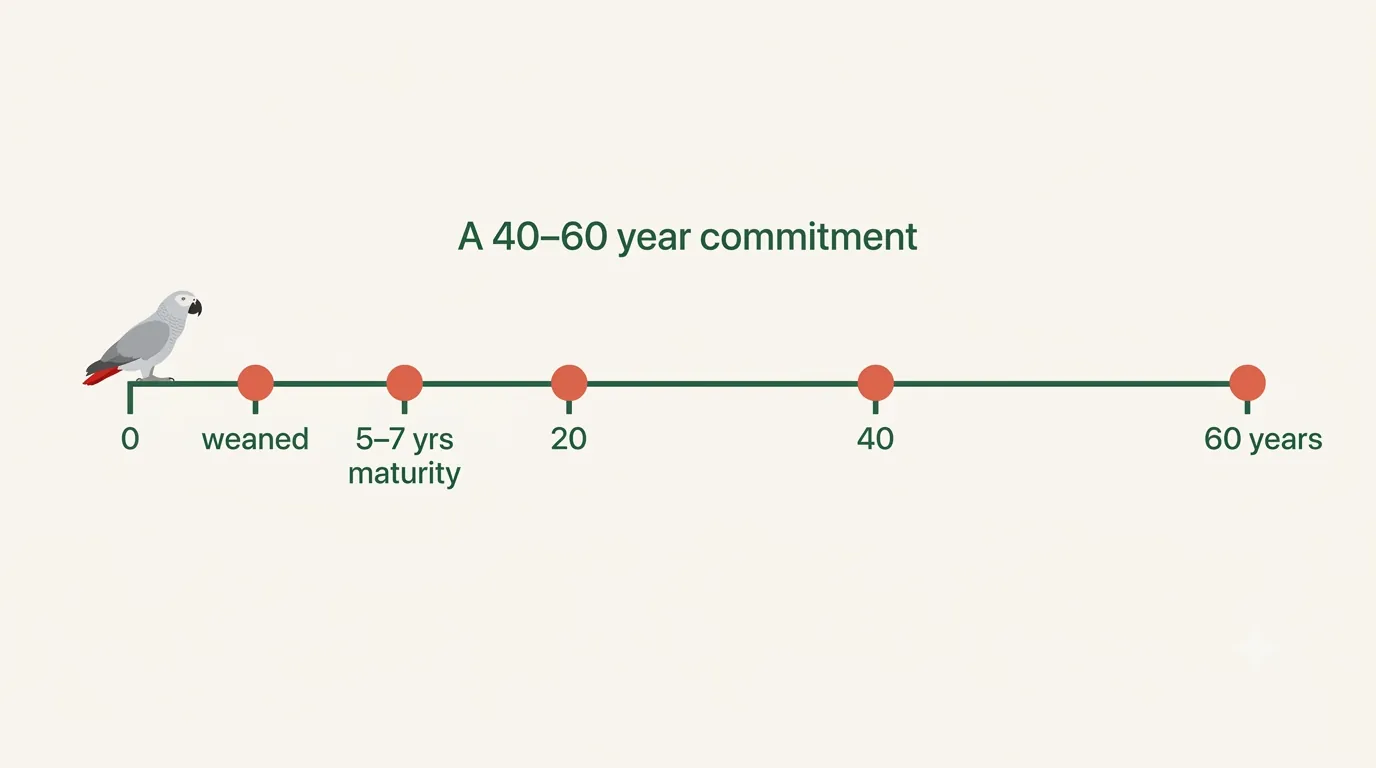
How long do African Greys live? Forty to sixty years with proper care — a lifespan that reshapes the decision entirely. A Grey is not a pet you own for a chapter of life; it is a companion you plan a life around.
Building a Bird Into Your Long-Term Life
The lifespan is the pro and the con fused into one line: decades of companionship, and decades of responsibility. Our African Grey lifespan guide covers the succession planning — a named caretaker, a care fund, instructions in writing — that turns "a bird that can outlive you" from a worry into a plan. Handle that, and the longest commitment becomes the best part of owning a Grey.
Noise, Dander and Daily Care — the Unfiltered Truth
Every species has a maintenance reality its admirers gloss over. For the African Grey it is powder-down dust, a daily attention requirement measured in hours, and a voice that, while quieter than a cockatoo's, is never silent.
What Day-to-Day Living Really Sounds and Looks Like
Day to day, a Grey is a talker with a fine dust habit and a standing appointment for your time. Expect conversational chatter and mimicked household sounds, sharper contact calls when it wants you, a film of powder-down dander on nearby surfaces, and a cage that needs frequent cleaning. An air purifier, regular bathing and a fixed routine keep all of it manageable — our African Grey care guide covers the daily rhythm in full. None of it is a surprise to a prepared owner; all of it blindsides an unprepared one.
If You Decide Yes: What a Documented Bird Gives You
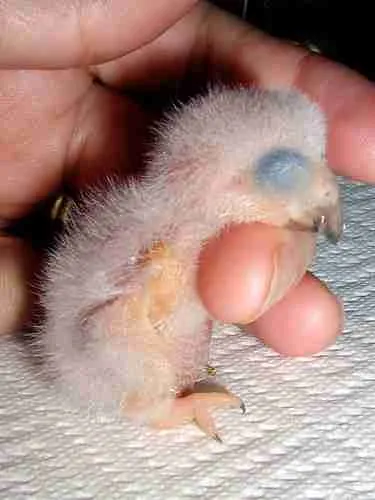
If the columns balance in the Grey's favour for your home, the last variable is the bird's origin. A documented, captive-bred African Grey converts every risk on the con side — health, legality, temperament — into paperwork you can hold.
How Health Documentation Removes the Nastiest Surprises
Once the pros win, the way to avoid the cons' worst edge is documentation. A Grey that arrives with CITES paperwork, DNA sexing, PBFD and Avian Polyomavirus PCR results and an avian-vet certificate is a bird whose health and legality you never have to wonder about — the standard behind our written health guarantee and every Congo on the Congo African Grey page and Timneh on the Timneh page. Choosing a documented bird from a reputable, USDA-licensed breeder is the single decision that turns the risk column from a gamble into a known quantity.
How Are C.A.Gs Greys Documented and Shipped?
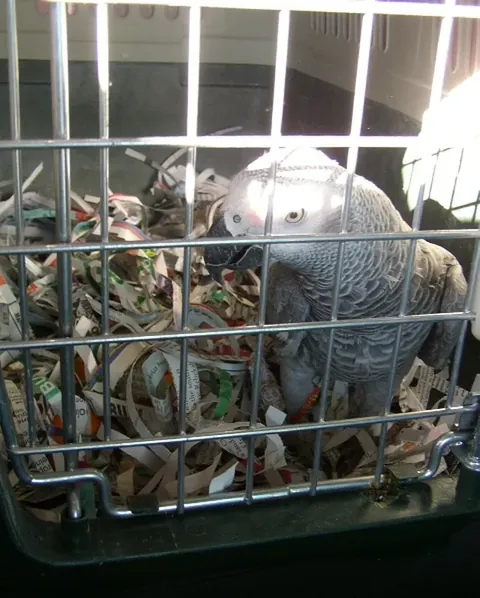
Live-animal cargo under IATA rules, on a Delta, United or American route to the airport nearest you, paperwork folder included

Climate-controlled ground transport to your door, the documentation folder handed over on arrival
Two Delivery Tiers, Full Documentation Either Way
The full African Grey shipping process — crate standards, timing and what arrival day looks like — has its own page. Wherever the bird lands, the CITES, DNA, PCR and vet paperwork travels with it. Tap a route to see that area's availability:
- PBFD PCR screening
- Avian Polyomavirus PCR
- DNA sexing certificate
- Avian-vet health certificate
- Hatch certificate + closed band
Both the nearest-airport option and door delivery run through our African Grey shipping guide; a $200 refundable deposit holds the bird.
Ships nationwide · $185 airport · $350 home
An Honest Owner's Story
We could summarize a decade of these decisions, but two of our verified buyers say it better than we can. Both weighed the same pros and cons you are weighing, and their stories sit alongside dozens more on our African Grey owner reviews page — here is what actually mattered once the bird was home.
 Richard WoodardWinter Haven, FL · Congo African Grey★★★★★
"At first I was hesitant about buying a bird online, but C.A.Gs made the process stress-free. They provided detailed care instructions and my parrot arrived in perfect condition. My Congo African Grey is now the star of our family, talking and entertaining us daily."
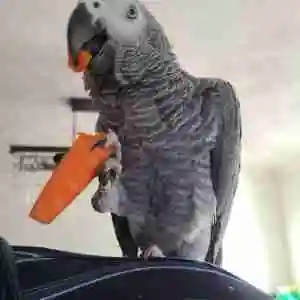 Archie O'BrienFarmingdale, NY · Congo African Grey★★★★★
"Finding a healthy and well-socialized female Congo African Grey was important to me, and I'm so glad I chose C.A.Gs. The entire experience was professional, transparent, and reassuring from start to finish. My Congo Grey is beautiful, affectionate, and already showing an amazing personality. I highly recommend C.A.Gs to anyone looking for a quality Congo Grey parrot."
Notice what neither owner mentions: regret. Match the bird to the household — pros and cons weighed honestly — and that sentence never gets written.
See a Documented African Grey You Can Meet
If the pros win for your home, here is who is actually in the nursery right now — click any bird for its full photo set, parentage and documentation. Sold birds retire from this list; nothing here is a placeholder.
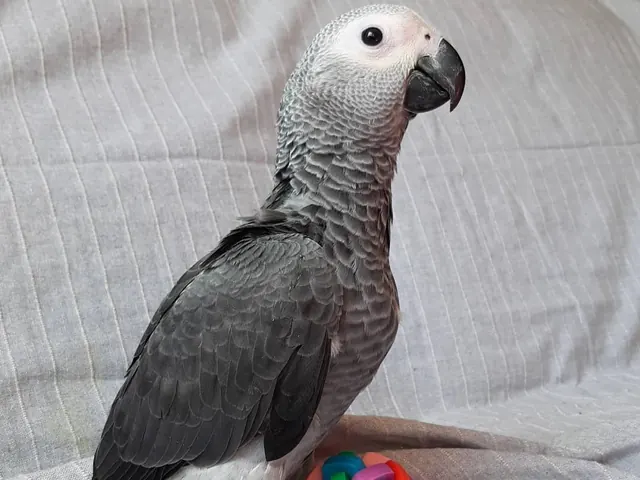
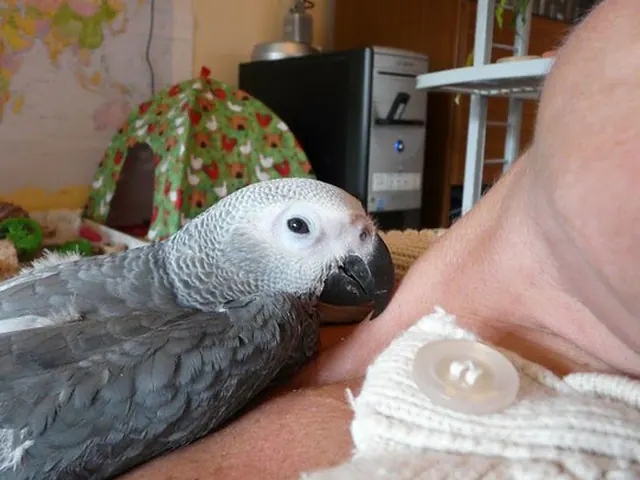
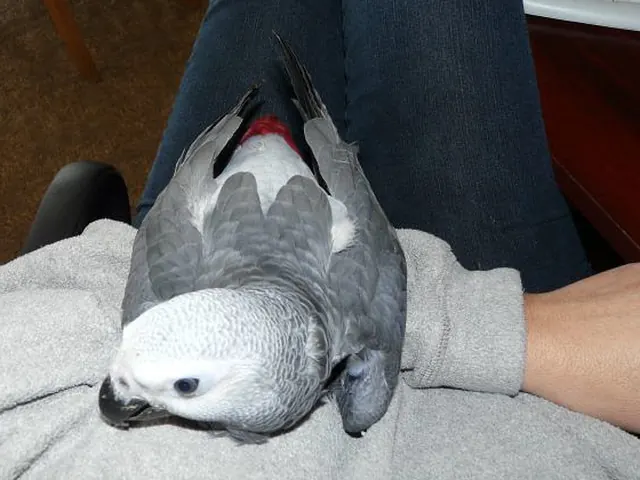
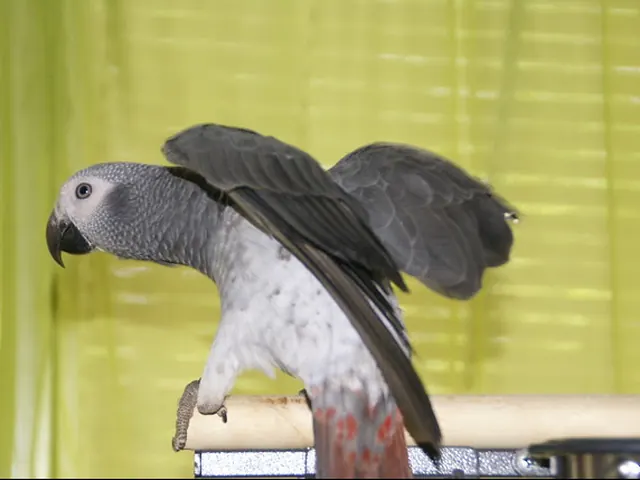
 Clutch alerts
Sold on a Grey? Take First Pick
You've weighed both columns. Join the list and hear the moment a documented chick opens for reservation.
African Grey Pros and Cons: Your Questions Answered
These are the exact follow-ups this decision generates. Our complete African Grey parrot FAQ covers care and ownership beyond the buying decision — start there for anything past weighing the pros and cons.
Are African Greys good pets?
For the right home, yes — few pets match a Grey's talking ability, problem-solving and capacity to bond for decades. But they are a demanding, high-maintenance parrot, not an easy first pet: a healthy African Grey needs hours of daily attention, tolerates a 40–60 year commitment, produces powder-down dander, and will pluck or bite if its needs go unmet. A Grey is a wonderful pet for a prepared, home-a-lot household and a poor one for a busy or impulse buyer.
What are the disadvantages of an African Grey parrot?
The honest cons are a 40–60 year commitment that can outlive you, several hours of daily attention and enrichment, one-person bonding and jealousy that sharpen at five to seven years old, powder-down dander that affects allergy-sensitive homes, sensitivity to change that can trigger feather plucking, hard bites, loud contact calls, and real veterinary cost. None of these are dealbreakers for a prepared owner — but every one is a dealbreaker for the wrong home.
Is an African Grey a good pet for beginners?
For most first-time owners, no — an African Grey is generally considered an intermediate-to-advanced parrot rather than a beginner bird, because its intelligence, sensitivity and daily needs punish under-preparation. A dedicated beginner who has done the research, can be home most of the day and treats it as a decades-long commitment can absolutely succeed. If you are weighing your experience level, our beginner-fit guide covers it in depth.
Do African Greys make good family pets?
They can, with realistic expectations. A Grey usually bonds most tightly to one person and may nip other family members, especially at maturity, so it fits a family that accepts a one-person favourite better than one expecting a bird every child can freely handle. Small children as primary handlers is the main mismatch. Adult and teen households where everyone respects the bird's boundaries tend to do very well.
How much attention do African Greys need?
A lot — plan on several hours a day of interaction plus out-of-cage time, mental enrichment and foraging. African Greys are flock animals with the cognition of a young child, and boredom or isolation is the leading trigger behind feather plucking and screaming. If your household is empty ten hours a day with no plan for company or enrichment, a Grey is the wrong bird.
Are African Greys loud?
Compared to macaws and cockatoos, African Greys are one of the quieter large parrots — but quiet is relative. They are prolific talkers and mimics who will repeat phone rings, microwaves and words at conversational volume, with sharper contact calls when they want attention. They are usually apartment-tolerable in a way a macaw is not, but they are not a silent pet.
Are African Greys bad for allergies?
They can be. African Greys are powder-down birds, meaning they produce a fine feather dust that keeps their feathers conditioned and can aggravate asthma or dust allergies in sensitive people. Regular bathing, an air purifier and frequent cage cleaning manage it for most owners, but anyone with a serious respiratory sensitivity should spend time around a Grey before committing.
Why do African Greys pluck their feathers?
Feather-destructive behaviour in Greys is usually a response to something — boredom, stress, a change in routine or environment, or an unmet need — rather than a random flaw. They are sensitive, routine-driven birds, and a move, a new pet or long hours alone can trigger plucking. It is often preventable with enrichment and stability and, once started, worth an avian-vet workup to rule out medical causes.
How long do African Greys live?
A well-cared-for African Grey typically lives 40 to 60 years, and some exceed that. That lifespan is the single most important line in any pros-and-cons list: it means planning for a bird that may outlive you, naming a caretaker in your will, and treating the decision as a multi-decade commitment rather than a purchase.
Should African Greys even be kept as pets?
Wild-caught African Greys should never enter the pet trade — the species is CITES Appendix I and wild trapping is both illegal and a genuine conservation harm. Captive-bred birds are the opposite case: a documented, captive-bred, CITES-papered Grey from a licensed U.S. breeder was hatched in captivity, takes no bird from the wild, and is legal to own. Keeping a captive-bred Grey responsibly, in a home prepared for its needs, is ethical; buying a cheap wild-caught bird is not.
Still Weighing It? Read These Three Next
Weighing a Grey is one decision inside a forty-year one, and three questions usually stay open after the pro and con columns are tallied: is this really a bird a first-timer can handle, which species facts should shape your setup, and what does the full lifetime bill come to? Each card below answers one of them in depth.
Decided the Pros Win? Tell Us About Your Home
When the honest answer to "should I get an African Grey" turns out to be yes, the next step is matching the right chick to your household. Send us a note below — Mark or Teri reads every inquiry personally and replies within 24 hours, documents first, sales pitch never.