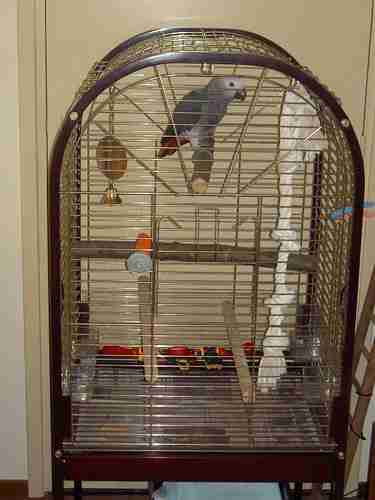
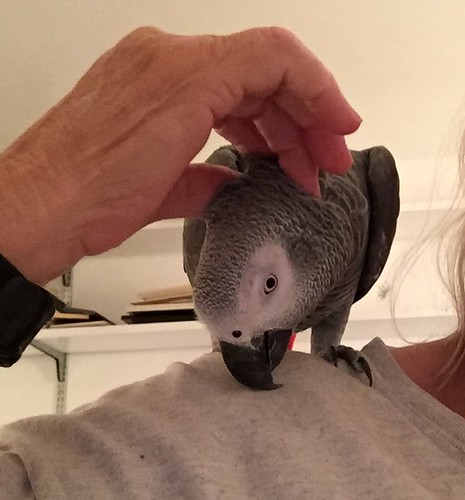
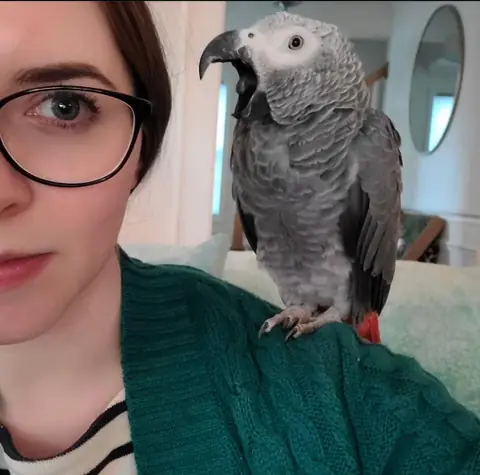
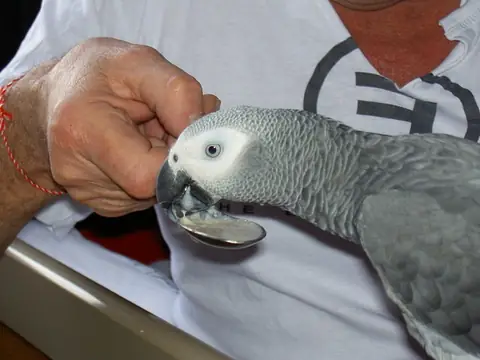
Expect three phases with a rehomed Grey: a quiet honeymoon while the bird observes you, a testing period when its real history surfaces, and — over 3 to 12 months of consistent, pressure-free work — the genuine bond.
The timeline belongs to the bird; your job is to be predictable.
The first weeks are deceptively easy. A displaced Grey goes into observation mode — quiet, compliant, watchful — and new adopters often report that the "difficult" bird they were warned about seems perfectly fine.
Then, somewhere between week two and month two, the real bird shows up: the opinions, the boundaries, the habits learned in previous homes.
A bird that was grabbed may bite hands on principle; a bird that lost its person may scream for someone who isn't coming back, or pick one new favorite and defend them against the family.
This phase is not failure — it is the bird finally feeling safe enough to be honest with you, which is progress wearing a disguise.
The way through is the same trust-building sequence used with any Grey, run at the bird's pace rather than yours: a genuine settle-in period, treats through the cage bars, an open door the bird chooses to use, then the step-up command — the full seven stages are laid out in our African Grey taming guide, including the honest 3–12 month timeline for adult and rescue birds.
The steps never change between a baby and a twenty-year-old; only the calendar does.
Short sessions, identical routines, and ending every interaction on a small win will out-perform every shortcut ever invented, mostly because there are no shortcuts and never were.
Two practical notes from the aviary side.
First, diet conversion is often the real first project: many surrendered Greys arrive on all-seed diets, and moving them toward the pellet-and-vegetables foundation in our African Grey diet guide does as much for behavior as any training plan.
Second, watch for grief — Greys mourn lost people recognizably: quieter, clingier or pricklier, sometimes calling a missing name.
Time and routine metabolize it, and the capacity for that grief is the same capacity that will eventually attach to you. It is the feature, not the bug, of a bird that can love someone for forty years.
What Should the First Vet Visit Cover for a Rehomed Grey?
Book a board-certified avian vet within the first week, even if the bird looks fine.
A baseline exam, a weight on record, and screening appropriate to the bird's unknown history turn "we think she's healthy" into something you actually know.
What If the Paperwork Is Thin?
Many genuine rehomes arrive with little more than a name and a cage. Document what you can at that first visit — the vet's exam record plus the band number, if the bird wears one, becomes the start of the paper trail going forward.
Start the Weight Log on Day One
A daily gram-scale weight is the cheapest health monitor a rehomed Grey can have.
Stress Shows on the Scale First
Stress hides in behavior; it shows up on the scale first.