1. Home
  2. African Grey Care
  3. How to Tame an African Grey
Care Guide

How to Tame an African Grey Parrot (7-Step Breeder Method)

African Greys are the most emotionally complex parrots on the planet. Get taming wrong and you create a fearful bird that bites for years. Get it right and you build a bond that lasts four decades.

Breeder insight: Hand-raised Greys from reputable breeders typically respond to this method within 7–14 days. Rescue or parent-raised birds may take 3–6 months — same steps, more patience required.

Why African Greys Are Different to Tame

African Grey parrots have emotional intelligence comparable to a five-year-old child — which means they remember trauma with the same clarity they remember kindness. A single bad handling session can set taming back weeks. A forced grab can create a bite-reflex that persists for years.

Unlike cockatiels or budgies that recover quickly from handling mistakes, a Grey will analyze your intentions, remember your inconsistencies, and adjust its behavior accordingly. This is what makes them the most rewarding parrot to tame — and the most unforgiving when the process is rushed.

See our complete African Grey care guide for housing, diet, and health basics before starting taming work.


The 7-Step Taming Method

This method is what we use at CongoAfricanGreys.com before every bird leaves our care. It builds trust systematically so that each step is earned, not forced.

  1. 1

    Let the Bird Settle (24–48 Hours)

    When your Grey arrives, resist every urge to interact. Place the cage in a room where the family spends time — living room, kitchen — but do not reach in, open the cage, or hover. Talk normally nearby. Let the bird observe that humans are calm and non-threatening. Food and water only.

    Ready for Step 2 when: The bird eats, preens, and vocalizes normally without freezing when you walk past.
  2. 2

    Hand-Feed Through the Cage Bars

    Sit beside the cage and offer small, high-value treats through the bars — pomegranate seeds, pine nuts, or small pieces of walnut. Hold the treat still. Do not wave your hand. If the bird approaches and takes the treat, immediately say "good bird" in a calm voice. If it doesn't approach, leave the treat clipped to the bar and walk away. Repeat 2–3 times daily for 3–5 days.

    Ready for Step 3 when: The bird consistently walks toward your hand to take a treat without backing away first.
  3. 3

    Open the Cage Door and Wait

    Open the cage door and step back 2–3 feet. Do not reach in. Place a treat on top of the cage or on the door ledge. The bird decides if and when to come out. Some birds emerge within minutes; others take days. Do not rush this step — the goal is the bird choosing to leave the safety of its cage, which is a major trust threshold.

    Ready for Step 4 when: The bird exits the cage on its own and spends time outside without constant alarm behavior.
  4. 4

    The Hand Perch Exercise

    Offer your forearm as a perch while the bird is outside the cage. Start with your arm resting on a table or chair arm so your hand is at the bird's level. Hold a treat near your wrist. The first goal is simply for the bird to stand on your arm while you remain still — not to interact, not to talk, just to perch. 5-minute sessions, twice daily. End every session before the bird shows stress signals.

    Ready for Step 5 when: The bird will stand on your arm for 3–5 minutes without attempting to escape.
  5. 5

    Introduce the Step-Up Command

    Press your index finger gently but firmly against the bird's lower chest — just above the feet — while saying "step up" in a clear, calm voice. The pressure causes a natural forward-stepping reflex. The moment the bird steps up, say "good bird" and offer a treat. Practice 5–8 repetitions per session. Never use gloves — they teach the bird that bare hands are the threat.

    Ready for Step 6 when: The bird steps up on the first or second "step up" command without hesitation 8 out of 10 times.
  6. 6

    Extend Handling Duration Gradually

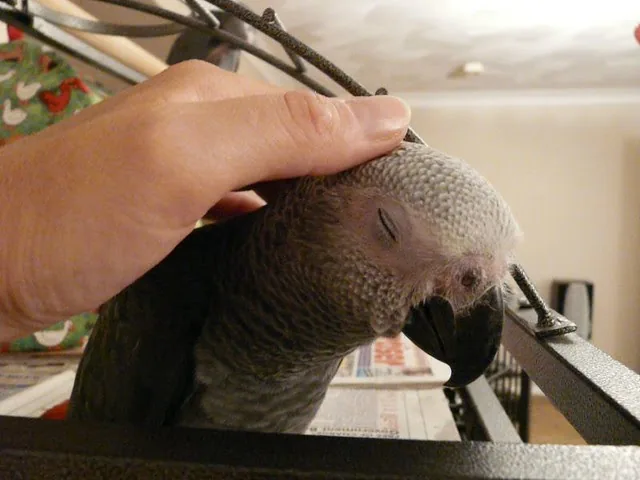
    Increase session length from 5 minutes to 10, then 15, then 20 minutes over 1–2 weeks — only if the bird remains calm throughout. Introduce movement: walk slowly from room to room with the bird on your arm. Offer head scratches if the bird lowers its head (it's asking for contact). Never increase duration if the previous session ended with stress signals or biting.

    Ready for Step 7 when: The bird tolerates 20-minute sessions calmly and accepts head scratches from you.
  7. 7

    Introduce New People and Environments

    Once the bird is comfortable with you, introduce other family members using the same step-up protocol from Step 5 — each person is essentially starting at Step 4 from the bird's perspective. Then expand environments: take the bird to another room, near a window, eventually for short outings. Socialized birds adapt to new people and places without fear, which is what makes them exceptional companions.

    Taming complete when: The bird steps up reliably for 3+ different family members and remains calm in at least 3 different environments.

What to Do When Your African Grey Bites

Biting during taming is almost always fear-based, not aggression. The bird is communicating that you've moved too fast. The correct response is counter-intuitive.

Never yell, pull away sharply, or punish a bite. Yelling reinforces the behavior (attention reward). Pulling away sharply teaches the bird that biting ends unwanted interaction — which is exactly what a fearful bird wants to learn. Punishment creates distrust that takes months to rebuild.

Pre-bite warning signs to watch for:

  • Feathers flattened tightly against the body (not relaxed/puffy)
  • Eyes pinning rapidly (pupils dilating and contracting)
  • Tail fanning open and closed
  • Neck feathers raised in a ruff
  • Shifting weight from foot to foot

When you see any two of these signals, calmly say "okay, all done" and set the bird on a perch. End the session. You went too long or asked too much. Tomorrow, take one step back in the protocol and rebuild from there.


Common Taming Mistakes That Set Progress Back

Handling Too Long

Sessions over 20 minutes cause fatigue and overstimulation, almost always ending in a bite. A 10-minute session that ends positively is worth more than a 30-minute session that ends with stress.

Using Gloves

Gloves teach the bird that bare hands are the threat it feared all along. When gloves come off, the bird bites bare hands. Always use bare hands from the first session.

Skipping the Step-Up Foundation

Trying to carry, pet, or play with a bird that hasn't mastered step-up is premature. Step-up is the foundation — every other behavior is built on top of it.

Inconsistent Handling

Three family members using different words, different reward timing, and different rules creates a confused bird. Pick one protocol and have everyone follow it during the initial taming phase.


Taming a Rescue or Previously Untamed Grey

The same 7 steps apply, but compress nothing. A rescue Grey may have been grabbed, screamed at, or punished in a previous home. Steps 1–3 may take weeks, not days. Steps 4–5 may take months. This is not a failure — it's the bird's history.

Before starting taming on a rescue bird, schedule an avian vet exam to rule out illness (sick birds bite out of pain, not fear). Learn how to verify a bird's history so you know what you're working with before you begin.

Taming FAQs

How long does it take to tame an African Grey parrot?
A captive-bred hand-raised African Grey parrot that was well-socialized as a chick typically tames within 1–4 weeks with consistent daily handling. Rescue or parent-raised Greys can take 3–12 months of patient, positive-reinforcement work. Never rush taming — forcing interaction causes fear that takes months to undo.
Why does my African Grey bite me?
African Grey parrots bite because of fear, overstimulation, territorial defense, or hormonal behavior during mating season. Most biting during taming is fear-based. The solution is to slow down, reduce handling sessions to 5–10 minutes, and end every session before the bird shows stress signals (feather flattening, eye pinning, tail fanning).
What is the step-up command for parrots?
The step-up command is a verbal cue ("step up") paired with pressing your finger or forearm gently against the bird's lower chest, just above the feet, prompting it to step onto your hand. Start by practicing on a perch before attempting from inside the cage. Reward every successful step-up with a small treat and praise.

Start with a Bird Already Socialized

Our hand-raised Congos and Timnehs leave our care already responding to step-up commands — so you're building on a foundation, not starting from zero.

Inquire About Availability
This guide is part of the African Grey Care Hub

Get In Touch

Don't miss your chance to add a loving, healthy, and playful African Grey parrot to your family.

Inquire Now →