

01
Diet & nutrition
A dye-free formulated pellet is the foundation (60–70%), rounded out with fresh greens and limited fruit. Greys are prone to calcium deficiency, so calcium-rich foods and UV-B exposure for vitamin D3 are key.
Full diet guide →Species Pillar · Psittacus erithacus · Congo & Timneh
The African Grey (Psittacus erithacus) is the most intelligent companion parrot on Earth — and choosing one is a 40-to-60-year decision.
Here at C.A.Gs in Midland, Texas, we are USDA-licensed breeders who hand-raise both Congo and Timneh Greys, so this guide is written from the aviary floor: taxonomy and wild origin, the two variants, talking ability, size, temperament, lifespan, diet, housing, CITES Appendix I status, and how to bring home a documented, captive-bred Grey.
The species in 60 seconds
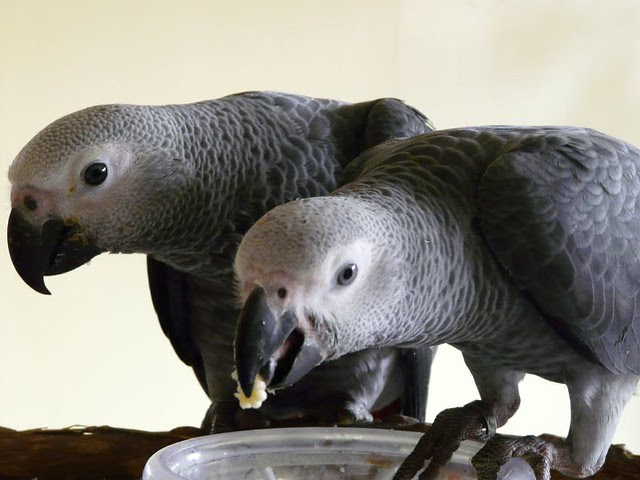
The African Grey (Psittacus erithacus) is widely ranked the most intelligent companion bird, with the talking ability to match.
The larger red-tailed Congo and the smaller maroon-tailed Timneh — equally clever, equally long-lived, different in size and pace.
Greys live up to 60 years in human care, making one a genuine multi-decade, plan-for-life commitment.
A socialized Grey learns hundreds of words and uses them meaningfully — the Alex/Pepperberg research proved real comprehension.
African Greys are CITES Appendix I (since Jan 2017); only documented captive-bred birds are legal to own and transfer in the USA.
Timneh Greys from $1,500 and Congos from $1,700 — captive-bred, hand-raised, never a bait listing.
Medium parrot: 9–11 in for a Timneh, 12–14 in for a Congo, 275–600 g — fully grown by about one year.
Mark & Teri Benjamin hand-raise every Grey in their USDA-licensed Midland, TX home — documented from the first day.
Join the waitlist for our next Congo or Timneh, raised by the breeders who wrote this species guide.
The Species
The African Grey parrot (Psittacus erithacus) is a medium-sized Old World parrot native to the lowland rainforests of West and Central Africa, and it is widely regarded as the most intelligent companion bird in the world.
Taxonomically the African Grey belongs to the order Psittaciformes and the family Psittacidae — the true parrots — and the genus Psittacus.
As the World Parrot Trust species encyclopedia records, the bird ranges across the equatorial forest belt from Côte d'Ivoire and Ghana eastward through the Congo Basin, where it nests in tree cavities and forages on fruit, seeds and palm nuts in large, vocal flocks.
Two forms are recognized — once treated as subspecies and now often as separate species — the larger Congo (P. erithacus) and the smaller Timneh (P. timneh).
Both share the understated silver-grey plumage, the pale bare facial patch and the famously expressive eyes that lighten from dark to pale yellow as the bird matures.
Unlike a macaw or cockatoo, the Grey's appeal is behavioral rather than ornamental: this is a bird that watches, listens, reasons and engages.
That same intelligence is why the species needs protection. Decades of trapping for the pet trade thinned wild flocks so severely that the bird is now listed as Endangered on the IUCN Red List and was uplisted to CITES Appendix I in 2017.
Every Grey we place at C.A.Gs is U.S. captive-bred, hand-raised and fully documented — we never touch a wild bird.
African Grey at a glance
| Common name | African Grey Parrot |
|---|---|
| Scientific name | Psittacus erithacus |
| Family | Psittacidae (true parrots) |
| Order | Psittaciformes |
| Native range | Rainforest belt of West & Central Africa |
| Variants | Congo (P. erithacus), Timneh (P. timneh) |
| Adult size | 9–14 in (28–36 cm), 275–600 g |
| Lifespan | 40–50 yr wild · up to 60 yr in human care |
| Conservation listing | CITES Appendix I · IUCN Endangered (wild) |
The Two Variants
Both of our Greys carry the exact same captive-bred guarantee — CITES Appendix I documentation, a closed band, PCR DNA sexing and an avian-vet health certificate. The difference is size, pace and personality, not paperwork. Here is our Congo and our Timneh side by side, so you can see which one we would help you bring home.
| Feature |  Congo African GreyCongo Grey The classic, dramatic talker Congo African GreyCongo Grey The classic, dramatic talker |  Timneh African GreyTimneh Grey Calmer, earlier to bond Timneh African GreyTimneh Grey Calmer, earlier to bond |
|---|---|---|
| Species | Psittacus erithacus | Psittacus timneh |
| Size | 12–14 in · 400–600 g | 9–11 in · 275–375 g |
| Tail color | Scarlet red | Maroon / dark crimson |
| Lifespan | 40–60 years | 40–60 years |
| Talking ability | ★★★★★ exceptional | ★★★★☆ excellent, earlier |
| Talking onset | ~12 months | ~4–6 months (earlier) |
| Temperament | Confident, dramatic | Calmer, steadier |
| Best for | Experienced owners | First-time owners |
| Price (from C.A.Gs) | $1,700–$2,500 | $1,500–$1,600 |
| Available now | Roys · Amie · Bery · Jins/Jeni | Elad · Evie |
| PCR DNA sexed | Yes | Yes |
| CITES docs | Appendix I, captive-bred | Appendix I, captive-bred |
Congo & Timneh
The Congo African Grey is the larger, classic silver-grey bird with a bright red tail; the Timneh African Grey is smaller and darker with a maroon tail, often calmer and an earlier talker.
The Congo African Grey is what most people picture when they hear "African Grey" — a 400-to-600-gram bird with light silver plumage, a vivid cherry-red tail and a solid black beak.
Congos are confident, sometimes dramatic, and famous for crystal-clear speech; they tend to begin talking around their first birthday and suit owners who want the bolder personality.
The Timneh African Grey is the smaller form at 275–375 grams, with darker charcoal plumage, a deep maroon tail and a horn-colored tip on the upper beak.
Timnehs are every bit as intelligent but generally steadier in temperament, and they frequently start talking earlier — around four to six months — which is part of why we often recommend a hand-raised Timneh to a committed first-time owner.
Neither variant is "better." For a deeper side-by-side, read our full Congo vs Timneh African Grey comparison, and if sex matters for your home, our male vs female African Grey guide covers what DNA sexing does and does not predict.
Whichever you choose, the documentation standard is identical.
The Famous Mind
African Greys are the most accomplished talking birds of any species and can learn hundreds of words and use them in the correct context — not merely mimic them.
The species' cognition is the most thoroughly documented of any parrot, thanks to roughly three decades of research by Dr. Irene Pepperberg with a Congo African Grey named Alex.
As her work at The Alex Foundation demonstrated, Alex could identify colors, shapes and materials, count small quantities, and grasp abstract concepts such as "same," "different" and even a zero-like idea of "none" — abilities researchers compare to those of a young human child.
We see that intelligence every day in our own aviary. Maxy, our talking Congo, greets visitors by name and announces when the kettle boils — a small, true example of what a hand-raised Grey becomes when it is socialized by people from a few weeks old.
That early window is exactly why a captive-bred, hand-raised Grey bonds and talks the way it does, while a wild-caught bird, having missed it in the forest canopy, rarely can.
That brilliance is also a responsibility. A bored or under-stimulated African Grey will turn its problem-solving mind on itself, developing feather-destructive behavior, screaming or anxiety.
Daily mental enrichment — foraging toys, rotating puzzles, training sessions and genuine social interaction — is not optional; it is the core of the bird's wellbeing, which is why we walk every new owner through it.
Our guide to taming and bonding with a Grey is the place to start.
Size & Looks
A Congo African Grey reaches about 12–14 inches and 400–600 grams; a Timneh is smaller at 9–11 inches and 275–375 grams — both medium-sized parrots, fully grown by roughly one year of age.
Both variants share a wingspan of around 18–20 inches and the same general silhouette: a compact, upright body, a short squared tail and a heavy curved beak built for cracking palm nuts.
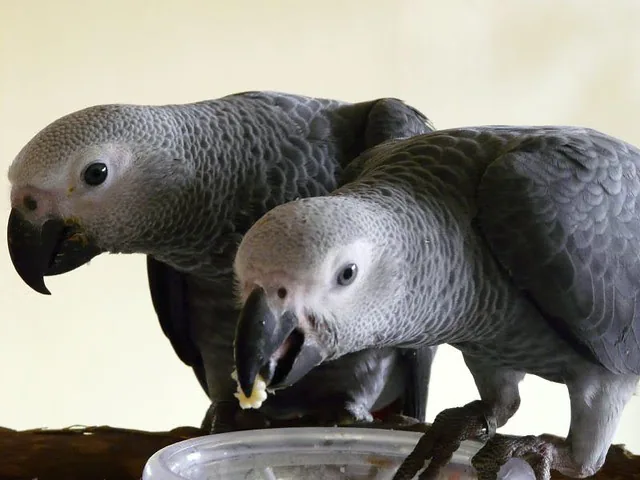
Plumage is the clearest visual difference — the Congo wears light silver-grey feathers scalloped with a fine pale edging, a vivid cherry-red tail and an all-black beak, while the Timneh is a darker charcoal-grey with a deep maroon tail and a bone-colored tip on the upper beak.
The eyes are a useful age cue. A young Grey's iris is dark grey to black; it lightens to pale straw-yellow as the bird matures, so a bright yellow eye signals an adult bird.
Both variants also have a distinctive bare, pale-skinned face that flushes slightly when the bird is excited — one of the small "tells" experienced owners learn to read.
Crucially, males and females look essentially identical.
African Greys are not reliably sexed by appearance, which is why every bird we place is laboratory PCR DNA-sexed with a certificate included — a sexing "guess" by eye is never reliable in this species.
Personality
African Greys are sensitive, deeply social flock animals that bond closely with their family, thrive on routine, and need daily interaction — they reward committed owners and struggle in chaotic or neglectful homes.
A well-raised Grey is affectionate, observant and almost unnervingly perceptive about its people's moods.
It is also famously sensitive: harsh corrections, sudden household upheaval or long stretches of isolation can trigger stress behaviors, so the species responds best to calm, consistent, positive handling.
Congos can be a touch more reserved with strangers and dramatic in their reactions, while Timnehs tend to take change in stride — but both want to be part of the daily life of the home, not parked in a corner.
Because Greys are flock animals, they form a primary bond yet do best when several family members handle them, which prevents the "one-person bird" pattern that can make a Grey nippy with everyone else.
We hand-raise every chick with our whole family — Mark, Teri and our kids, James and Allyson — precisely so a Grey arrives already comfortable with different voices, hands and routines.
This is the honest reason an African Grey is not a casual first pet.
A Grey that gets the attention, structure and enrichment it needs is a gentle, hilarious, lifelong companion; one that does not can become loud, anxious or feather-destructive.
If you are weighing whether the species fits your life, our African Grey pros and cons page lays it out plainly before you commit.
A Lifetime Bird
African Grey parrots live 40–50 years in the wild and up to 60 years in human care with good nutrition, annual avian-vet exams and daily enrichment — making a Grey one of the longest-lived companion parrots.
That longevity reframes the whole decision: bringing home a Grey is a multi-decade commitment, and a young owner may well share their entire adult life with the bird.
Responsible ownership means planning for the realistic possibility that an African Grey outlives the arrangements you make today — many owners name a future caretaker or write the bird into their long-term plans from the start.
Longevity is largely earned through prevention. A calcium-adequate diet (Greys are prone to calcium deficiency), safe UV-B exposure so the body can make vitamin D3, an annual avian-vet wellness exam, and a clean, enriched, low-stress environment all add healthy years.
Screening matters too — every Grey we place is checked for PBFD (Psittacine Beak and Feather Disease) and Polyomavirus by a board-certified avian veterinarian before it leaves us, and arrives psittacosis-aware and health-certified.
For the full picture of what shortens and what extends those decades — common health conditions, signs to watch, and a realistic year-by-year view — read our dedicated African Grey lifespan guide, and see exactly what we stand behind on our written health guarantee page.
It looks like one honest conversation before you buy: who takes the bird if your circumstances change in year 20 or year 40? Families who answer that up front are the ones whose Greys never see a rescue.
Yes — a Grey that already knows its backup person treats a handover as a visit, not an abandonment. Have them share a few feeding sessions a year; that small habit pays off decades later.
Keep the caretaker's name with the bird's CITES and hatch documents.
The packet that proves your Grey is legal is also the cleanest place to record who inherits its care.
Only for a first-time owner who goes in eyes-open. A Grey's intelligence is the whole appeal and the whole challenge — it needs hours of engagement daily, and a bored Grey becomes a screaming, plucking one faster than most beginners expect.
If a buyer's schedule or noise tolerance is thin, we say so and point them to a calmer species — a mismatched Grey helps no one, least of all the bird.
Greys don't just mimic — studies of the species credit them with associating words to context, which is why a well-socialized Grey can seem to use language rather than parrot it. Talking ability still varies bird to bird, so we never promise a specific vocabulary.
The birds that develop the richest vocabularies are simply the ones whose families narrate daily life to them — exposure, not pedigree, does most of the work.
Greys are moderate by parrot standards — far quieter than a macaw or cockatoo — but they are not silent. Expect chatter, contact calls, and a daily noisy window or two, which makes them workable in many homes but rarely ideal for a shared apartment wall.
Persistent screaming usually means an unmet need rather than a "loud bird" — the fix is almost always more routine and engagement, not less attention.
No — a single Grey bonds to its human family and does not need a second bird. Two Greys can actually bond to each other and tune people out, so for most homes one well-engaged Grey is the better choice.
To a hand-raised Grey, its people are the flock — consistent daily interaction matters far more than a feathered companion in the next cage.
Caring for a Grey
Good African Grey care rests on six pillars — diet, housing, enrichment, health, lifespan planning and honest budgeting.
Here is the overview, with a route to the in-depth guide for each. This page is the hub of our care library; follow whichever pillar matters most to you right now.
A dye-free formulated pellet is the foundation (60–70%), rounded out with fresh greens and limited fruit. Greys are prone to calcium deficiency, so calcium-rich foods and UV-B exposure for vitamin D3 are key.
Full diet guide →A cage of at least 24 x 24 x 36 inches with horizontal bars and 3/4–1 inch bar spacing, plus varied natural-wood perches and a quiet spot away from kitchen fumes and drafts.
Complete care guide →Foraging toys, rotating puzzles and short daily training sessions keep that powerful mind busy. A bored Grey is a feather-plucking Grey, so enrichment is care, not a luxury.
How to tame a Grey →An annual avian-vet wellness exam, a calcium-adequate diet and 10–12 hours of dark sleep add healthy years. Every Grey we place is PBFD and Polyomavirus screened before it leaves.
Our health guarantee →At 40–60 years, an African Grey may outlive arrangements you make today, so responsible owners plan for the bird's whole life, including a named future caretaker.
Lifespan guide →Purchase price is only the start: cage, perches, toys, food and vet care add up over decades. We lay out first-year setup and lifetime cost honestly.
Price & cost guide →Want the single, complete walkthrough? Our African Grey parrot care guide pulls housing, diet, health and enrichment into one reference, and the best African Grey food guide names the pellet types we feed and the fresh foods that round out the bowl.
Legal & Documented
A captive-bred African Grey is legal to own and transfer within the United States with proper documentation; African Greys are CITES Appendix I, which bans trade in wild-caught birds, not responsible captive-bred ownership.
African Greys were uplisted from CITES Appendix II to Appendix I at CoP17, effective 2 January 2017 — the strictest tier, which ended all legal commercial trade in wild-caught birds.
The practical takeaway for a buyer is simple: a wild-caught Grey cannot be lawfully sold, so a legitimate breeder will always be able to prove a bird is captive-bred.
If a seller cannot produce paperwork, our scam-avoidance guide treats that as the most serious red flag there is.
Every African Grey placed by C.A.Gs ships with a complete documentation packet, in your hands before any deposit:
We hold a verifiable USDA Animal Welfare Act license you can check before paying anything, and the same packet underpins our promise on the trusted breeders page.
For the deep dive on what each document proves, and the difference between a domestic sale and an international export, read our full CITES African Grey documentation guide.
This Week's Aviary
Every Congo and Timneh below is a real bird we are hand-raising right now — captive-bred, PCR DNA-sexed, avian-vet checked, CITES Appendix I documented and fully weaned. No bait listings.
 Baby Boy Midland, TX
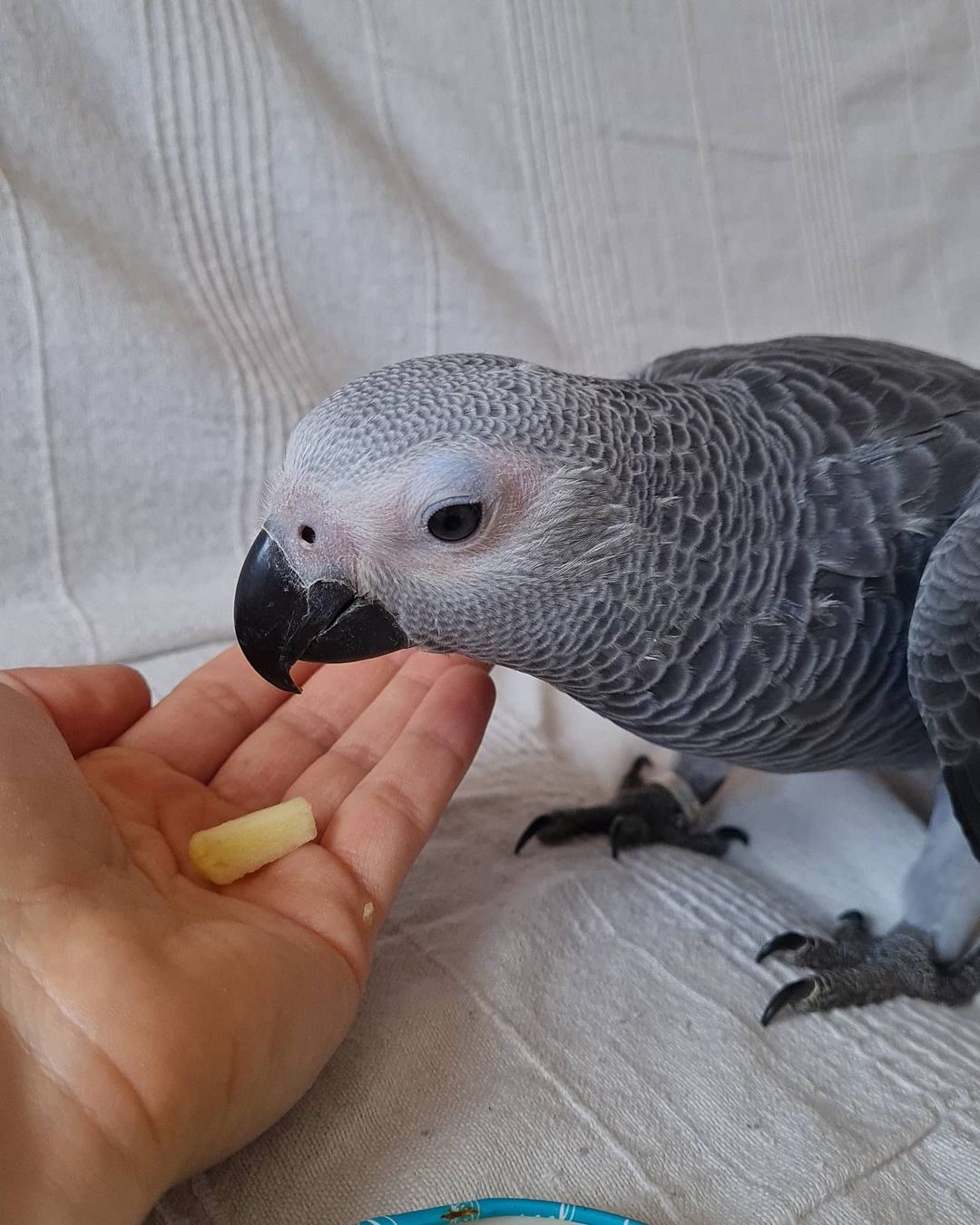
Male · 4 mo · Congo African Grey
"Hand-raised in our home from day one."
Hand-raised male Congo, 4 months old — captive-bred, PCR DNA-sexed, vet-checked, and CITES Appendix I documented before he ever ships.
Ships nationwide · $185 airport · $350 home
 New Arrival Midland, TX
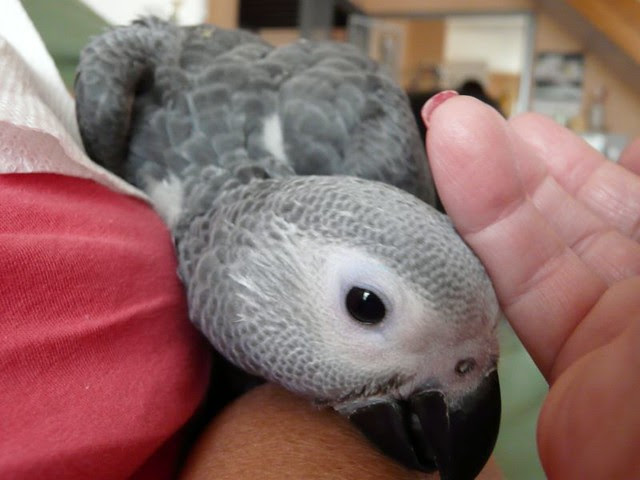
Female · 3 mo · Congo African Grey
"Socialized by our whole family."
Premium hand-raised female Congo, 3 months old. Closed-banded, hatch-certified, CITES Appendix I documented.
Ships nationwide · $185 airport · $350 home
 Best Value Midland, TX
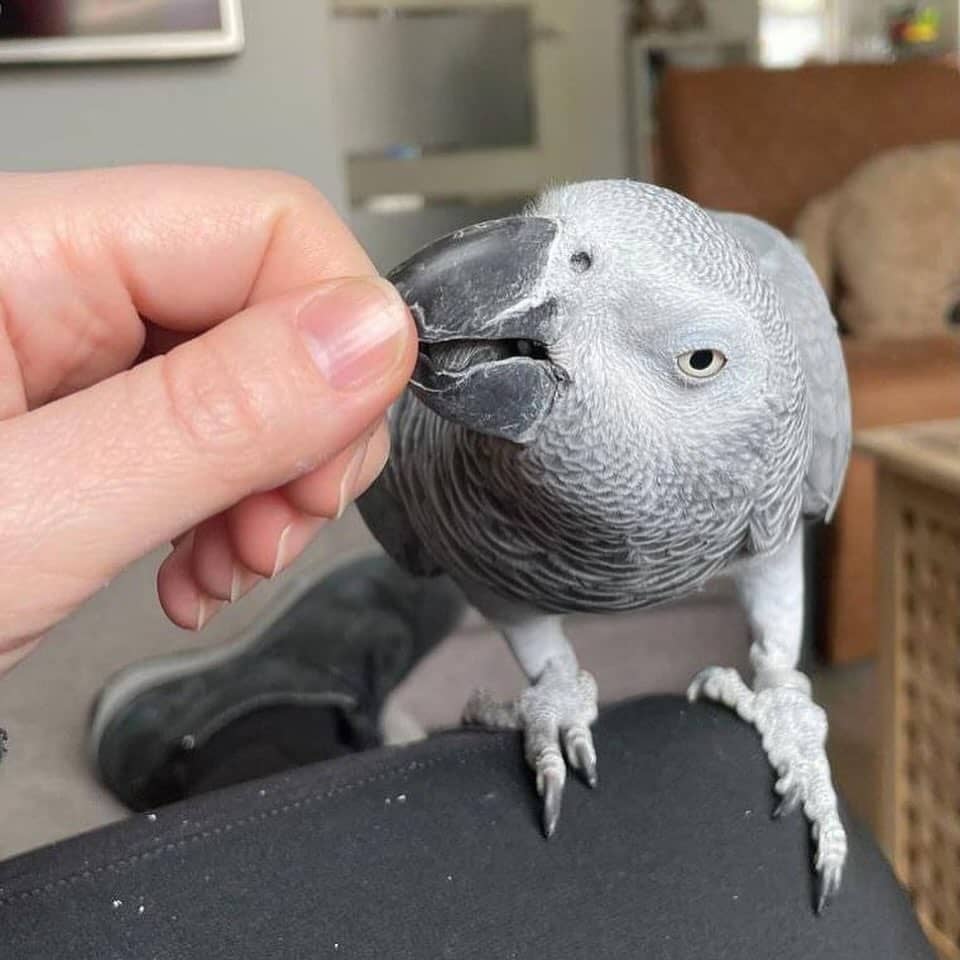
Female · 1 yr · Congo African Grey
"Gentle, settled, paperwork in hand."
Soft temperament, easy to handle. 1-year-old captive-bred female Congo with full health and CITES documentation.
Ships nationwide · $185 airport · $350 home
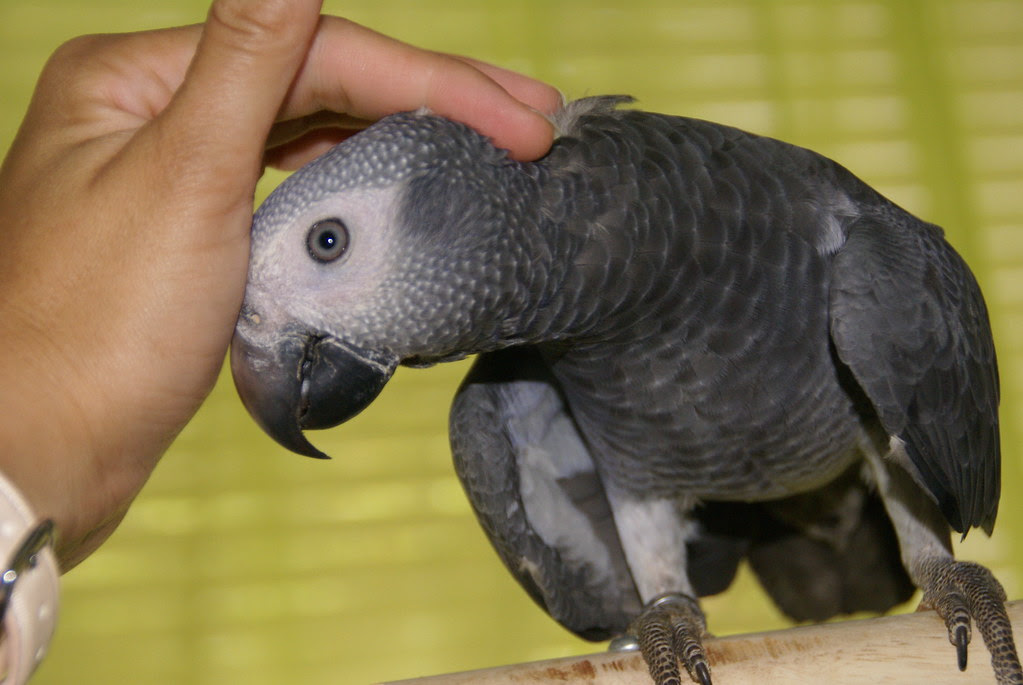 Timneh Midland, TX
Male · 5 mo · Timneh African Grey
"Smaller bird, same documentation standard."
Hand-raised male Timneh, 5 months old. PCR DNA-sexed, avian-vet certified, captive-bred and never wild-caught.
Ships nationwide · $185 airport · $350 home
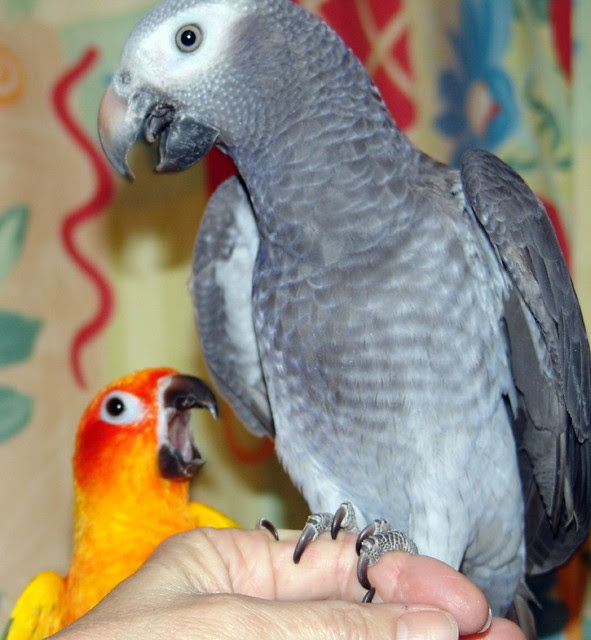 Timneh Midland, TX
Female · 6 mo · Timneh African Grey
"Calm, clever, ready to come home."
Hand-raised female Timneh, 6 months old. Closed band, hatch certificate, and CITES Appendix I paperwork included.
Ships nationwide · $185 airport · $350 home
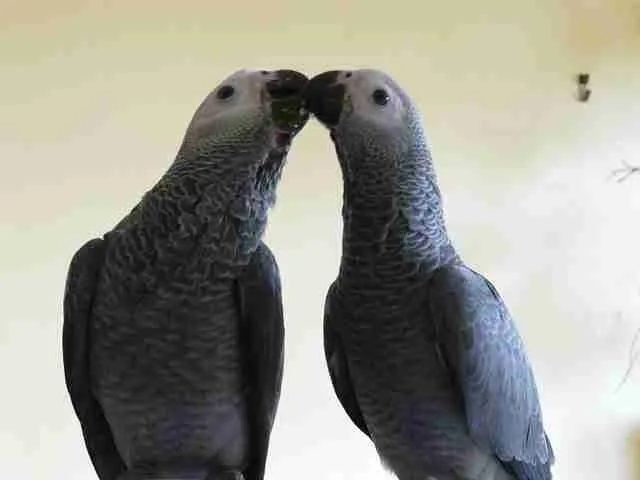 Must-Go Pair Midland, TX
Pair · 4–6 mo · Congo African Grey
"Two bonded birds, one documented package."
Unrelated captive-bred pair, offered together. Jins (male, 6mo) + Jeni (female, 4mo). Both hand-raised and fully documented.
Ships nationwide · $185 airport · $350 home
For the Aviculturist
A species guide would be incomplete without the breeding side. Beyond our hand-fed companions, here at C.A.Gs we also place fertile grey parrot eggs for incubation and bonded African Grey pairs for aviculture — for keepers ready to raise their own clutch or run a small, ethical breeding program. Both carry the same CITES Appendix I documentation described above.
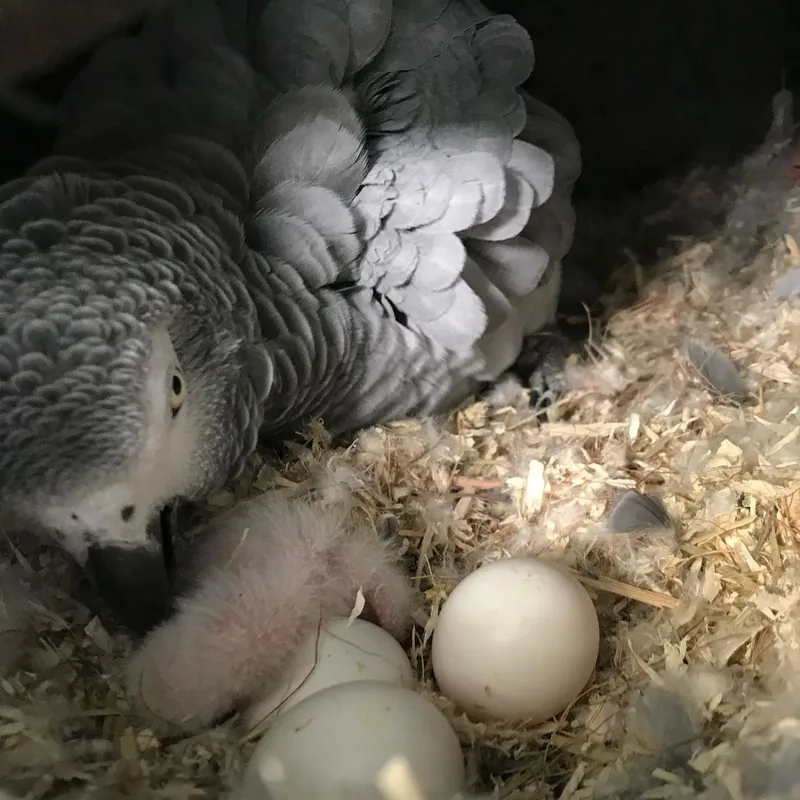
Candled, fertility-checked Congo & Timneh eggs ready for your incubator — $95 each, free US shipping on five or more.
View eggs for incubation →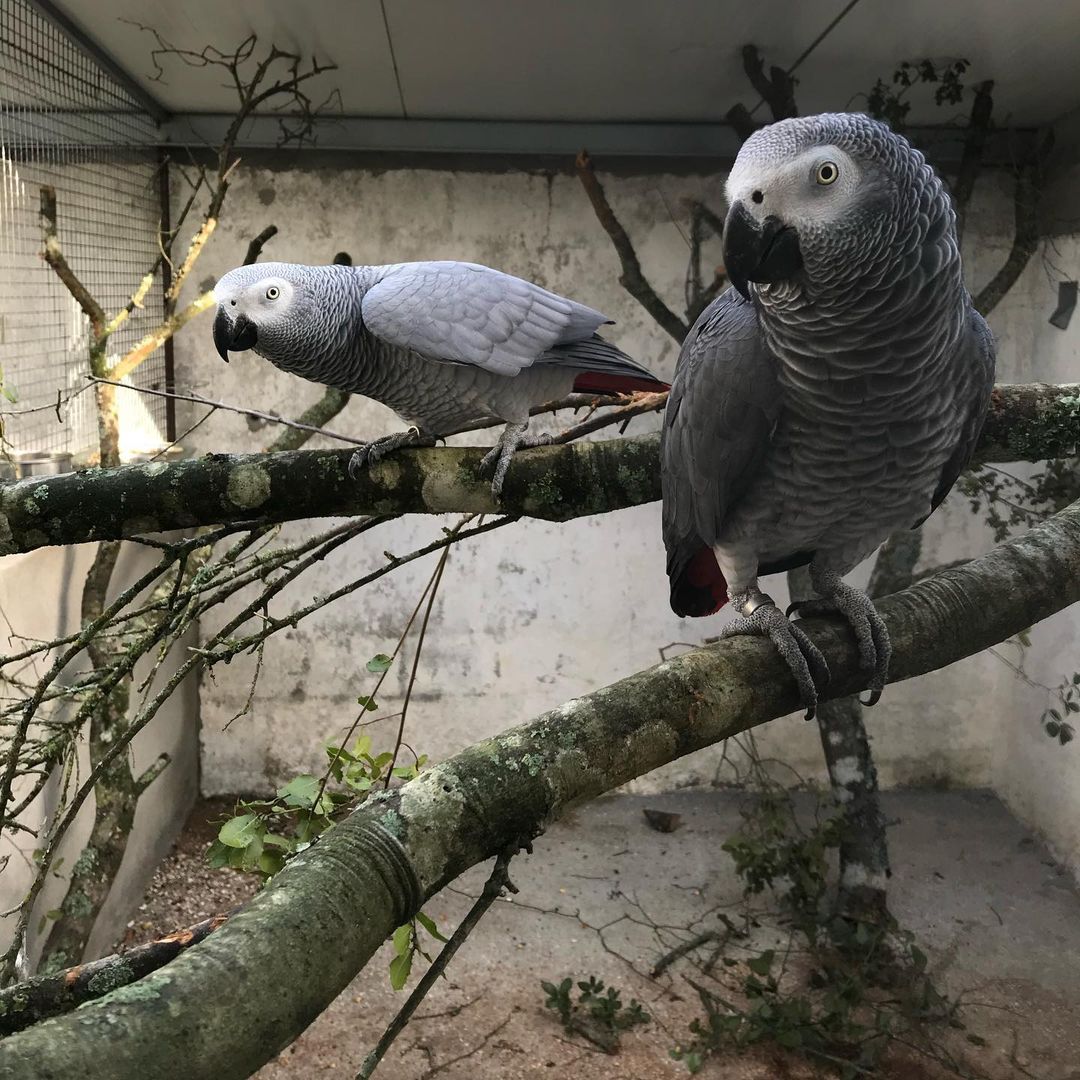
Closed-banded, aviary-proven African Grey pairs for breeders — from $3,000, CITES-documented like every Grey we raise.
View breeding pairs →Planning a clutch or a breeding setup? Ask C.A.Gs below about pair compatibility and incubation guidance.
 From the aviary floor
Our clutches are small and spoken for quickly. Reserve a documented, hand-fed Congo or Timneh ahead of the public listing.
African Grey · Questions
An African Grey parrot (Psittacus erithacus) is a medium-sized parrot native to the rainforests of West and Central Africa, widely regarded as the most intelligent companion bird in the world. There are two recognized variants — the larger, red-tailed Congo and the smaller, maroon-tailed Timneh — and both are CITES Appendix I species, so a Grey sold in the USA must be captive-bred and documented. Here at C.A.Gs we hand-raise both Congos and Timnehs in our Midland, Texas home, and every bird ships with full CITES, hatch, DNA and avian-vet paperwork.
The Congo African Grey is the larger variant — roughly 12–14 inches and 400–600 grams — with light silver-grey plumage, a bright cherry-red tail and an all-black beak. The Timneh African Grey is smaller at 9–11 inches and 275–375 grams, with darker charcoal plumage, a maroon tail and a horn-colored upper beak. Both are equally intelligent and equally long-lived; Timnehs tend to talk earlier and stay a touch calmer. We place both here at C.A.Gs — Congos from $1,700 and Timnehs from $1,500 — under the exact same captive-bred documentation standard.
Yes — African Greys are the most accomplished talking birds of any species. A well-socialized Grey can learn hundreds of words and short phrases and use them in the correct context rather than simply mimicking. The species' cognition is documented through Dr. Irene Pepperberg's three decades of work with a Congo Grey named Alex, who could identify colors, shapes and materials, count small quantities, and grasp concepts such as 'same' and 'different.' Our own talking Congo, Maxy, greets visitors by name — proof of what a hand-raised Grey becomes when it is socialized from a chick.
African Grey parrots live 40–50 years in the wild and up to 60 years in human care with proper nutrition, annual avian-vet wellness exams and daily enrichment. That makes a Grey one of the longest-lived companion parrots and a genuine multi-decade commitment — many owners name a future caretaker for the bird. Read our dedicated African Grey lifespan guide for the full picture of what shortens and what extends those years.
A Congo African Grey grows to about 12–14 inches (33–36 cm) from head to tail and weighs 400–600 grams. A Timneh African Grey is smaller, reaching 9–11 inches and 275–375 grams. Both reach full adult size by roughly one year of age and have a wingspan of around 18–20 inches. Males and females look nearly identical, which is why every Grey we place is PCR DNA-sexed with a certificate included.
A healthy African Grey diet is built on a formulated, dye-free pellet making up roughly 60–70% of daily intake, supplemented with fresh vegetables, leafy greens and a smaller portion of fruit. African Greys are especially prone to calcium deficiency, so calcium-rich greens and safe access to UV-B light (which lets the body make vitamin D3) matter. Avocado, chocolate, caffeine, alcohol and salty or sugary human foods are toxic and must never be fed. See our African Grey diet guide and best-food guide for full feeding plans.
Yes — a captive-bred African Grey is legal to own and transfer domestically within the United States with proper documentation. African Greys were uplisted to CITES Appendix I at CoP17, effective January 2017, which bans commercial trade in wild-caught birds; captive-bred birds are unaffected. Every Grey from C.A.Gs is U.S. captive-bred and ships with a CITES Appendix I captive-bred certificate, hatch certificate, closed band, PCR DNA sexing certificate and a board-certified avian-vet health certificate. See our CITES documentation page for the full breakdown.
Here at C.A.Gs a captive-bred Congo African Grey ranges from $1,700 to $2,500 depending on age, and a Timneh ranges from $1,500 to $1,600; a bonded pair is $3,500. Shipping is $185 to your nearest major airport or $350 for home delivery, IATA-compliant via Delta, United or American. First-year setup — cage, perches, toys and an initial vet visit — typically adds several hundred dollars. Our African Grey price guide has the complete cost breakdown.
African Greys are sensitive, highly intelligent birds that need daily interaction, mental enrichment and a consistent routine, so they reward committed owners more than casual first-time keepers. That said, a beginner ready for the commitment often does very well starting with a calm, fully weaned, hand-raised Timneh from a documented breeder. We talk through your home and experience before placing any bird, so the match is right for both you and the Grey.
An African Grey needs a cage at least 24 x 24 x 36 inches with horizontal bars, several hours of supervised out-of-cage time, and 2–4 hours of daily social interaction and enrichment. They are flock animals that bond closely with their family and can develop feather-destructive behavior or stress if isolated for long stretches. A predictable 10–12 hour dark sleep schedule and a quiet location away from kitchen fumes keep a Grey calm and confident.
Our 25-question African Grey FAQ goes deeper on anything this guide left you wondering — pricing, paperwork, talking timelines and more.
Still researching? Compare our Congo and Timneh Greys, read the full care guide, or see the CITES documentation that travels with every bird we place.
Start Your Grey Journey
Every African Grey from C.A.Gs is hatched and hand-raised in our Midland, Texas home, PCR DNA-sexed, avian-vet certified, and placed with a complete CITES Appendix I documentation packet — never wild-caught, paperwork in your hands before any deposit, and shipped nationwide ($185 airport / $350 home).
Tell us about your home and whether a Congo or Timneh fits in the form below, and Mark or Teri will reply within 24 hours.
We review every application. Expect a response within 24 hours.