Everything you need to know about feeding, housing, enrichment, and veterinary care for a captive-bred African Grey — written by USDA-licensed breeders with over a decade of hands-on experience.
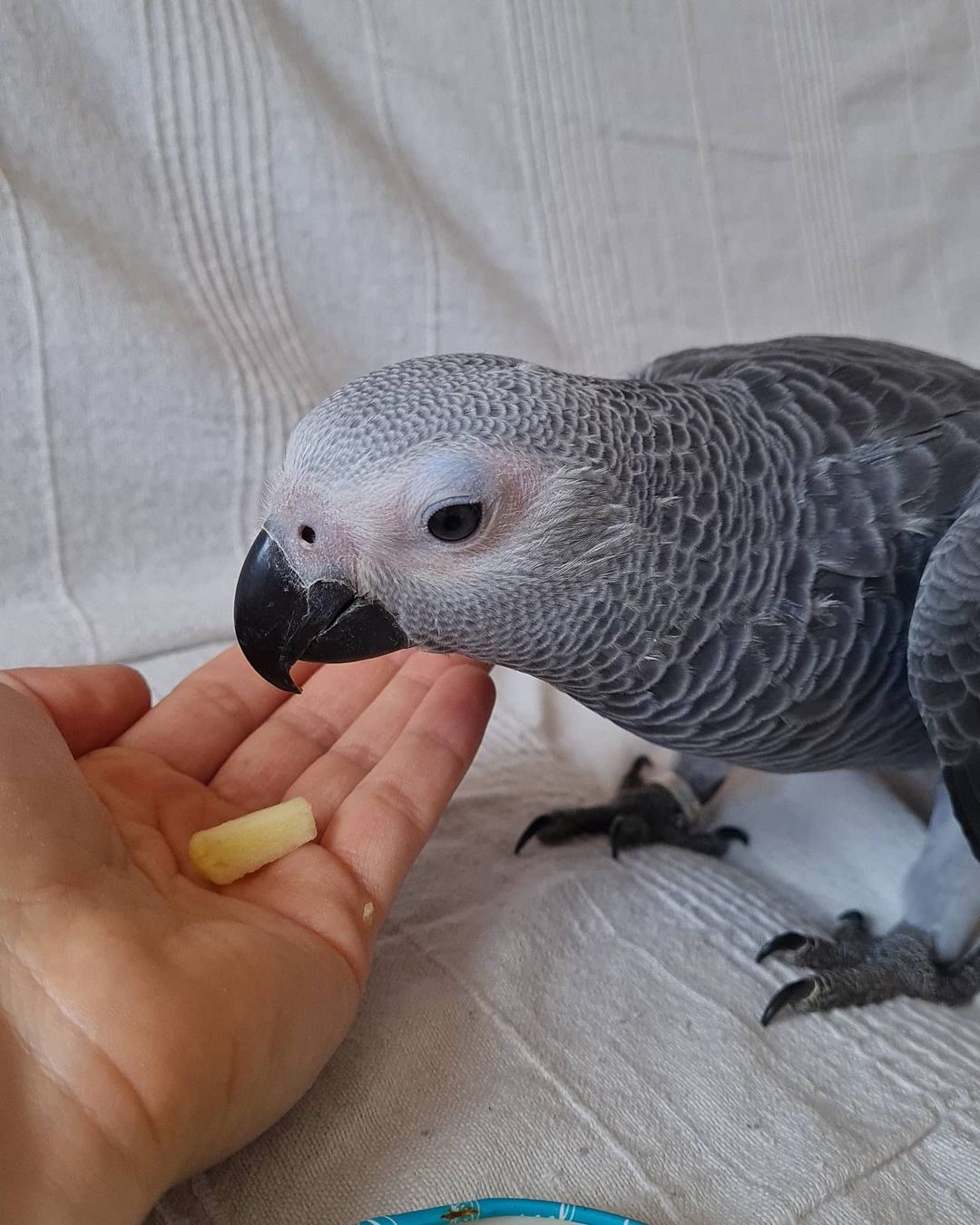
See Available BirdsAfrican Grey parrots thrive on a diet built around 70% high-quality pellets, 20% fresh vegetables, and 10% fruit. Harrison's Adult Lifetime Fine and Zupreem Natural are the two gold-standard pellet brands recommended by avian veterinarians. Pellets provide a nutritionally complete base that seed-heavy diets simply cannot match.
The vegetable portion should emphasize dark leafy greens (kale, Swiss chard, collard greens), orange-pigmented vegetables (sweet potato, carrots, butternut squash), and bell peppers. These foods are rich in beta-carotene, which African Greys convert to vitamin A — the nutrient most commonly deficient in improperly fed birds. Vitamin A deficiency causes chronic upper respiratory infections, blunted choanal papillae, and significantly shortened lifespan.
The following foods are toxic and must never be fed: avocado (all parts including skin, flesh, and pit), onion, garlic, chocolate, caffeine, alcohol, xylitol, and all fruit pits (cherry, apple, peach, and plum pits contain cyanogenic compounds). PTFE fumes from overheated non-stick cookware are airborne and can kill a bird within minutes — never cook with Teflon-coated pans near your parrot.
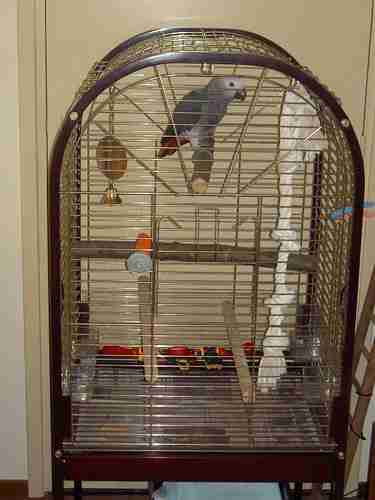
The minimum cage size for a single Congo African Grey is 36" W × 24" D × 48" H with bar spacing of ¾" to 1". Smaller bar spacing risks toe entrapment; wider spacing risks head entrapment. A Timneh can be housed in a slightly smaller cage, but larger is always preferable for a species that is active and foraging for up to 12 hours daily in the wild.
Stainless steel cages are the safest and most durable option. Avoid cages with zinc-coated bars (common in lower-priced models) and any cage with visible paint, which may contain lead. Both zinc and lead cause heavy metal toxicosis — a veterinary emergency that can be fatal.
Cage placement matters. Position the cage against a wall (never in the center of a room), at roughly human eye level, away from windows with direct afternoon sun, and far from the kitchen. Kitchen proximity exposes birds to PTFE fumes from non-stick cookware, cooking spray aerosolization, and carbon monoxide from gas stoves. The bedroom is acceptable; high-traffic family living areas where the bird can observe household activity tend to produce more socialized birds.
African Greys have the cognitive ability of a 5-year-old human child. A bird left in a bare cage with nothing to do will develop destructive behaviors — feather plucking, screaming, and aggression — within months. Mental stimulation is not optional; it is essential healthcare.
Provide 5–7 rotating foraging toys that change on a weekly cycle so the bird never habituates to them. Offer at least three types of perches: natural wood perches of varying diameter (manzanita, java, or eucalyptus), a rope perch for foot conditioning, and a flat platform perch for resting. Out-of-cage time of 3–4 hours daily in a safe, bird-proofed room is non-negotiable.
Speech training typically begins between 12 and 18 months, though some birds attempt words sooner. Training sessions of 10–15 minutes, three to four times daily, using positive reinforcement (target sticks, preferred food rewards) produce the best results. Never punish a bird for failing to perform — fear-based training permanently damages trust.
African Greys are prey animals. They instinctively mask illness until it becomes critical — by the time you notice visible symptoms, the bird may already be seriously compromised. This makes proactive annual wellness exams with an avian-certified veterinarian essential, not optional.
Annual exams should include a complete blood count (CBC) to detect anemia, infection, or organ dysfunction; a gram stain to screen for bacterial or yeast overgrowth; and a weight check. Weight loss of even 10–15 grams (2–4% of body weight) can indicate disease in a bird that otherwise appears normal. Keep a weekly weight log using a kitchen gram scale.
African Greys are uniquely prone to hypocalcemia (low blood calcium). Symptoms include muscle tremors, seizure-like episodes, and falling off the perch. Provide cuttlebone free-choice as a calcium source, feed dark leafy greens regularly, and consider a full-spectrum UVB light on a 10–12 hour daily cycle to support vitamin D3 synthesis. If you see any neurological signs, treat this as an emergency.
Every African Grey parrot — Congo and Timneh — is listed under CITES Appendix II, which regulates international trade to protect wild populations. This does not prevent ownership of captive-bred birds within the United States, but it does mean that proper documentation is both legally required and ethically important.
When purchasing any African Grey, demand the following documentation from your breeder:
Any seller who cannot provide these documents is either selling a wild-caught bird or operating outside legal requirements. Wild-caught African Greys have a very high post-import mortality rate and should never be purchased. See our detailed guide at /cites-african-grey-documentation/.
African Greys thrive on 70% high-quality pellets (Harrison's or Zupreem Natural), 20% fresh vegetables (leafy greens, bell peppers, carrots), and 10% fruit. Avoid avocado, onion, chocolate, and caffeine — all are toxic. Seed-only diets cause vitamin A deficiency and early death.
Minimum cage size is 36" W × 24" D × 48" H for a single bird. Bar spacing must be ¾" to 1" to prevent head entrapment. Stainless steel cages are safest — avoid zinc-coated or lead-painted bars. Bigger is always better for a species that spends 12 hours a day active.
African Greys require 3–4 hours of direct interaction and supervised out-of-cage time daily. They are highly social and develop feather-destructive behaviors from chronic loneliness. A second bird does NOT replace human interaction — both birds still need individual time.
African Greys are not ideal as a first parrot. They are sensitive to change, can develop phobias, and have complex emotional needs. First-time owners who research thoroughly and commit to 40–60 years of care can succeed — but a Timneh African Grey's calmer temperament makes it a better starting point than a Congo.
Properly cared-for African Grey parrots commonly live 40 to 60 years. Some documented individuals reach 70+. This is a multi-decade, lifetime commitment. Plan for guardianship arrangements in your estate documents.
Every bird from CongoAfricanGreys.com is fully weaned, hand-raised, CITES-documented, DNA sexed, and vet-certified. Reach out to start the conversation.
$200 deposit reserves your bird · 3-day health guarantee · IATA-compliant shipping nationwide
Don't miss your chance to add a loving, healthy, and playful African Grey parrot to your family.
Inquire Now →