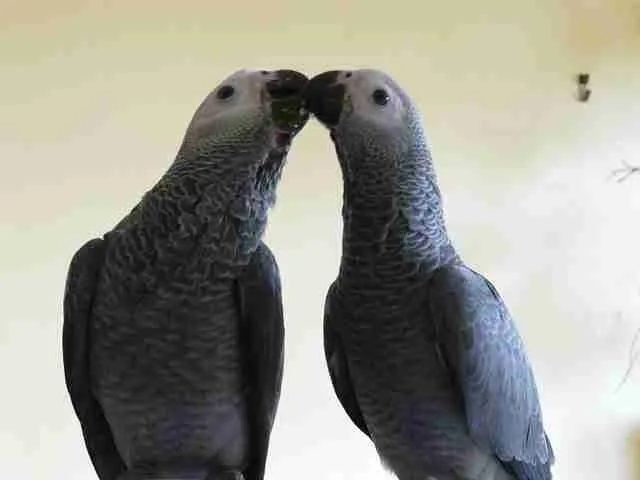
The condition is well documented in avian medicine; the veterinary literature on African Grey hypocalcemia and its seizure syndrome describes birds that crash with muscle tremors, weakness, falling off the perch, and seizure-like episodes.
A Grey can have plenty of calcium in its bowl and still collapse if it cannot make D3 to use that calcium — and indoors, behind window glass, it usually cannot.
How We Cover Calcium & D3 for Every C.A.Gs Grey
- ✔Offer a cuttlebone or calcium block free-choice — most Greys self-regulate and chew it when their body needs calcium.
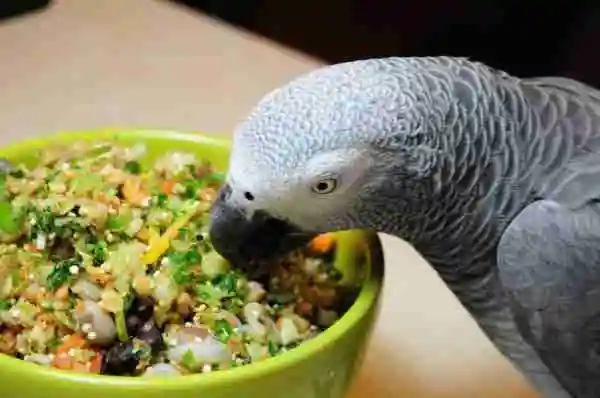
- ✔Feed calcium-rich greens daily (kale, collard, dandelion, bok choy, broccoli) — diet is the safest calcium source.
- ✔Provide full-spectrum UV-B light on a 10–12 hour cycle so a Grey can synthesise vitamin D3 in its skin and actually absorb that calcium.
- ✔Ask your avian vet before adding oral D3 or calcium supplements — too much vitamin D3 is toxic, so test first, supplement second.
What Are the Warning Signs of Low Calcium in a Grey?
Muscle tremors, weakness, clumsiness, falling off the perch, or any seizure-like episode are a veterinary emergency in an African Grey — hypocalcemic crises are treatable when caught fast, and delayed care is the main reason they turn fatal.
Have your vet check blood calcium at the annual wellness exam so a problem shows up on paper before it shows up on the cage floor.
Do Egg-Laying Females Need Extra Calcium?
Yes — a hen pulls heavily on her own calcium reserves to form eggshells, so a female that starts laying (even without a mate) has a sharply higher calcium demand and is at real risk of egg-binding and a hypocalcemic crash if her diet falls short.
Keep calcium and UV-B dialled in, and loop in your avian vet promptly, since chronic laying is itself a problem worth addressing.
Keep a Calcium Baseline on File
Asking for a baseline blood-calcium value at your Grey's first wellness exam gives your vet a number to compare against later — far more useful than a one-off reading taken only once a bird is already symptomatic.
How Much Fresh Food Should a Grey Get Each Day?
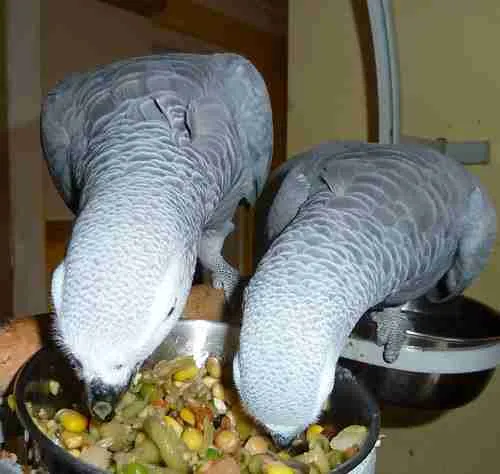
Aim for fresh vegetables and a little fruit to make up roughly 20–30% of the daily intake, with formulated pellets covering the rest — enough fresh food to deliver vitamin A and variety, not so much that your Grey grazes the pellets aside.
Measure by the Bird, Not the Bowl
A heaping bowl tells you nothing — what matters is what actually goes down. Watching how much your Grey eats versus scatters is the only reliable read on whether the portions are right.
Can You Feed an African Grey Once a Day?
Pellets can stay available all day, but fresh food is best split into a morning and an early-evening offering — it mirrors a Grey's natural foraging rhythm and keeps perishable veg from sitting out and spoiling in the cage.
Pull Fresh Food Before It Spoils
Remove uneaten fresh food within a few hours, especially in warm weather — spoiled produce is a common, avoidable cause of crop and gut trouble in pet Greys.
Is It Safe to Change a Grey's Diet Suddenly?
No — Greys are neophobic about food and a sudden switch can make a bird refuse to eat entirely. Convert to a new pellet or fresh item gradually over one to two weeks, mixing old and new while you watch the bird's weight hold steady.
How We Hand Over a Grey's Diet
Each C.A.Gs Grey goes home already eating its pellet base, and we send a starter supply so the bird's food never changes on moving day — you only adjust once it has settled in.
Do You Still Need Supplements on a Pellet Diet?
Usually not — formulated pellets are already fortified, and stacking a vitamin supplement on top can push fat-soluble vitamins like A and D into harmful territory. Add a supplement only if your avian vet specifically advises it.
When We Do Suggest One
The exception is a bird transitioning off a seed-only history or a laying hen — there we work with the owner's vet on a short, targeted calcium or vitamin-A plan rather than a permanent daily additive.
This is exactly why, here at C.A.Gs, we raise our Greys with UV-B lighting and vitamin D3 support from the start and wean them onto a calcium-rich fresh diet — the routine that prevents hypocalcemia is already second nature by the time a bird goes home, and we walk every buyer through keeping it going.