
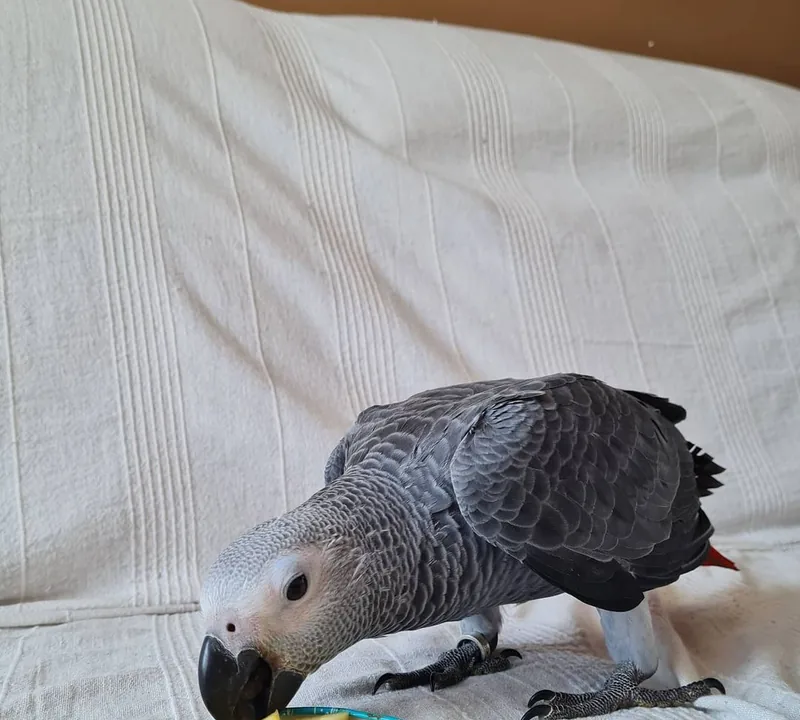
 Congo Grey
Roys
$2,300Curious, confident Congo cock — thrives in a busy, interactive home where there's always something on.
CITESDNA-sexedHand-raised
Reserve Roys → Est. 2014 · Midland, TX · USDA-licensed family aviary
Here at C.A.Gs, every Congo and Timneh African Grey is hand-fed, weaned and socialized in our own home — not pulled early, not warehouse-raised. What you meet is a grey that already trusts people, steps up without a fight, and settles into family life from day one.
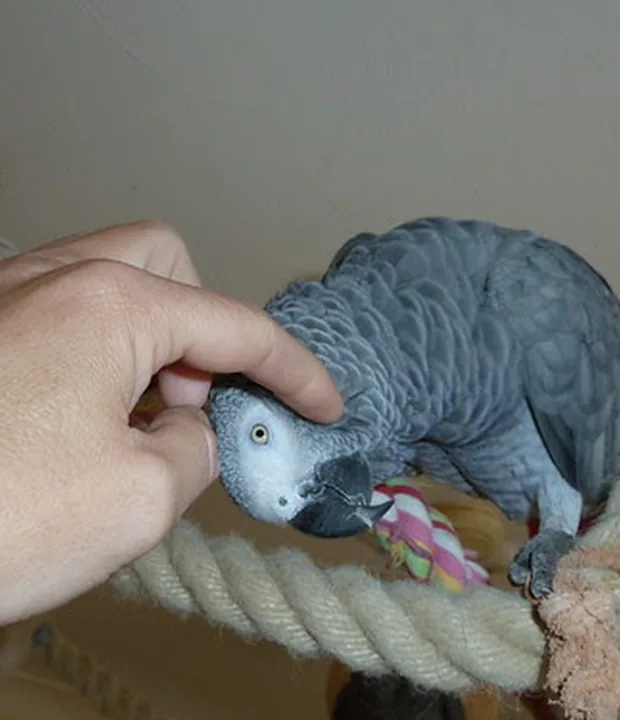
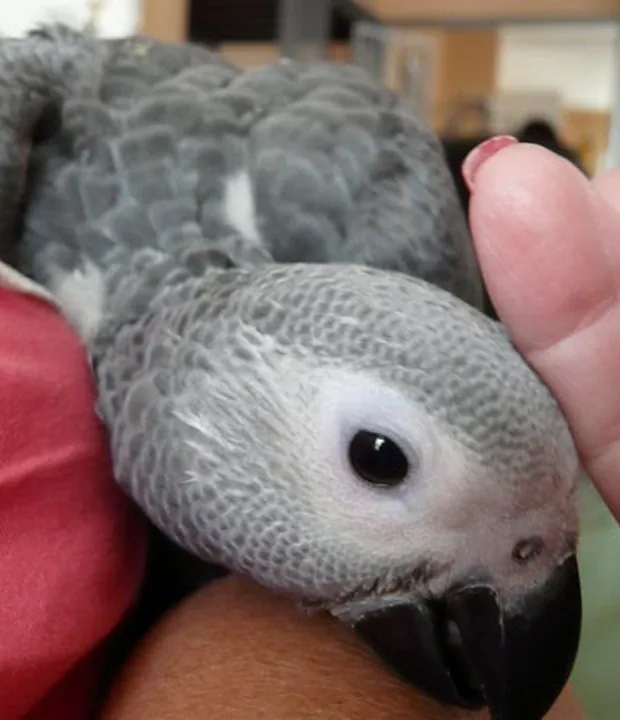
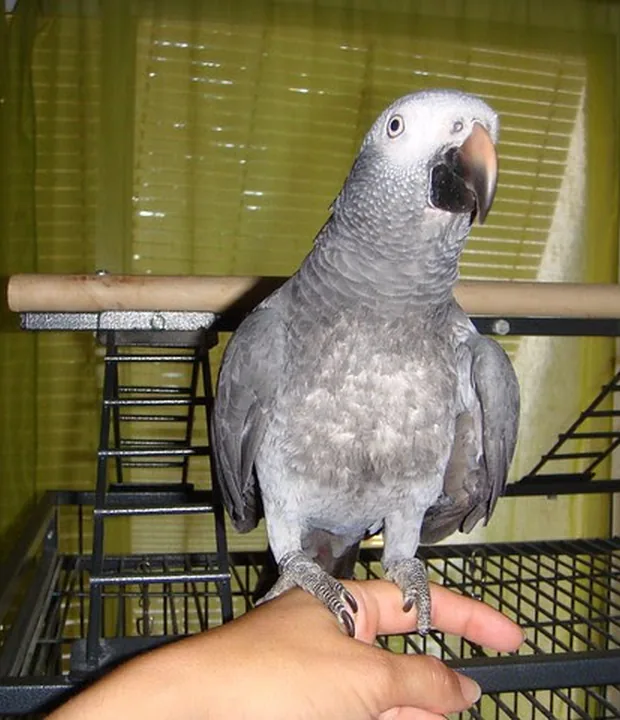
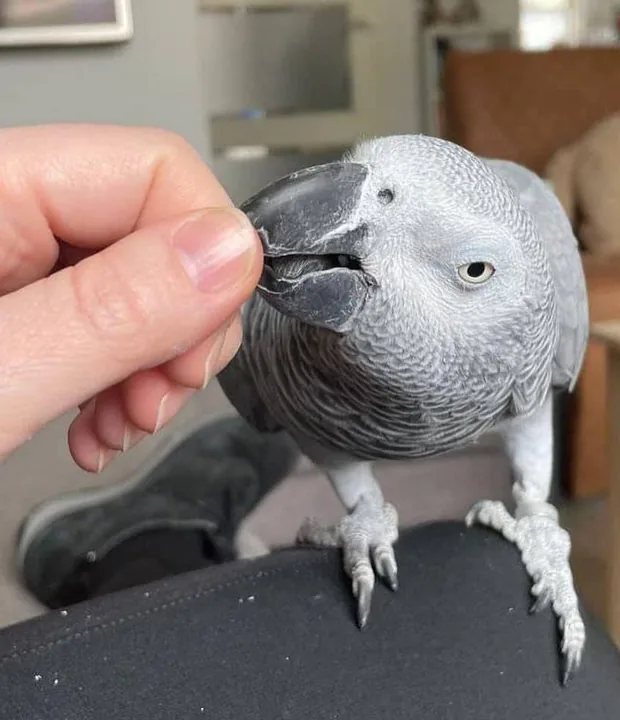

"Hand-raised" is the single most abused phrase in this market, so let us define it the way we practice it: a hand-raised African Grey is a chick we fed, held, played with and talked to every single day, then weaned on its own timeline and introduced to normal household life before it ever met you. That daily investment is the whole difference between a bird that greets a stranger and one that lunges at a hand.
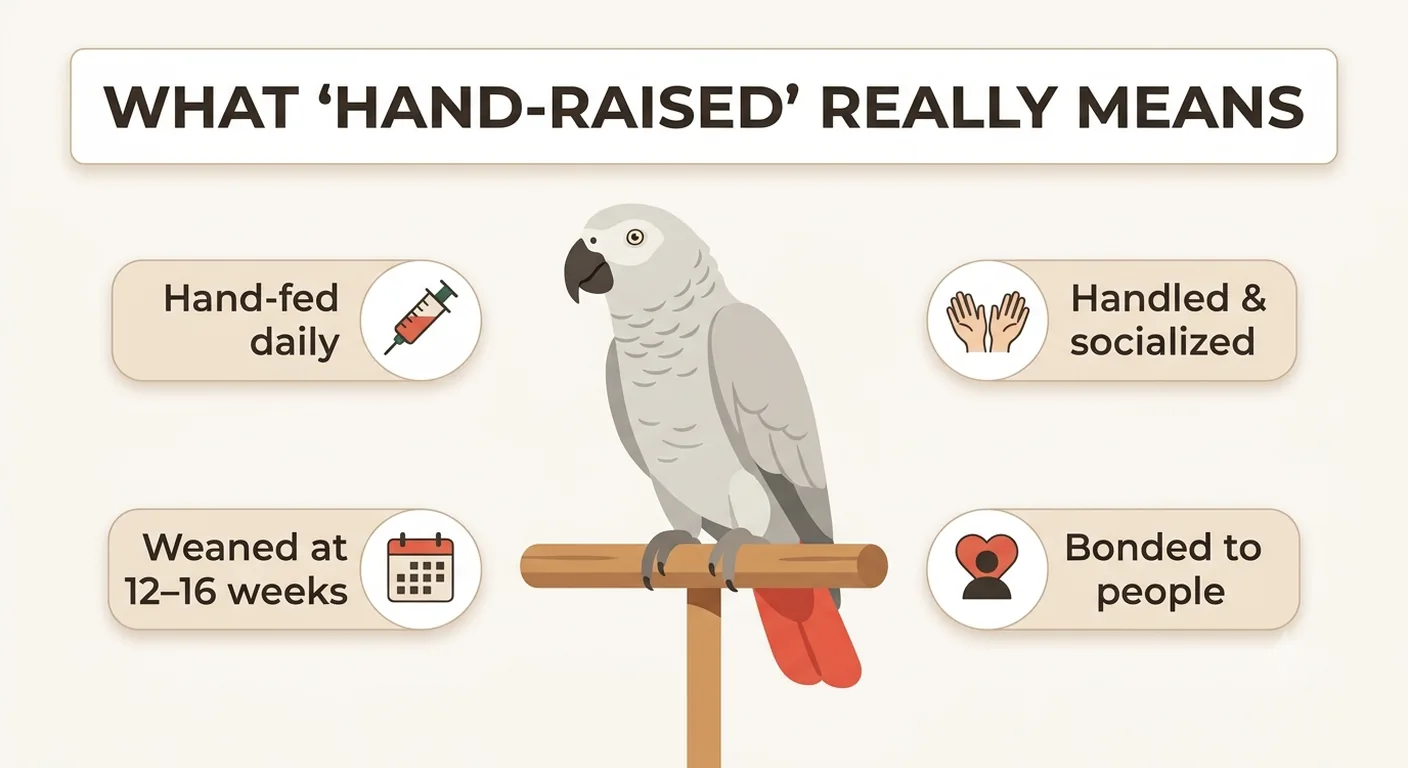
Read a dozen listings and you'll see the three terms used as if they mean the same thing. They don't. Because the labels carry different amounts of work, the temperament you take home varies wildly between them — and a seller who blurs them is usually hiding how little handling actually happened.
Hand-fed only promises that a human held the feeding syringe; it says nothing about whether that chick was ever socialized. Hand-raised — our standard — bundles the feeding together with hours of daily handling, exposure to household sound and movement, and a patient weaning process.
We've met plenty of "hand-fed" greys that flinch at a towel and bite when they're nervous, because volume feeding in a back room produces a fed chick, not a confident companion. Confidence is built in the minutes between feedings — and those minutes are exactly what a rushed operation skips.
We keep a simple per-chick log from hatch — who handled it, for how long, what new thing it met that day — and we're glad to walk you through it on a video call. It isn't marketing; it's how Teri makes sure no chick gets quietly under-socialized in a busy clutch.
A grey raised this way tends to step up on request, tolerate normal household chaos, and treat new people as interesting rather than threatening. It is not a robot and it will still have opinions — but the baseline it starts from is trust, which is the hardest thing to add later.
There are three honest ways a grey reaches you — hand-fed, hand-raised, or parent-raised — and each produces a different starting temperament. Because most buyers want a bird that bonds quickly, a properly hand-raised grey is usually the right answer, but we'd rather you choose it knowing the trade-offs than because a listing shouted "tame".
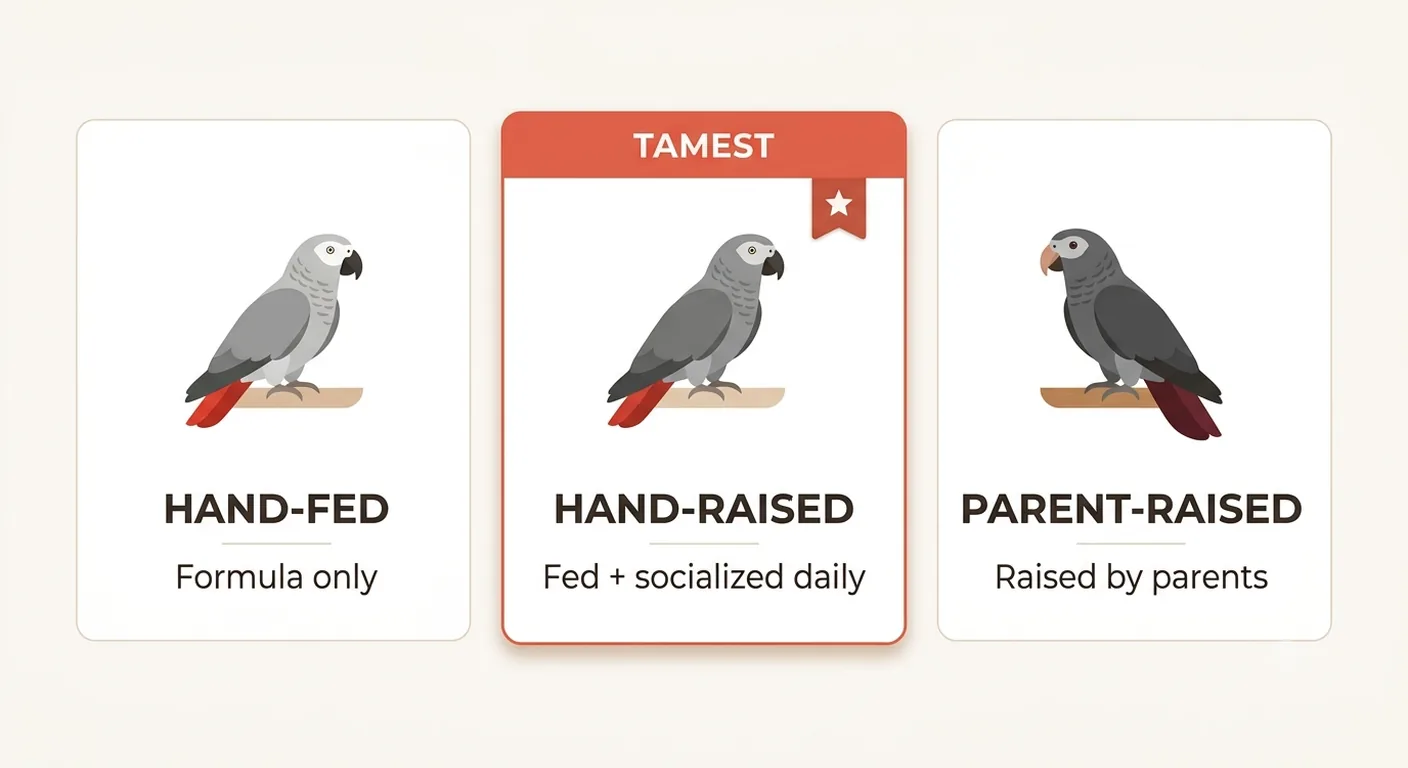
| Rearing path | What it means | Starting tameness | Best for |
|---|---|---|---|
| Hand-fed only | Fed by hand, little else | Variable | Owners who'll do the socializing |
| Hand-raised Top pick | Fed, handled & socialized daily | High, people-bonded | Most families & first-grey homes |
| Parent-raised | Raised by the parent birds | Shy at first | Patient, experienced keepers |
Sometimes, yes. A parent-raised grey often grows up more independent and can be wonderfully well-adjusted in the right hands, which is why we won't dismiss it.
If you've kept parrots before, enjoy earning trust slowly, and don't need a bird that cuddles in week one, a parent-raised grey can be a deeply rewarding project. For a first-time owner hoping to bond fast, though, it's a harder road than a hand-raised chick.
The Association of Avian Veterinarians' guidance on companion-parrot socialization ↗ lines up with what we see in the nursery — the earliest months set a grey's temperament, which is exactly why we pour ourselves into them.
We leave chicks with their parents through the earliest days, then bring them into the nursery for hand-raising once they're strong. That order gives us the best of both: the security of parent care first, and the human bond that makes a grey a companion.
Every bird below is a grey we hand-raised ourselves, listed live from our clutch record — 6 available today across both subspecies, plus one bonded pair. Because they're all raised the same way, the choice really comes down to size, tail color and temperament, so filter by the grey that fits your home.
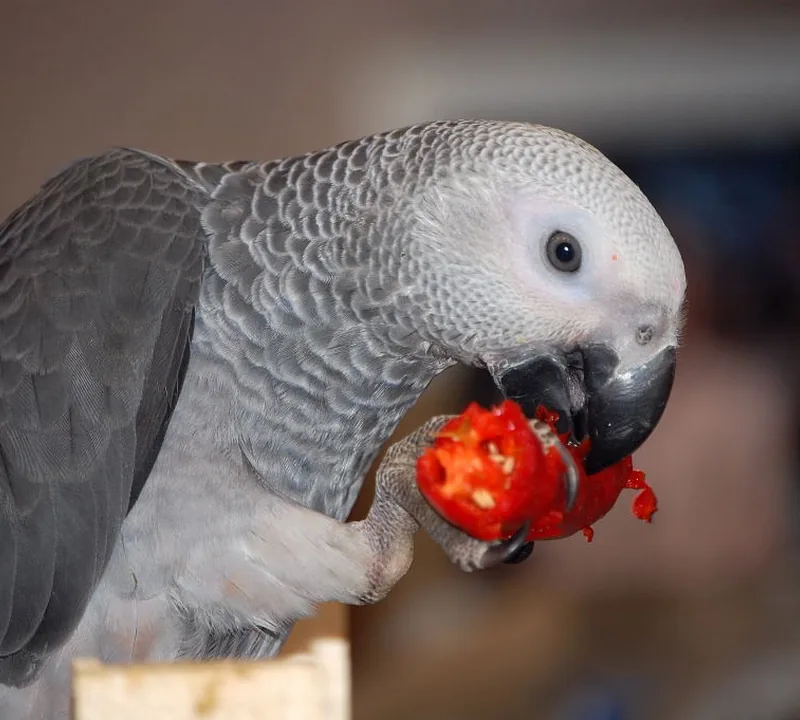
Congo GreyCurious, confident Congo cock — thrives in a busy, interactive home where there's always something on.
 Congo Grey
Bright Congo hen who steps up for strangers because we rotated her handling across the household.
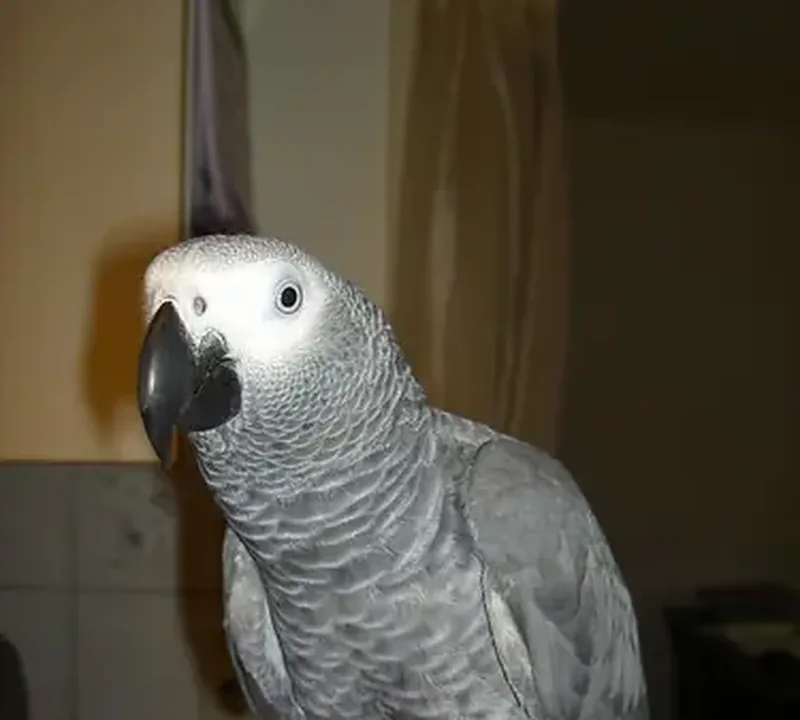 Congo Grey
Steady, affectionate Congo hen — hand-fed and unflappable, an easy grey to live with day to day.
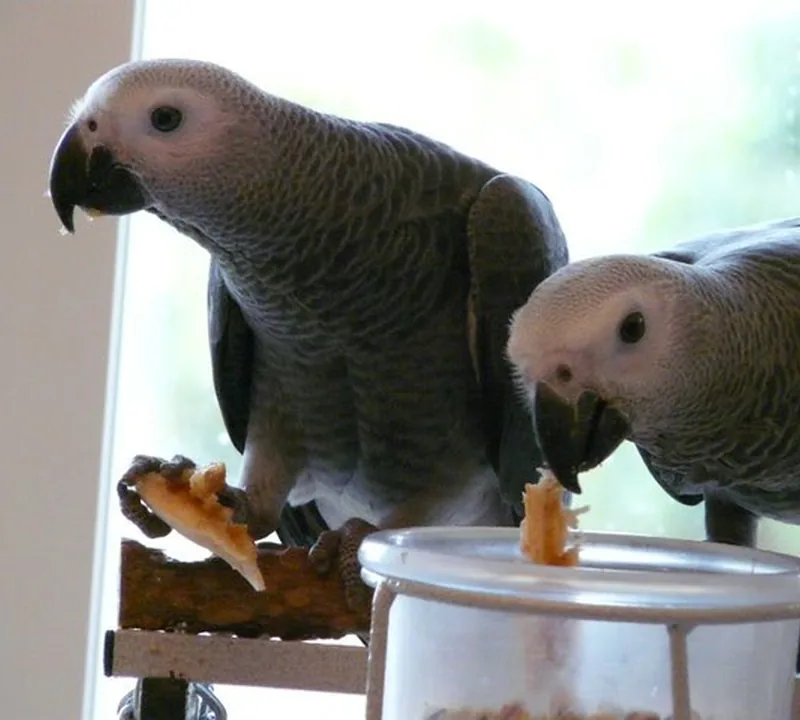 Companion Pair
A bonded Congo pair that must stay together — two hand-raised greys who already keep each other company.
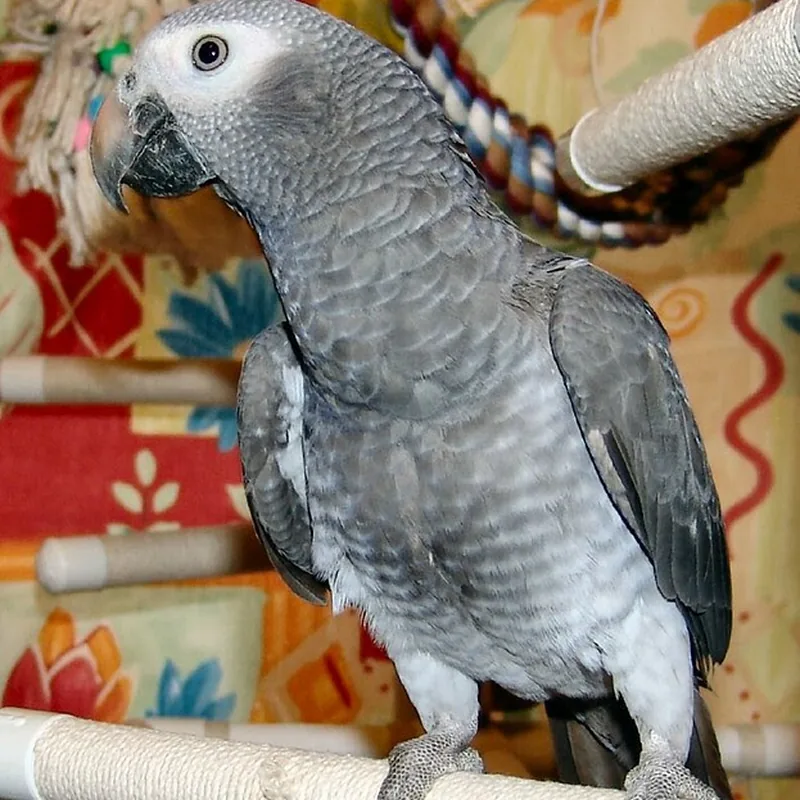 Timneh Grey
Tractable Timneh hen who takes new things calmly and loves quiet, gentle interaction.
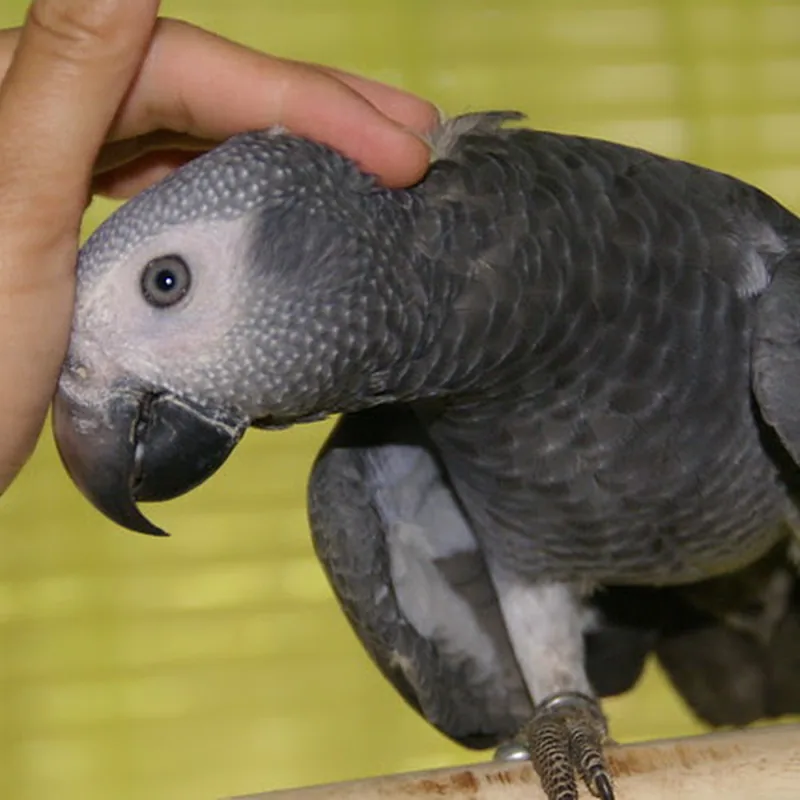 Timneh Grey
Even-tempered young Timneh male, an early talker who bonds fast in a hands-on home.
Prices include a $200 refundable deposit toward the total. A bird marked reserved has a deposit down; a sold bird leaves the list. We never take two deposits on the same grey.
Trust here isn't a slogan — it's a paper trail you can check before a dollar moves. Because the market is thick with fake "hand-raised" listings, we hand every buyer the same verifiable stack the fraudulent sellers can't produce: a USDA license number, CITES captive-bred records, a DNA certificate and a live video of your actual bird.
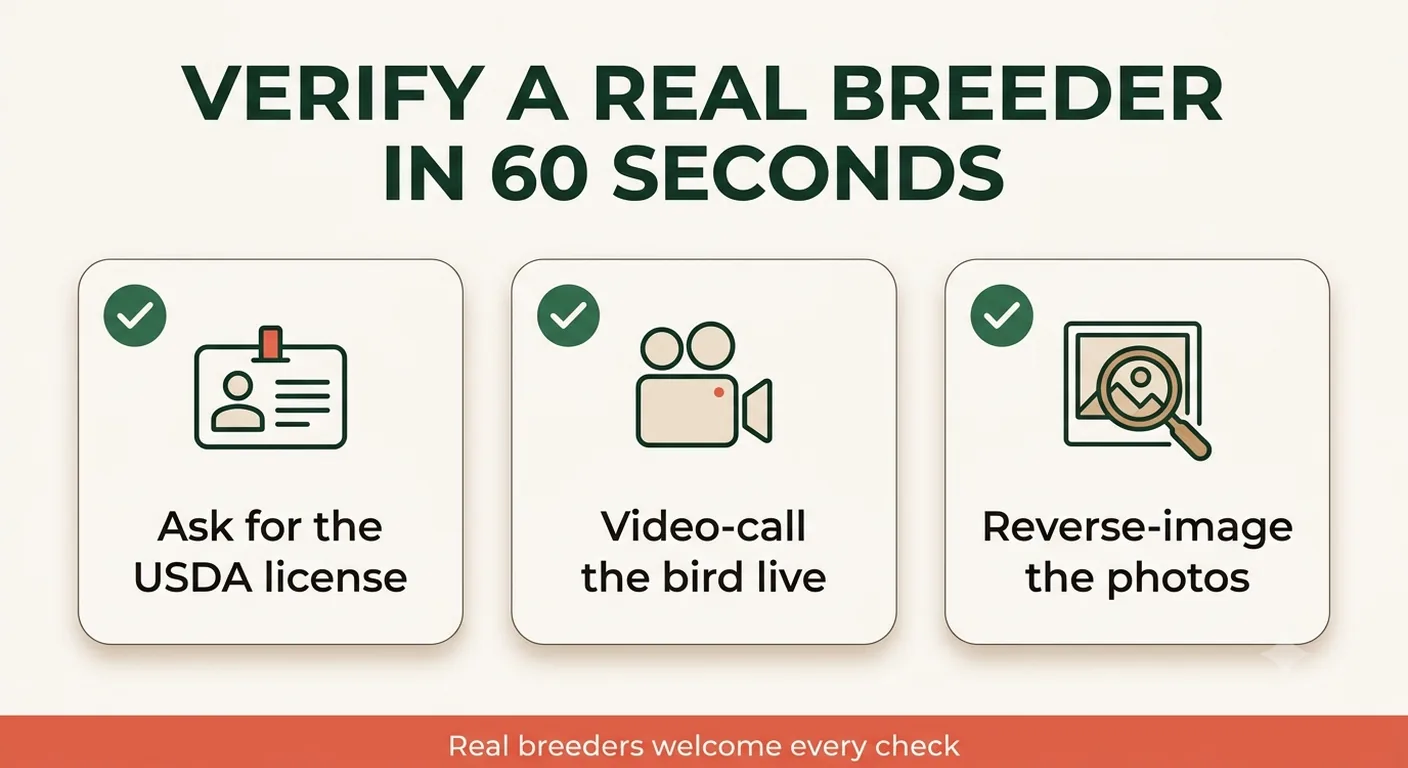
Each grey ships with the same documentation set, and every credential is one you can independently verify rather than take on faith.
You don't have to trust your gut — you can check three things in about a minute, and a real breeder will happily wait while you do.
Ask for the USDA license and look it up; request a live video call with the bird and today's date in frame; and reverse-image-search the listing photos to catch stolen pictures. A scammer fails at least one of these every time.
The USDA APHIS licensing lookup ↗ lets you confirm any breeder's Animal Welfare Act license in seconds — run ours, then run anyone else's before you send a dollar.
Hand-raising a grey well is a fourteen-week job, not a marketing word — a rhythm of feeding, handling and patient weaning that we run the same way for every chick. Because rushing any stage produces a nervous adult, we let each bird set its own pace and only call it ready when it's eating on its own and emotionally settled.
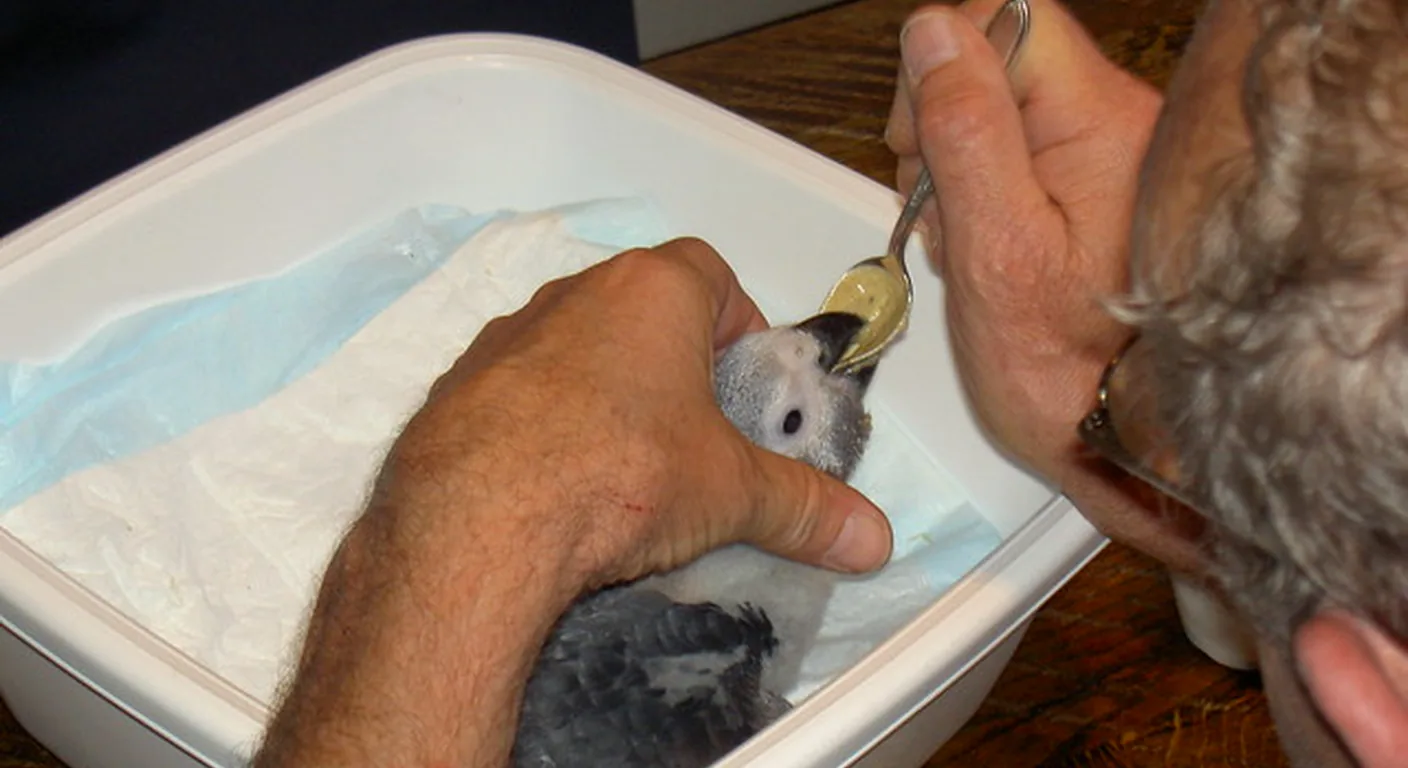
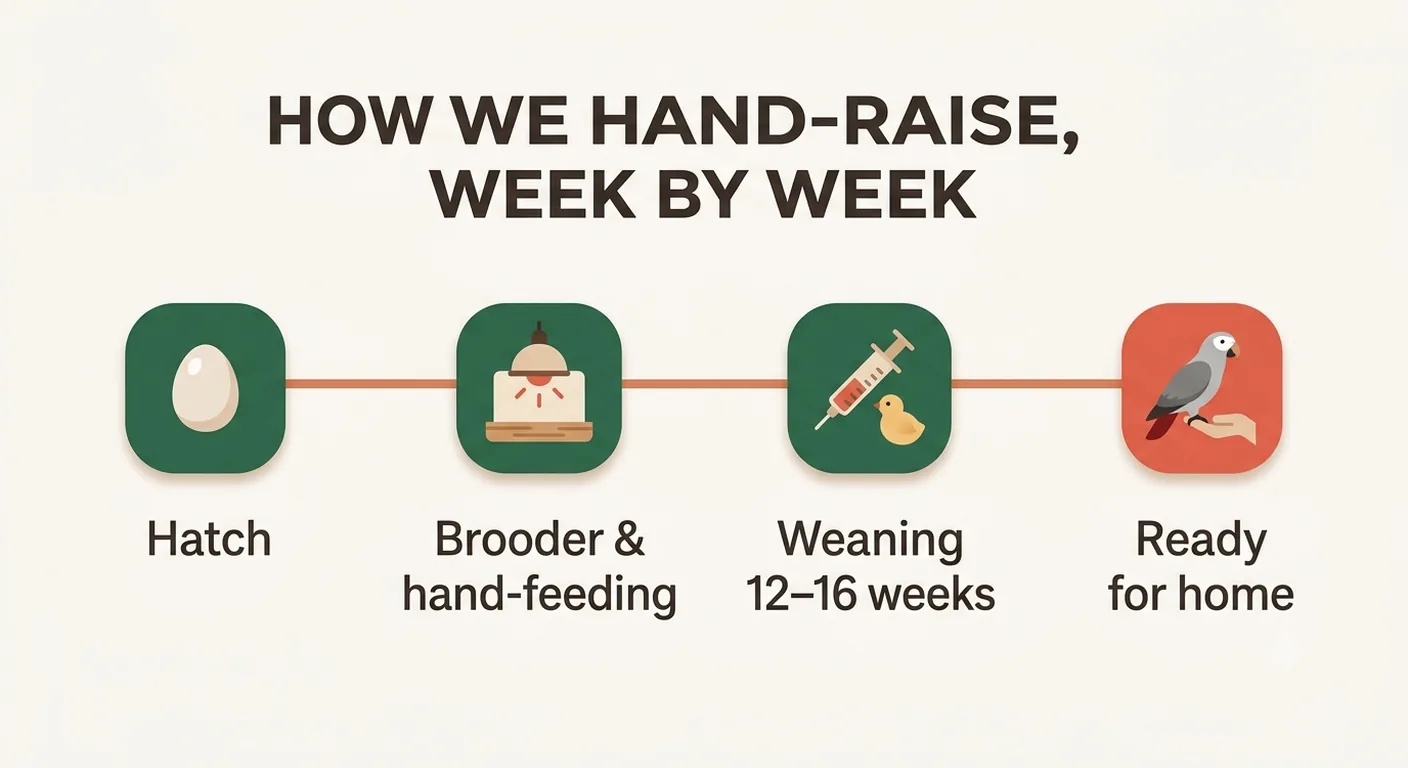
When it is fully weaned and eating independently — typically between 12 and 16 weeks — and not a day sooner. A weaned grey travels better, settles faster, and starts its new life confident instead of frightened.
Selling an unweaned baby shifts the hardest, riskiest job — hand-feeding formula at the right temperature and consistency — onto a new owner who's never done it, and force-weaning to hit a sale date can scar a grey for life. We simply don't do either, however keen a buyer is to take one early.
Every chick is weighed daily through weaning, because a grey that's quietly dropping grams tells you it isn't ready long before it looks unwell. That log is another thing we'll gladly show you before you commit.
From the first weeks we make sure several people handle each chick — different voices, different hands, the normal noise of a family home — so the grey grows up used to more than one person. That habit is the quiet reason our birds tend to settle into families rather than fixate on a single owner.
LafeberVet's African Grey information sheet ↗ sets out the same weaning and nutrition fundamentals we raise to, if you'd like a veterinary second opinion on how a grey should be brought up.
Here's the part most sellers skip: a hand-raised grey bonds so readily that it can over-attach to one person if you let it. Because we'd rather you succeed than just sell you a bird, we build against that from the nursery — and we tell you how to keep it from happening at home.
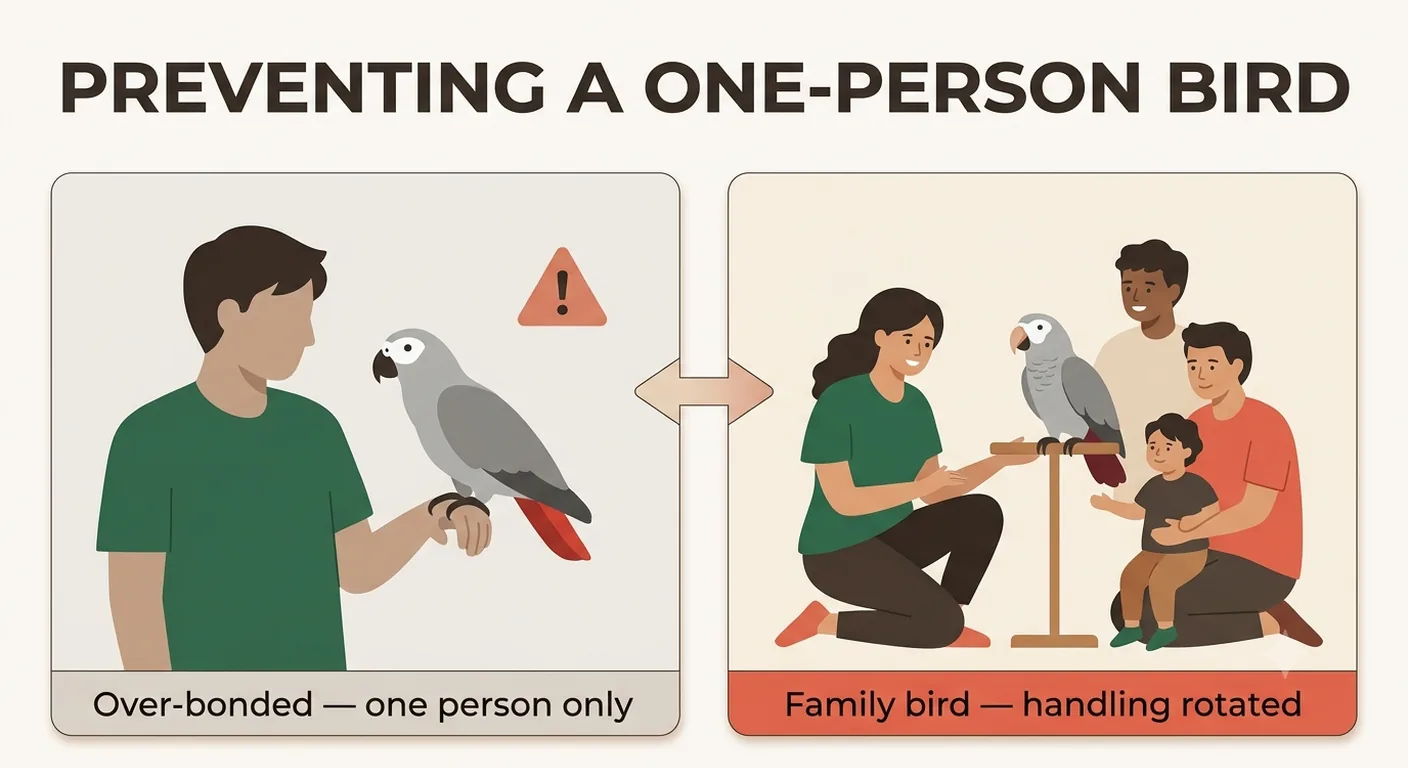
A grey that adores exactly one human and bites everyone else isn't broken — it's usually a bird that only ever knew one pair of hands. Left unmanaged, that pattern narrows a family's bird down to a single-person pet.
We rotate handling across several people from the very start, so "people" — plural — is normal to the chick long before it comes home. Then we ask you to keep the rotation going for the first months.
Amie is the clearest proof — because Teri, Mark and visitors all handled her through weaning, she'll step up for a guest she met five minutes ago. That isn't luck; it's the rotation, and it's a habit any household can keep.
A genuine hand-raised grey starts at $1,500, and the number isn't arbitrary — it's what months of hand-feeding, DNA testing, avian-vet care and CITES paperwork actually cost to do right. Because that floor is also the market's clearest scam line, we'd rather explain it than let a "$700 hand-raised African Grey" tempt you into a wire you'll never get back.
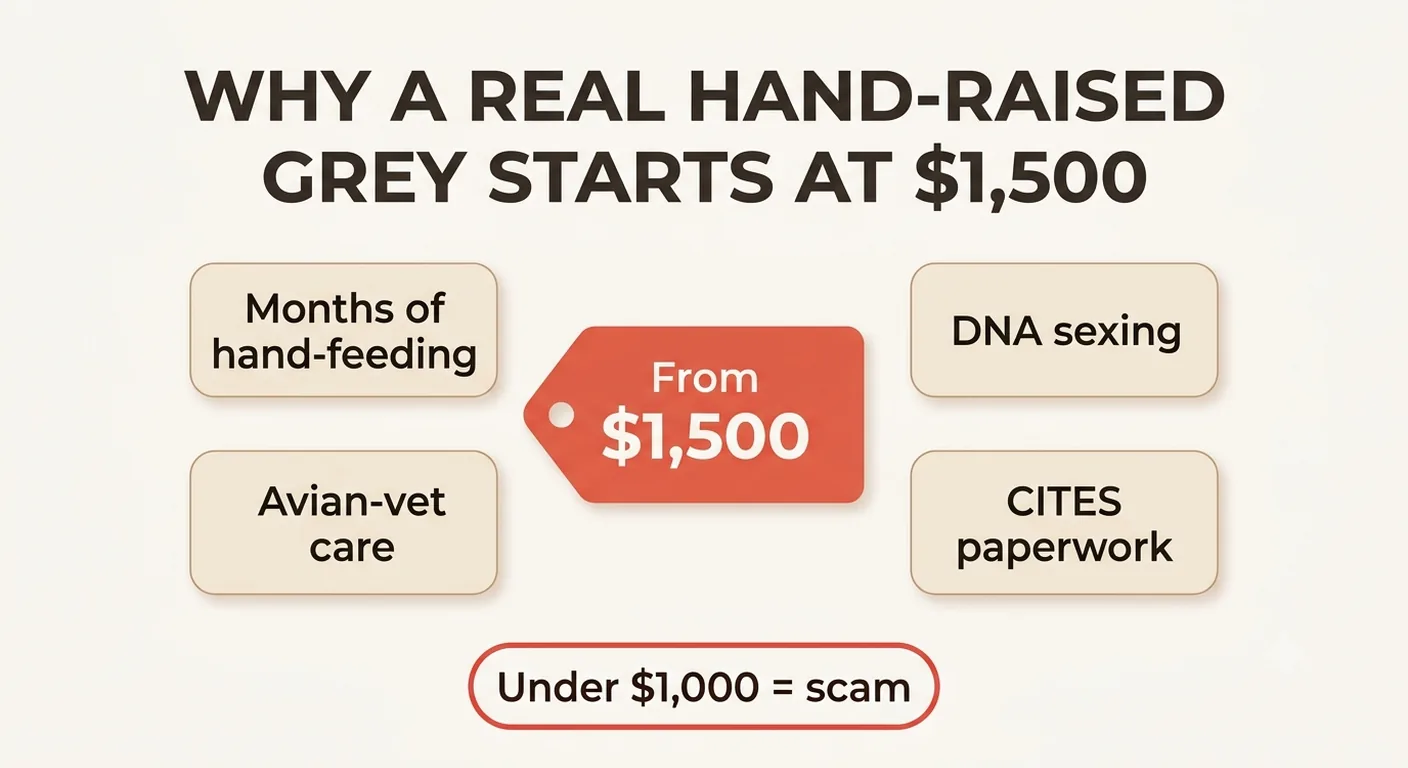
Hand-raised Timneh greys run $1,500–$1,600, and hand-raised Congo greys $1,700–$3,500 depending on age and training. A $200 refundable deposit holds any bird.
Anything advertised "hand-raised" under $1,000 is the oldest African Grey scam there is.
Stack up the real inputs — incubation, three to four months of daily hand-feeding, a DNA-sexing lab fee, avian-vet checks, PCR screening and the CITES paper trail — and the floor makes sense. Nobody covers that and profits at a few hundred dollars.
Because the listing is bait. At that price the "seller" is fishing for a deposit on a bird that is stolen-photo fiction, wild-caught, or sick — the discount is the hook.
If the only remarkable thing about a listing is how cheap it is, treat that as the red flag it is and walk away. A real breeder prices for the work; a scammer prices to lure.
Your total covers the bird, its full document folder, DNA and health records, PCR screening, a care guide and our lifetime support line — no surprise "insurance" or "release" fees bolted on at the airport.
A fake "hand-raised" listing follows a script, and once you know it you can read one in seconds — sub-floor price, no papers, no live video, untraceable payment. Because we're a real aviary that competes against these fakes, calling out the pattern protects you and it protects our name.
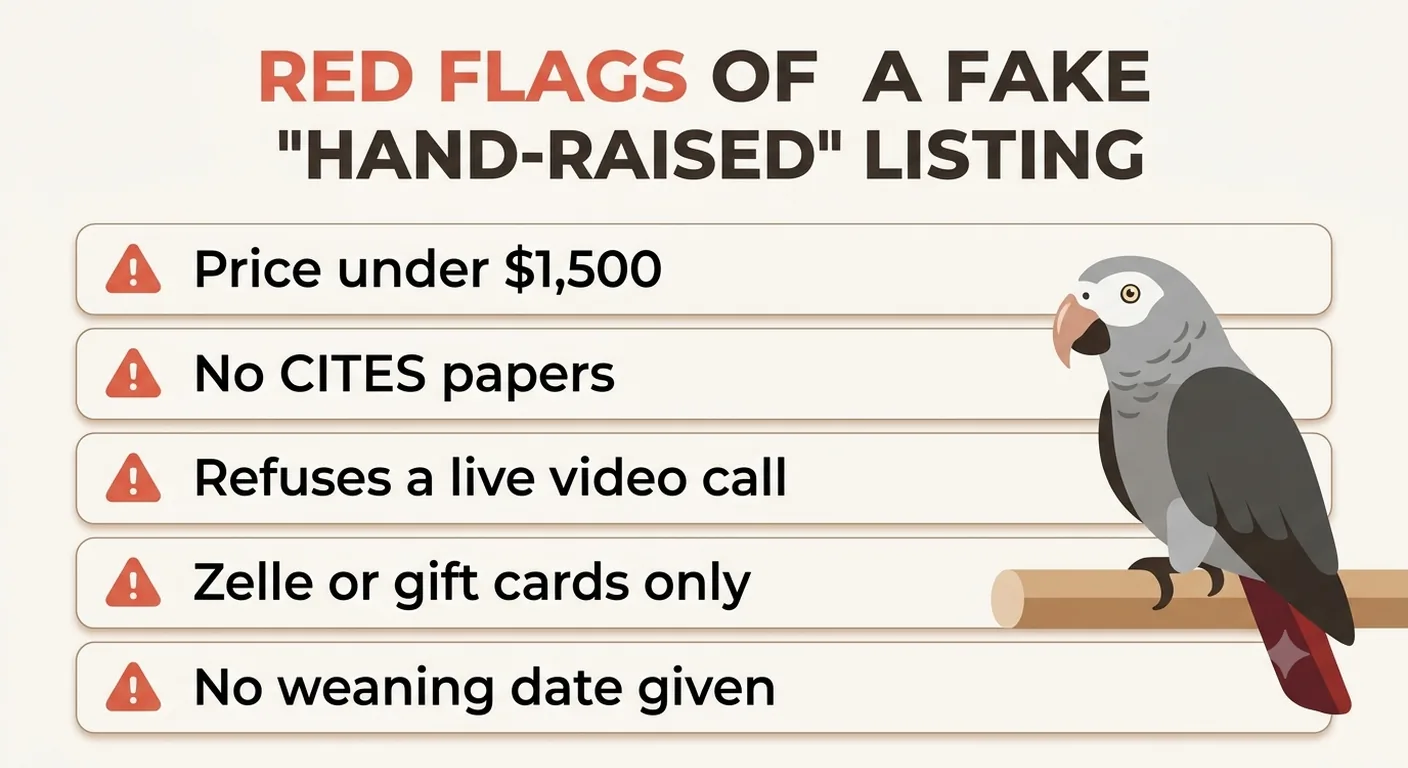
Any single flag is a caution; two or more together, and you should close the tab. The scam pattern is remarkably consistent across the fake farms we track.
You ask the listing to do something a photo can't — move, in real time, on your schedule.
A real breeder will video the actual bird with today's date or newspaper in frame, on request. A scammer using lifted photos will stall, make excuses, or vanish — which is exactly the answer you needed.
Before you deposit anywhere, our African Grey scam-awareness guide walks the full red-flag checklist so you can vet us and every other seller with the same yardstick.
African Greys earn their reputation honestly — they're arguably the most cognitively gifted parrots kept as companions, and a hand-raised one turns that intelligence toward you. Because a grey is a decades-long relationship, that talking, problem-solving mind is the reason the commitment is worth it.

Greys routinely learn scores of words and use them in context, solve puzzles that stump other parrots, and form deep, lasting bonds. Hand-raising doesn't create that intelligence — it opens the door so the bird will share it with you rather than guard against you.
The World Parrot Trust's grey parrot profile ↗ catalogs the cognition research behind that reputation, and hand-raising is simply what turns all of it toward you instead of away.
Both subspecies leave our nursery hand-raised the exact same way, so this choice is about fit, not quality. Because the two greys differ in size, tail color and tempo, the honest answer depends on your home — and we're happy to talk it through rather than push the pricier bird.
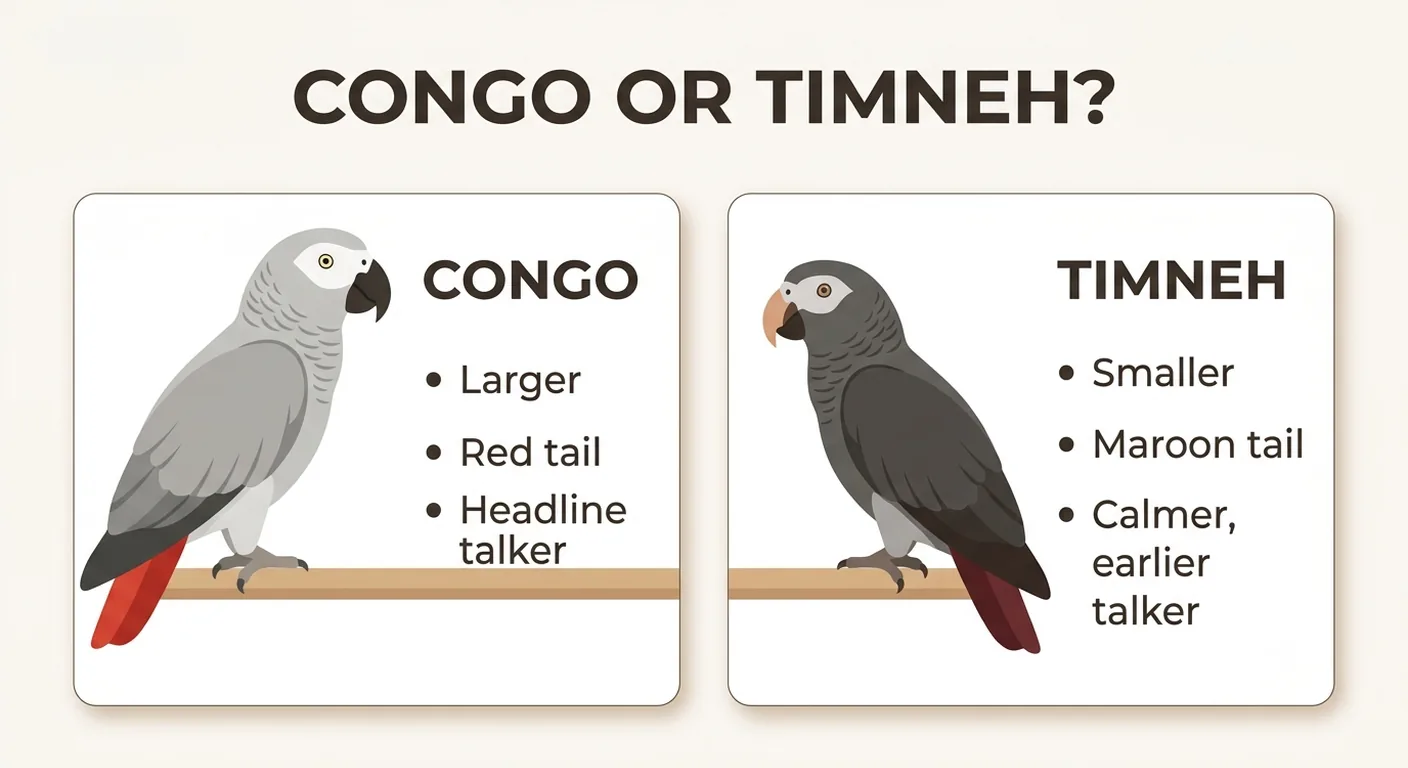
The Congo is the larger, red-tailed grey with the headline vocabulary; the Timneh is smaller, maroon-tailed, often a shade calmer and an earlier talker. If you're still weighing it, our Congo vs Timneh comparison breaks the decision down point by point so you can match the grey to your household.
A reserved grey travels US-only on IATA live-animal cargo, in a climate-controlled crate, with arrival confirmation — because a bird we spent months raising isn't something we hand to a random courier. You choose airport pickup at $185 or door delivery at $350, and if you're close, you're welcome to collect in person.

Airport pickup at $185 puts your grey on a direct flight to your nearest major cargo airport; home delivery at $350 brings it door-to-door. Both routes carry the full document folder and health certificate with the bird.
We fly Delta, United and American live-animal cargo in ventilated, IATA-compliant crates with a water source and our handling label — the same programs professional aviaries rely on.
Because those regulations set the crate, temperature and handling standards for shipping a bird, we book to them every time — and we time flights to avoid temperature extremes at either end.
Yes — buyers who live a couple of hours out often just drive in and collect their bird by hand, which skips shipping entirely and gives the grey the calmest possible start. We genuinely love meeting the families our birds go home with, so if reaching Midland, Texas is realistic for you, tell us. Shipping to nearby states is easy too — start with our Texas hand-raised greys page if you're local.
Every grey leaves with the full paper trail that separates a real breeder from a fake — not as a bonus, but as proof. Because that documentation is exactly what a fraudulent seller can never assemble, it's also the fastest way for you to confirm you bought the real thing.
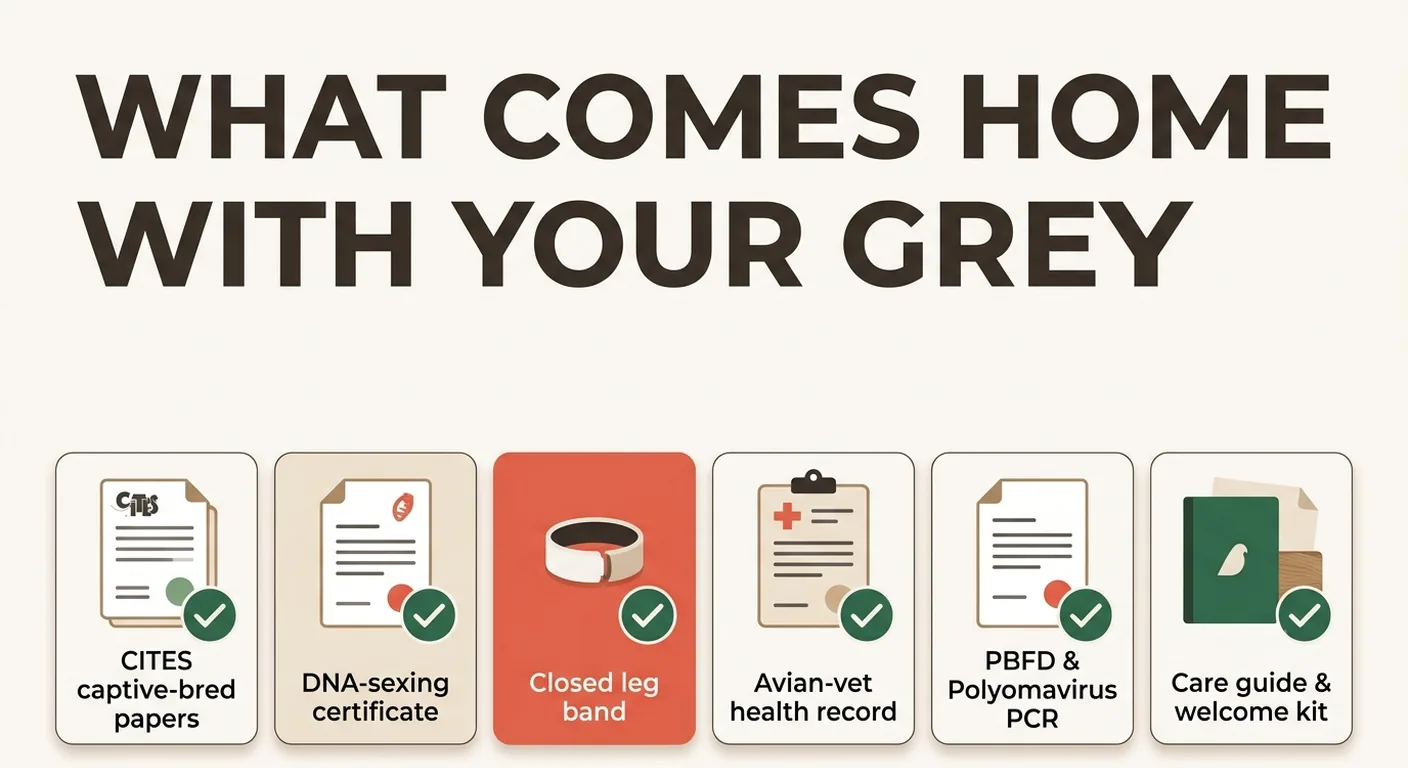
Each document is one you can verify independently, which is the whole point — you shouldn't have to take a stranger's word about a $2,000 bird.
Because African Greys are CITES Appendix I, the paperwork is what proves your bird is a legal, captive-bred companion rather than a wild-caught import — it protects you as much as the species.
Appendix I birds are legal to own and transfer within the United States when the captive-bred documentation is in order, which ours always is. It also means a legitimate breeder never offers to smuggle one overseas.
The official CITES appendices ↗ set out exactly how Appendix-I captive-bred birds must be documented — the international rules our own paperwork is built to satisfy.
Yes — every grey is seen by an avian vet and PCR-screened before it travels, because shipping a bird that isn't well is unthinkable to us. That screening, paired with the health record in the folder, is how you know the grey that lands is the grey we described.
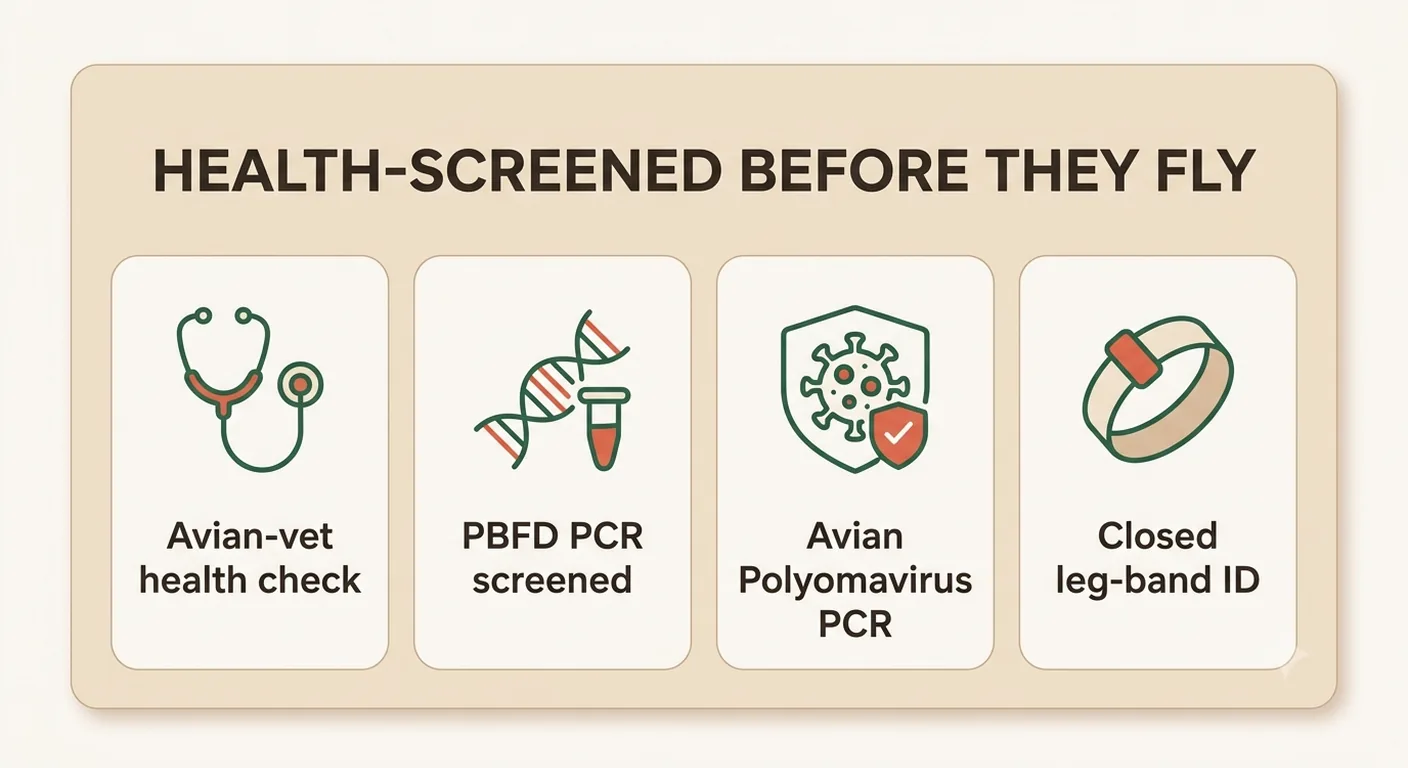
Each grey gets an avian-vet examination and PCR screening for PBFD and Avian Polyomavirus, and you receive the results with your bird. If your own avian vet ever flags a covered concern after arrival, we want the call — we stand behind the birds we raise.
A veterinary review of psittacine beak and feather disease ↗ explains why PBFD is the one result every serious grey buyer wants ruled out — which is precisely what our screening does.
Research on PCR-based molecular sexing ↗ is why the sex printed on your grey's certificate is a lab result rather than a guess about a visually monomorphic bird.
You should never buy a grey you haven't watched move, so here they are on video — our own birds, unedited, being greys. Because a photo can be stolen but a live video can't, we film every reservable bird and video-call you before any deposit.
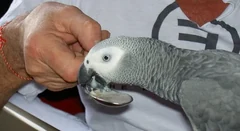
Roys, one of our hand-raised Congo greys, eating on camera. Ask us for a live call with any bird above.
On request we'll film the bird you're considering with today's date in frame, so you can confirm the grey is real, present and healthy before you commit a cent.
The best test of a hand-raised bird is how it settles in after the excitement fades — so here are two families in their own words. Because these are verified C.A.Gs buyers, their stories sit here unedited, the way they sent them.
If you're looking for an african gray bird for sale, I highly recommend C.A.Gs. My bird arrived exactly as promised — healthy, curious, and already comfortable around people. The updates throughout the process and the professionalism of the C.A.Gs team gave me complete confidence. It's rare to find a breeder that truly cares about both the birds and their customers.
My African grey parrot purchase through C.A.Gs couldn't have gone better. Every question I had was answered promptly, and I received regular updates before my bird arrived. My African Grey is healthy, intelligent, and already becoming a wonderful member of our family. The quality of care and customer service from C.A.Gs exceeded my expectations.
These are the questions buyers actually ask us before they reserve — and, usefully, they double as a due-diligence checklist. If a seller you're comparing us against can't answer all of them plainly, that tells you something too.
Not quite, and the difference matters. Hand-fed just means a person delivered the formula; hand-raised — the way we do it — means the chick was fed, handled, played with and talked to every day, then weaned on its own schedule and socialized across our whole household. A bird can be technically hand-fed and still barely tame if nobody put the hours in. Every grey we place is hand-raised, and we can show you the daily notes to prove it.
Generally yes — a properly hand-raised grey already sees people as safe, steps up without drama, and starts associating words with objects early. What we won't tell you is that tameness is automatic or permanent: a hand-raised bird still needs daily interaction to stay confident, which is why we coach every new owner through the first weeks rather than waving goodbye at the airport.
Yes, and it's one of the clearest tells of a careless seller. A chick pulled or 'force-weaned' before it's ready can grow up anxious, phobic, or prone to feather-plucking. We co-parent first, let the chick wean on its own timeline between roughly 12 and 16 weeks, and only place a grey once it is eating independently and emotionally settled — never on a shipping deadline.
Because raising one properly costs real money — incubation, months of hand-feeding, DNA testing, avian-vet care and CITES paperwork — so a healthy, captive-bred, genuinely hand-raised grey does not sell for a few hundred dollars. A sub-$1,000 'hand-raised African Grey' is almost always a stolen photo, a wild-caught bird, or a deposit you'll never see again. Our floor is $1,500 for exactly that reason.
We do — every Congo and every Timneh we place is hand-raised here in Midland the same way, which is why this page lists both. Congos are the bigger, red-tailed, headline talkers; Timnehs are smaller, maroon-tailed and often a touch calmer and earlier to mimic. Same rearing, two temperaments — we help you match the bird to your home.
It can, and we set it up to. Because we rotate handling across several people from the start, our greys are used to more than one pair of hands, which lowers the risk of a one-person bird that only tolerates a single owner. Keep that rotation going at home and a hand-raised grey happily becomes a family bird rather than a jealous one.
Almost certainly not, and the reason is timing rather than effort. Whether a grey is easy with people gets decided in the weeks between hatching and weaning, while the chick is still working out what hands and voices are — and that window closes whether or not anyone was there for it. Hatching is the short part. What follows is months of feeding and handling on the bird's clock rather than yours, several times a day, indoors. Buyers who incubate at home often end up with a perfectly healthy parrot that ducks away from a hand, and that is far harder to undo at eight months than to build at eight weeks.
No, and raising them that way would work against what they are for. A pair needs to bond with each other and settle into a nest box, which goes better when both birds are confident in an aviary than when they are watching the door for a person. Our chicks are brought up to be the opposite — deliberately tuned to hands, conversation and the noise of a lived-in room, because that is where they are going. So the two are genuinely different animals raised for different lives, and a pair is the wrong purchase if what you want is a grey that climbs onto your finger and answers you back.
Your reserved grey flies domestic-only in a climate-controlled crate booked to IATA live-animal standards, on Delta, United or American — $185 to your closest airport or $350 brought to your door, with the full document folder riding along beside it. If you live roughly two to three hours from Midland, Texas, you're welcome to collect in person, and honestly that's the calmest handoff there is.
A hand-raised grey is a 40-year decision, so read a little further before you reserve — these guides answer the questions this page only touched. Each one is written the same first-person way, by the people who actually raise the birds.


Also from our aviary
Hatching a grey yourself is a different project from raising a tame one, and that page is candid about which parts tend to go wrong.
Aviary-raised adult pairs are kept for breeders rather than living rooms, and they are listed with their own terms and price.
Two Congos sold together suit a keeper setting up a flight rather than a first-time owner looking for a companion.
Ready to bring one home? Tell us which grey caught your eye and how you'd like it delivered, and Teri will reply personally within 24 hours — no bots, no pressure. A $200 refundable deposit holds your bird while we arrange the details.
Every grey below is hand-raised, documented and available now. Pick one — or ask us to help you choose between a Congo and a Timneh.
Ships nationwide · $185 airport · $350 home · Pickup in Midland, TX (within 2–3 hours)