
- Home
- African Greys For Sale
- Evie — Female Timneh African Grey
Psittacus timneh · CITES Appendix I Captive-Bred · Midland, TX
Evie — Female Timneh African Grey For Sale ($1,500, was $2,200 · Hand-Raised & DNA-Sexed)
- Sex Female (DNA-sexed)
- Age 6 months
- Variant Timneh African Grey
- Price $1,500
- Talking Developing
- Status Available
Ships nationwide · $185 airport · $350 home
Ask About Evie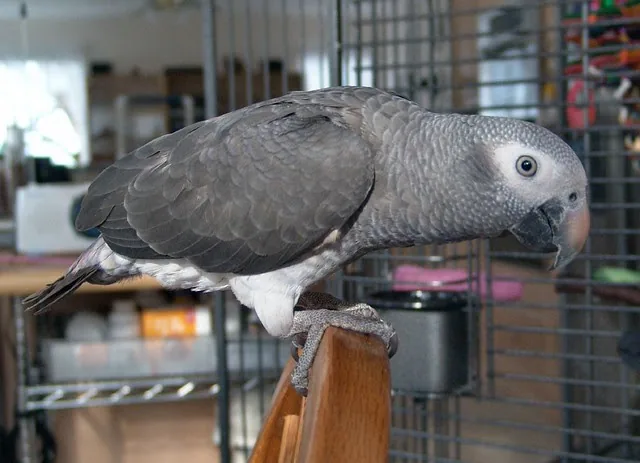
Evie — our hand-raised female Timneh African Grey, 6 months, in our Midland, TX home.
At a glance
Evie at a glance — Female Timneh African Grey for Sale Snapshot
Evie is a hand-raised female Timneh African Grey (Psittacus timneh), 6 months old, now $1,500 — reduced from a $2,200 Timneh starting price. She is DNA-sexed, CITES Appendix I documented, captive-bred in the USA at our USDA AWA licensed aviary, and ships nationwide ($185 airport / $350 home).
- Variant
- Timneh African Grey
- Sex
- Female (DNA-sexed)
- Age
- 6 months
- Price
- $1,500 · was $2,200 · $200 deposit
- Talking
- Early talker / developing
- Documentation
- DNA · CITES · health cert
The short version
Is Evie the right African Grey for me?
Lab-confirmed female — no guesswork. Her DNA sex certificate travels home with her.
Young enough to shape her routine, old enough to show a real personality. She is curious, gentle, and people-oriented.
Now $1,500 — reduced from a $2,200 Timneh starting price. Covers a hand-raised, fully documented Timneh; a $200 deposit reserves her.
Psittacus timneh — the smaller, darker grey with a maroon tail and horn-coloured beak, bred in our Midland, TX family aviary since 2014.
Full Appendix I captive-bred documentation — the paperwork that proves Evie is legal to own and transfer.
DNA cert · AAV health cert · hatch cert + band · CITES docs · weaning guidance. No chasing paperwork after.
Airport Pickup $185 or Home Delivery $350. IATA LAR-coded via Delta, United, and American.
Calm, affectionate and observant. A people-loving hen who bonds closely and thrives on steady company.
What is Evie like as a companion Timneh?
Evie is a gentle, affectionate female Timneh African Grey who is happiest in a calm home with people who include her in the day. She does not demand the spotlight — as we like to say, she does not ask for attention so much as earn attachment. We have watched her grow from a clumsy chick into an observant young hen who reads a room, leans into a head scratch, and rewards a patient family with a deep, trusting bond.
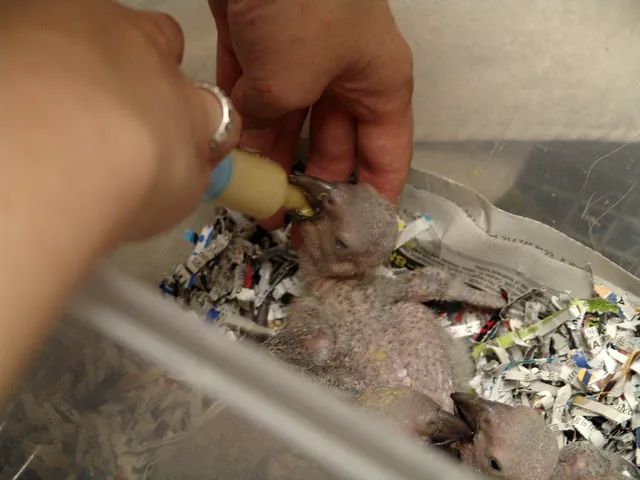
Here at C.A.Gs we hand-raised Evie ourselves, in our Midland, Texas home, so what we tell you about her comes from feeding her every day rather than from a sales sheet. One thing we noticed early: she watches before she acts, then settles onto a shoulder and stays. That quiet steadiness is the whole personality. Give her gentle company and a predictable routine and she gives back a calm, devoted attachment.
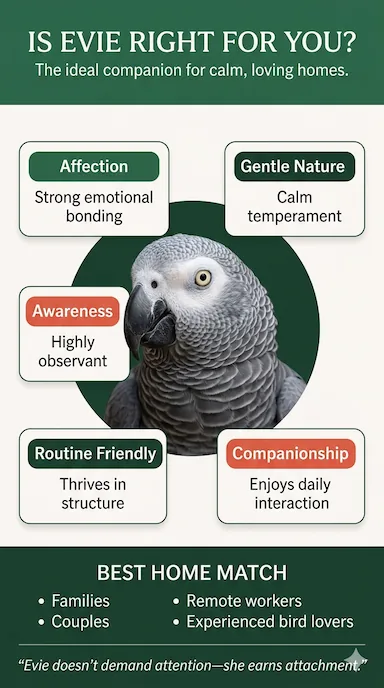
At 6 months she is curious about everything and still forming her sense of the world. Timneh greys are famously bright — the species, Psittacus timneh, sits among the most studied talking parrots in the world, and the World Parrot Trust's grey parrot profile ↗ covers their cognition in depth. She suits a calm owner or household ready to give a sensitive, people-oriented hen steady attention and gentle company.
How quickly does Evie settle in?
Her first 30 days at home tend to follow a pattern we have seen across our greys. Week one she watches more than she plays, learning the rhythm of your house. By week two she starts claiming a favourite perch and testing which sounds get a reaction. By the end of the month, in a home that shows up for her daily, she is asking to come out and beginning the soft babble that comes before real words.
Will Evie do well around young children?
She does well with older children who understand that a bird is not a toy. She reads energy quickly — a calm, curious kid who offers a finger consistently is exactly the kind of relationship she builds on. Chaotic or grabbing handling is another matter. We are honest about that.
Can a female Timneh African Grey learn to talk?
Short answer: Timneh African Greys of either sex are among the most capable talking parrots alive, and Timnehs are reputed to start talking earlier than Congos — sometimes around 6–12 months. Sex is not a reliable predictor: individual motivation and daily interaction shape vocabulary far more than whether the bird is male or female.
Where is Evie being raised at the moment?
At 6 months, Evie is in the developing stage. Her vocal learning is just beginning. We hear the soft contact calls and exploratory sounds a young grey makes before real mimicry clicks — that process happens over the coming months. Watch the playing video above to hear her as she is now: active, interactive, and already engaged with whoever holds the camera.
Listen to a grown C.A.Gs grey talking
You do not have to take our word for what Evie is growing toward. This is Maxy, an adult hand-raised Congo African Grey from the same flock and the same Midland, TX home, talking on camera — the clearest proof of the vocabulary a well-socialised Congo develops.
What decides how much vocabulary Evie builds?
The single biggest factor is daily conversation in her home environment. Greys learn by listening and repeating what gets a real reaction — your name, your kitchen sounds, the things you say at the same time every day. A bird in a quiet house with minimal human contact will talk less than one at the centre of a busy family routine. Sex has almost nothing to do with it.
How does a female Timneh's voice compare to a Congo's?
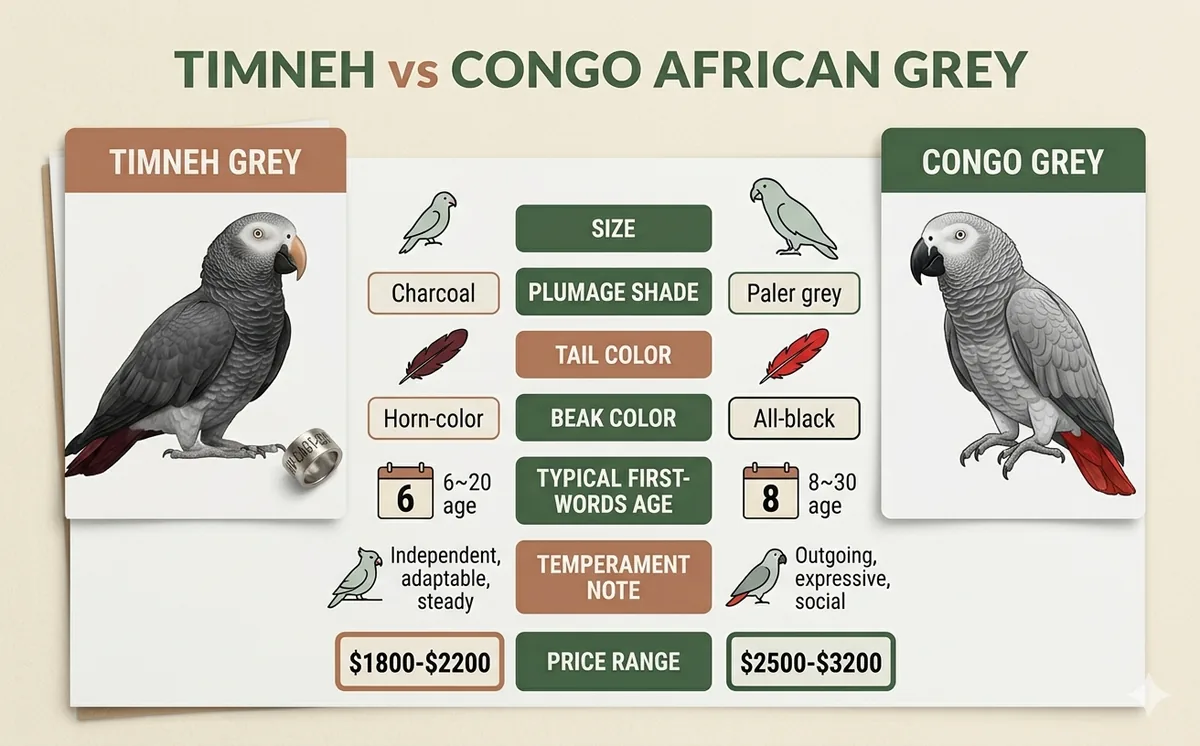
Timnehs tend to start talking earlier — sometimes as young as 4–6 months — while Congos tend to develop larger and more dramatic vocabularies over time. Our Congo vs Timneh comparison covers this side-by-side in detail if you are weighing the two.
Can I help Evie find her words faster?
Not by drilling. Repetition without genuine social context rarely sticks. The greys that develop the fastest are the ones whose owners talk with them, not at them — narrating what they are doing, responding when the bird makes sounds, treating the conversation as two-way.
When might Evie first start talking?
Timnehs are reputed to begin mimicking household sounds and short words a little earlier than Congos — often between 6 and 12 months — with clearer speech firming up through the first year. Evie is 6 months old, so she is right in that window.
Why does Evie cost $1,500 when some Timnehs list far cheaper?
What the $600 price cuts, point for point
- ✗ No DNA certificate. Evie has a lab-confirmed sex cert. The $600 bird has a guess.
- ✗ No CITES documentation. African Greys are Appendix I. Evie has the full captive-bred paperwork. The cheap bird has none.
- ✗ No avian-vet exam. Evie travels with an AAV health certificate. The $600 seller skips the exam because it costs them money.
- ✗ No breeder you can verify. Evie comes from a USDA AWA licensed aviary you can look up. The $600 seller vanishes when the deposit clears.
A documented, hand-raised Timneh cannot honestly be produced for $600. Evie has been reduced from a $2,200 Timneh starting price to $1,500 — that is a genuine saving on a documented bird, not a bargain-bin "$600 Timneh". When you see that figure, you are looking at a bird missing everything above — or a listing with no real bird behind it at all. The gap is not markup. It is paperwork, health, and accountability.
Why will Evie's paperwork still matter in 40 years?
African Greys are CITES Appendix I. A captive-bred bird is legal to own and transfer domestically only when the paperwork backs it up. A grey with no CITES record and no closed leg band is a grey you cannot prove anything about — not its origin, not its sex, not whether it is healthy. Evie can be proven, on paper, top to bottom.
What a cut-price Timneh really costs later
It is the breeder you cannot find in year two. A real aviary answers the phone. Knowing how to avoid bird scams mostly comes down to one habit: insist on documentation and a verifiable breeder, and walk away when either is missing. For the full picture of what a real grey actually costs, the math behind $1,500 is open for you to read.
Can Evie's $1,500 price be negotiated?
No. Our prices reflect the real cost of raising a documented, hand-reared bird properly. We would rather be transparent about that than discount Evie and cut something you would not see until later.
What does Evie's $200 deposit hold?
It removes Evie from the listing and holds her exclusively for you while you arrange travel and any final questions. The balance is due before she ships. No one else can claim her once your deposit is confirmed.
Is Evie's deposit credited toward the $1,500?
Yes. The $200 is not an extra fee — it comes straight off Evie's $1,500 price, leaving a $1,300 balance due before she travels.

What paperwork comes with Evie?
Every grey we sell ships with a full documentation set, and Evie is no exception. We never ask a buyer to take our word for it — she goes home with the same paperwork standard we hold every C.A.Gs bird to. Here is exactly what travels with her.
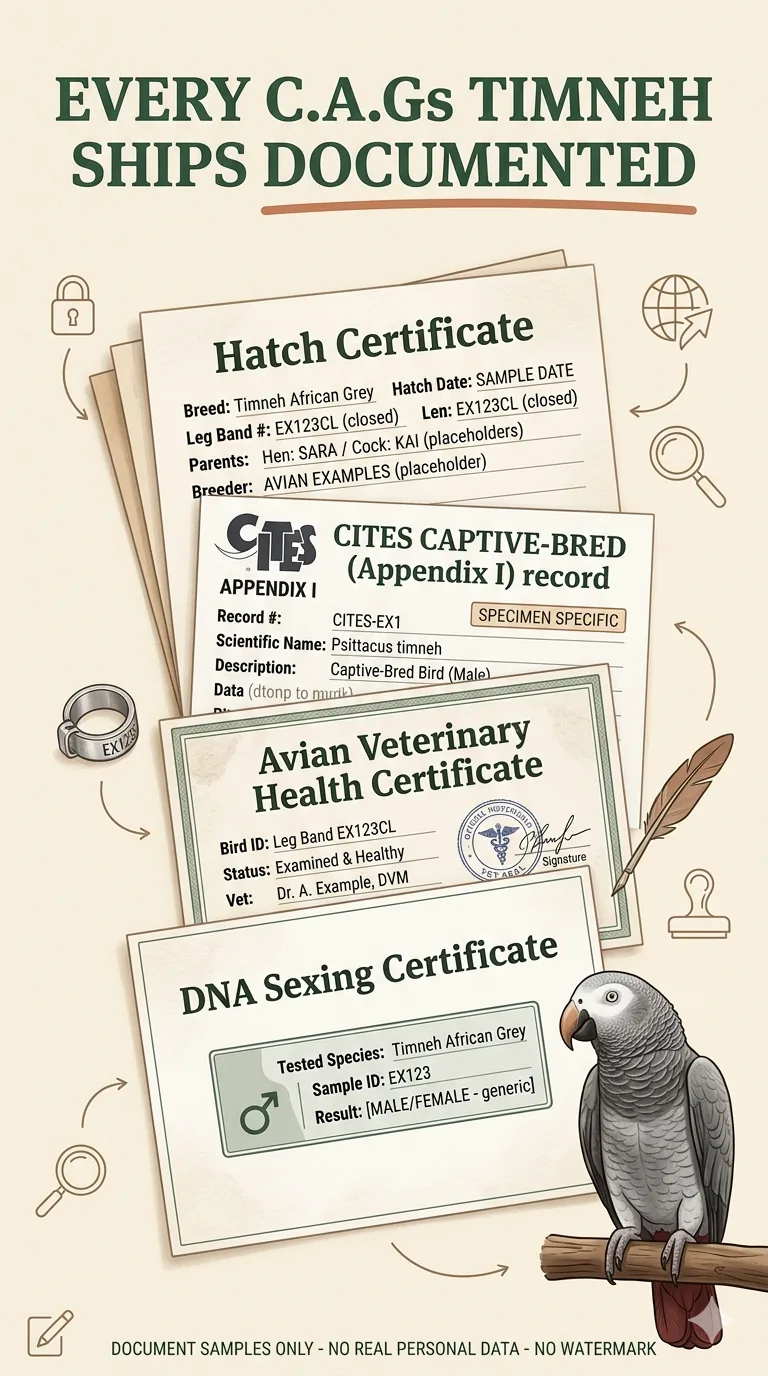
DNA-sexing certificate (female confirmed)
Lab-confirmed that Evie is female, so there is no guesswork. The certificate names the bird, the collection date, and the confirming lab. Our DNA-tested greys page explains why lab sexing matters before you commit to a 40–60 year bird.
AAV avian-vet health certificate
Issued before Evie travels by a vet following Association of Avian Veterinarians ↗ standards. The certificate documents her physical exam, her condition at time of travel, and the issuing vet's credentials.
Hatch certificate + closed leg band
Her traceable identity as a captive-bred bird. The closed band can only be applied when the chick is a few days old — it is the first and most tamper-resistant proof of captive origin.
CITES captive-bred Appendix I (USA) documentation
African Greys are CITES Appendix I. Captive-bred birds are legal to own and transfer domestically with the right paperwork, which Evie has. Our CITES documentation page explains what each form covers.
Weaning progress + feeding guidance
Evie leaves us only once she is eating independently on her own schedule — African Greys typically wean between 12 and 16 weeks. We include her current diet, feeding routine, and the transition guidance your vet will want.
Evie is also covered by our African Grey health guarantee, which travels home with her alongside the documents.
How do I check Evie's documents for myself?
You do not have to take any of it on trust. Our USDA AWA license number is public and searchable on the federal portal, the DNA certificate names the testing lab so you can contact them directly, and your own avian vet can confirm the AAV health certificate at Evie's first wellness visit.
Hold on to Evie's papers for life
Store the originals somewhere safe. You will want the CITES and hatch paperwork for any future vet records, for travel between states, and to prove captive-bred origin decades from now — these papers are what separate a documented grey from an unprovable one.
Source: CITES Appendix I captive-bred provisions (USFWS)
Captive-bred African Greys are legal to own and transfer domestically with proper documentation under U.S. Fish & Wildlife Service CITES guidance ↗. Evie's paperwork meets that standard.
What do you receive when you reserve Evie?
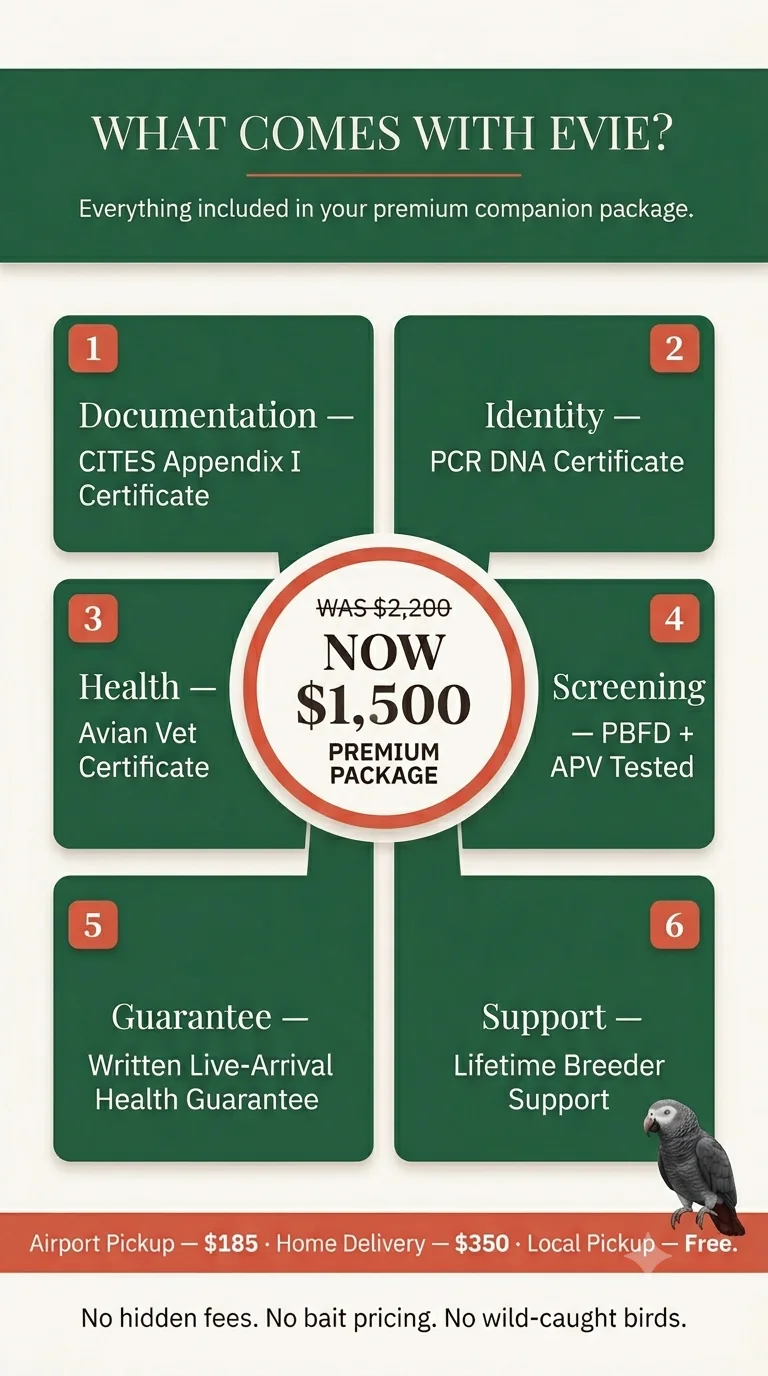
Price & reservation
- Evie (female, 6 months) $1,500
- Deposit to reserve $200
- Airport Pickup (IATA, LAR) $185
- Home Delivery (door-to-door) $350
Ships nationwide · $185 airport · $350 home · Delta / United / American
A $200 deposit reserves Evie and pauses her listing for you. The balance is due before she travels.
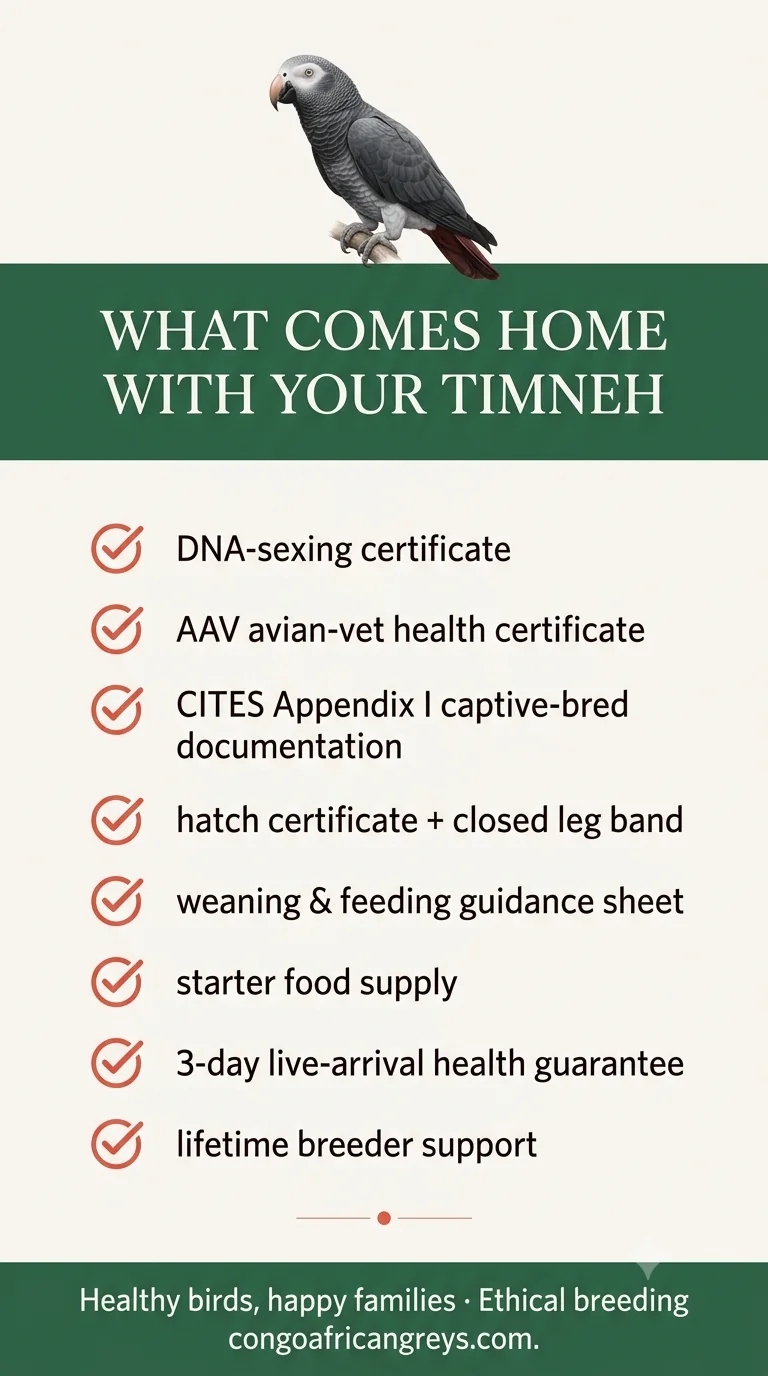
What travels home with Evie
- ✔ DNA sex certificate
- ✔ Avian-vet (AAV) health certificate
- ✔ Hatch certificate + closed leg band
- ✔ CITES captive-bred documentation
- ✔ Weaning & feeding guidance
- ✔ Health guarantee + post-arrival support
Compare Our Available Greys
How does Evie compare with our other available greys?
We have four individually different birds available right now. Evie is not the only option — here is how they stack up, so you can find the one that actually fits your home. Our Congo vs Timneh comparison goes deeper on the species differences if you are still weighing the two variants.
| Trait | Evie Female Timneh · 6 mo | Amie Female Congo · 3 mo | Bery Female Congo · 1 yr | Elad Male Timneh · 6 mo |
|---|---|---|---|---|
| Price | $1,500 | $2,500 | $1,700 | $1,600 |
| Variant | Timneh | Congo | Congo | Timneh |
| Sex | Female | Female | Female | Male |
| Temperament | Gentle, affectionate | Social, curious | Gentle, settled | Energetic, bold |
| Talking | Early talker | Developing | Starting words | Early talker |
| Ships nation. | $185 airport / $350 home | $185 / $350 | $185 / $350 | $185 / $350 |
| CITES status | Appendix I, captive-bred | Appendix I, captive-bred | Appendix I, captive-bred | Appendix I, captive-bred |
| Best for | Calm, gentle home | Family or couple | First-time owner | Interactive home |
Is Evie a healthy hen? Our health standard
Evie goes through a set of pre-placement health checks that every bird from our aviary clears before she is listed for sale. We are a USDA Animal Welfare Act licensed facility — the federal licensing standard for animal dealers and breeders — which means our health and housing practices are subject to inspection.
Which health checks has Evie passed?
- ✔ PBFD & Polyomavirus PCR screening — PBFD (Psittacine Beak & Feather Disease) ↗ and Avian Polyomavirus are the two viral conditions a serious grey buyer should ask about, so we PCR-test every C.A.Gs bird, Evie included, and keep the records. Our African Grey care guide explains what those screens protect against and how we manage flock health day to day.
- ✔ Pre-placement avian-vet exam — a physical exam by a veterinarian following Association of Avian Veterinarians ↗ standards, with a written health certificate issued before travel.
- ✔ Weight and condition assessment — we track her weight from hatch and check it again at pre-placement. A healthy chick gains consistently.
- ✔ Weaning verification — Evie does not ship until she is independently feeding on a varied diet. A weaned bird is meaningfully more stable than one rushed off formula.
What is covered by Evie's health guarantee?
The health guarantee travels with Evie and covers the specific terms and timeframes our aviary stands behind. We lay it all out plainly on our African Grey health guarantee page — read it before you reserve, not after.
Why isn't there an aviary vet visit for me beforehand?
We encourage every new owner to schedule an independent avian vet visit within the first 72 hours of Evie arriving home. That appointment protects you, validates the health certificate, and gives your vet a baseline. We can recommend what to look for and what to bring.
A word on Timneh 'fully tested' claims
We only tell you what we have documented. If your vet recommends additional diagnostic testing beyond the AAV health certificate, that is a conversation between you and your vet — and we support it.
Source: AAV pre-travel exam standard
Evie's health certificate follows Association of Avian Veterinarians ↗ exam standards and is issued before she travels — documenting her condition at the moment she leaves us, not weeks earlier.
Who are Evie's parents?
Evie's parents are Levi and Rily, our bonded Timneh African Grey breeding pair here in Midland, Texas — and Evie is a full sibling of Elad, the male Timneh from the same clutch. We have run this family aviary since 2014 under a USDA Animal Welfare Act license, and we hand-fed Evie ourselves from the start rather than parent-pulling her late. Because Levi and Rily live with us, we can tell you what Evie's father and mother are actually like — from daily observation over years, not a paper trail handed to us by a third party.
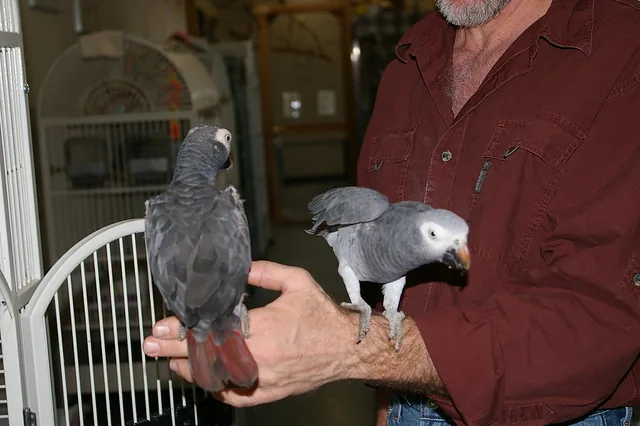
Father · 7 years
Levi
Talkative, cuddly and tame — a confident male who loves company and steps up readily. Levi passes Evie his easy sociability and that talkative streak Timnehs are known for.
Mother · 6 years
Rily
A people-loving hen who counts easily and stays busy — bright and quick. Rily is where Evie gets her curiosity and that sharp, problem-solving Timneh mind.
What raising Evie in our own home means
It means we manage the pairing, we know the breeding history, and we can describe Levi and Rily because we work with them every day. Knowing both parents tells you something a reseller never can: the temperament Evie is likely to grow into. A Timneh raised by a talkative, people-loving pair in a hands-on home tends to carry that same even, sociable temperament forward — and that is exactly what we see developing in Evie.
Can I see more of Evie's lineage before reserving?
Yes. We are happy to share more about Levi and Rily, Evie's clutch, and anything else you want to verify before you put a deposit down. Evie's full sibling Elad is available from the same pairing, and our available greys hub gathers every bird in one place.
What should you think through before buying a female Timneh?
Most bird listings skip this part. We don't. An honest fit-screening question now saves a difficult conversation in year three.
An honest checklist before you decide on Evie
40–60 year lifespan
A healthy Timneh African Grey can outlive a mortgage. Evie could still be greeting your kitchen in 2070. Are you prepared for a companion that may need someone to care for her after you?
Daily interaction — not optional
Evie will need real engagement every day. A grey left alone ten hours consistently will develop stress behaviours. This is not a low-effort pet.
Noise and feather dust
Timnehs are vocal — not a background presence. The fine powder-down they produce is real and requires good air filtration. People with bird-dander sensitivities should verify tolerance first.
The total annual cost
The purchase price is a fraction of the lifetime spend. Ongoing costs include a varied diet, avian vet visits, enrichment, and cage. Our full cost breakdown maps it all out.
Once you have been honest with the checklist
If you reached this point nodding along — if the commitment is real and the fit is right — that is the conversation we want to have. The AVMA's pet-bird selection guidance ↗ is blunt about the lifelong nature of parrot ownership, and we agree with every word of it.
We screen gently. We would rather Evie go to the home that genuinely fits her than to the first one to ask.
A 50-year decision
A Timneh African Grey is one of the longest commitments in the pet world. Work through this list honestly before you reserve Evie — we would rather you be sure now than rehome her later.
What does living with a Timneh hen look like long-term?
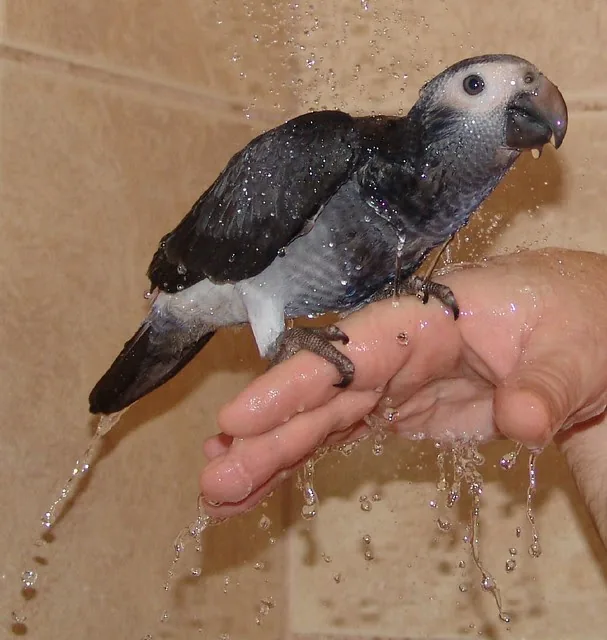
A settled Timneh hen at ease — the calm bond that deepens over the decades.
The part most Timneh listings skip
We always tell Timneh buyers to picture the bird at fifteen, not at six months — and Evie is six months. Today she's a sweet, slightly reserved little hen who'd rather size you up than rush you, true to the Timneh temperament. Her vocabulary builds across that first year instead of switching on overnight. The hen she settles into at five years, and again at fifteen, is a more expressive, more bonded version of this youngster, because a well-handled Timneh deepens with time. The patience you spend on her now pays back across a forty-plus-year life.
What the steady years with Evie look like
A well-integrated Timneh in a stable home develops into something that genuinely surprises people who have not owned one. She anticipates your schedule. She marks seasons — Christmas wrapping paper gets a comment, a suitcase gets a worried sound, your morning coffee routine gets narrated. That is what 40–60 years of companionship looks like when it is working.
The bridge between worry and a settled bird
The greys we hear about decades later that are still thriving share one thing: consistent daily engagement with people who committed to the relationship as a long-term one. Not intensive training, not elaborate setups. Consistency. A grey who trusts her household develops a resilience that makes her adaptable even when life changes around her.
Read our full African Grey parrot guide for the practical day-to-day picture — diet, enrichment, sleep, and what to expect decade by decade.
What C.A.Gs families say
Reviews — families who chose a C.A.Gs grey
These are real buyers who found us the same way you did — searching for a documented, legitimate African Grey breeder they could actually trust.

Lawrence Brunner
Fullerton, CA · African Grey
"I'd been burned by a deposit scam before, so I asked C.A.Gs for everything — license number, CITES paperwork, a live video call. They sent it all without hesitating. My grey landed calm and healthy with his whole documentation packet."
Verified C.A.Gs buyer
Sandra Soliz
Rome, GA · African Grey
"What sold me was how well they actually knew their birds. Teri answered every question for weeks, then checked in after he arrived to make sure he was settling. A real breeder, not a flipper."
Verified C.A.Gs buyer
Ida Brim
Nashville, TN · African Grey
"From the first email to home delivery, everything was exactly as promised. My grey arrived hand-raised, weaned, and confident — with his health certificate and CITES documents in hand."
Verified C.A.Gs buyer
Not ready to reserve Evie yet?
Every family above started exactly where you are. Join our list and be first to hear when our next hand-raised Congo or Timneh clutch is ready to place — before it's listed publicly.
How do you tame and bond with a young hen like Evie?
Training an African Grey is less about commands and more about building trust. Evie is 6 months old — exactly the right stage to start the patient, positive-reinforcement approach that produces a well-adjusted grey for life. Our full guide to taming an African Grey covers every stage, but here is the core method we use with every bird from our aviary.
Bonding with Evie — the step-up basics
- 1
Spend quiet time near her first
Spend the first few days simply being near her cage. Talk quietly. Let her decide whether to approach the bars. Forced interaction at this stage creates wariness that takes weeks to undo.
- 2
Teach the "step up" cue
Present your finger or forearm firmly below her chest and say "step up" once. A confident, still arm is the cue. Wavering or retreating teaches her not to trust it.
- 3
Reward the attempt, not perfection
When she steps up, reward immediately — a small treat, quiet praise, or a foraging toy. Greys connect cause and effect faster than most birds. The reward has to follow the behaviour within one second to register.
- 4
Keep each session brief
Five minutes twice a day beats one long session. Greys remember their last experience most — end while she is still engaged, not after she has lost interest.
- 5
Let the whole family take part
We socialize Evie with multiple people specifically so she does not become a one-person bird. Repeat the step-up with everyone in the home in the first weeks — that is the investment that pays off for 40 years.
What you must never do with a young hen
Do not force contact, do not punish vocalisation, and do not use spray bottles as deterrents. Any negative physical experience at this stage can produce fear-based biting that takes months to unpick. When Evie says no — retreating, raising her hackles, narrowing her eyes — that is information, not defiance. Read it and give her space.
Teri's note: Evie's first week matters most
My advice with a reserved hen like Evie is to do almost nothing the first few days. Quiet room, a routine she can count on, food and water in easy reach, and no pressure. Let her come to you. The bond you build slowly is the one that lasts decades.
What do C.A.Gs feed a female Timneh like Evie?
Short answer: A formulated pellet base (40–50% of diet), supplemented with fresh vegetables, leafy greens, and limited fruit. We send Evie home eating the exact diet she is on now to avoid digestive stress during the transition.
The four pellet brands behind our birds
Here at C.A.Gs we have fed and evaluated many formulations across the flock. The four brands we confidently recommend — and have used in our own aviary — are Harrison's Bird Foods, Roudybush Daily Maintenance, TOP's Parrot Food, and ZuPreem Natural. All four are nutritionally complete and avoid the artificial dyes that can irritate sensitive greys. Our African Grey diet guide and best food for African Greys both lay out the full ingredient comparison and conversion tips if you want to go deeper.
What else fills Evie's bowl each day?
- ✔ Fresh vegetables daily — leafy greens (kale, chard, romaine), carrot, broccoli florets, and bell pepper. Variety matters more than quantity.
- ✔ Limited fruit — apple, papaya, mango in small pieces. High sugar, so keep it occasional and use it for training rewards rather than a meal component.
- ✔ Calcium support + UV-B light — Greys are specifically prone to hypocalcemia. We raise our birds with full-spectrum UV-B lighting and vitamin D3 supplementation so they can actually absorb the calcium in their diet.
- ✗ Never — avocado, chocolate, caffeine, alcohol, onion, or anything high in salt. All are toxic to parrots and some are fatal in small amounts.
Real Photos — No Stock Images
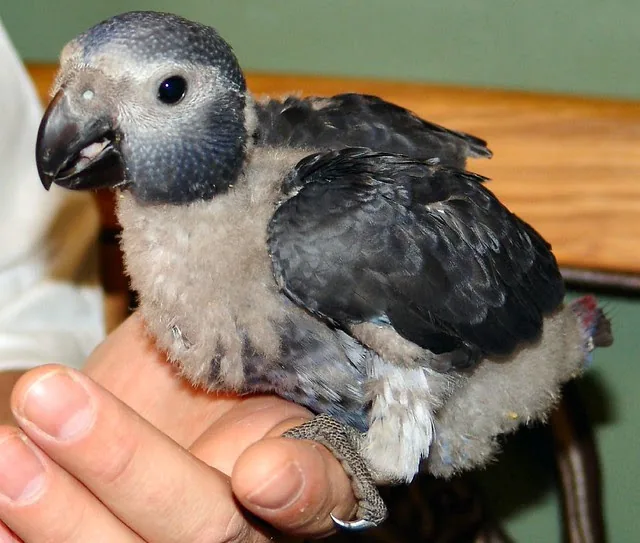
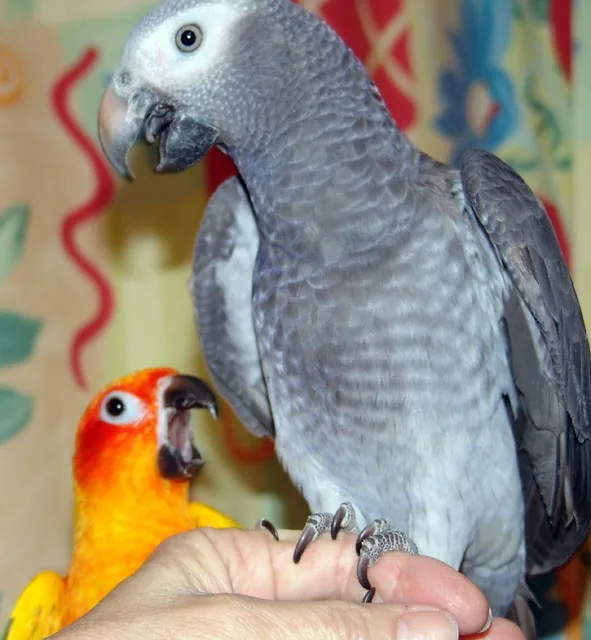
Evie's photo & video gallery
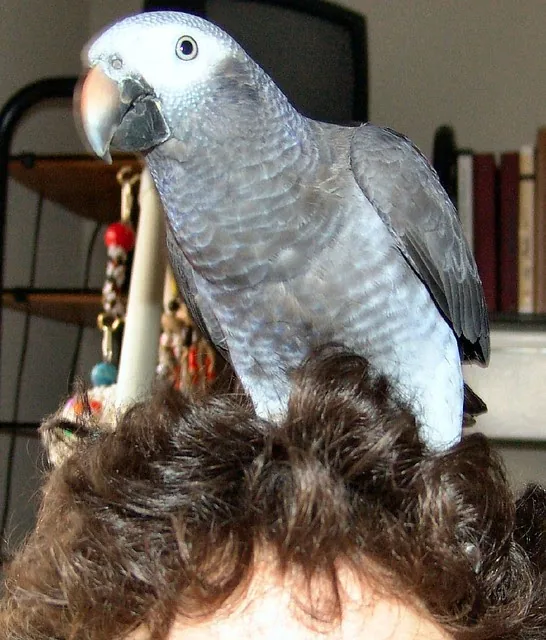
Every image below is Evie herself — taken in our Midland, TX aviary. What you see is what ships to you.
How do you reserve and buy Evie, step by step?
We built the reservation process to be clear at every step — no surprises, no pressure, no money moving until you are certain. Here is exactly how it works.
- 1
Get in touch through our contact form
Use the inquiry form below or on our contact page. Tell us you are interested in Evie. We reply within 24 hours with fresh dated photos and answer any questions you have before a single dollar moves.
- 2
A $200 deposit holds her for you
Once you are ready, a $200 deposit holds Evie for you and pauses her listing. No one else can claim her after your deposit is confirmed. The deposit is applied to the $1,500 total — it is not a separate fee.
- 3
Balance settled before she travels
The remaining balance is due before Evie is shipped. We confirm the travel date with you first and schedule around what works for your household — not a one-size-fits-all calendar.
- 4
Choose shipping — airport or home delivery
Choose Airport Pickup ($185) — Evie travels in an IATA LAR-compliant live-animal carrier on Delta, United, or American to your nearest major hub — or Home Delivery ($350) door-to-door. An Avian Flight Nanny who carries her in-cabin is also available, quoted per route.
- 5
Evie lands with her full paperwork
She lands with her full documentation set in hand: DNA sex certificate, AAV avian-vet health certificate, hatch certificate + closed band, CITES captive-bred paperwork, and weaning + feeding guidance. We stay reachable for any post-arrival questions — the relationship does not end when the carrier opens.
Is Evie's deposit refundable?
Yes — the $200 deposit is refundable any time before Evie ships. If circumstances change on your end, reach out and we work it out directly.
Which states do C.A.Gs deliver a Timneh to?
Nationwide shipping — two tiers
$185
Airport Pickup
IATA LAR live-animal cargo to your nearest major airport. Delta, United, or American.
$350
Home Delivery
Door-to-door delivery. Evie arrives at your address, calm and ready to settle in.
We ship Evie to all 50 states. She travels in an IATA Live Animals Regulations (LAR) ↗ approved carrier with an AAV avian-vet health certificate dated within 10 days of travel. Hub airports we regularly use include Denver (DEN), Los Angeles (LAX), Miami (MIA), Chicago O'Hare (ORD), Dallas (DFW), and Atlanta (ATL) — but reach out and we will confirm your nearest hub.
What does an avian flight nanny do?
A Flight Nanny is a professional courier who carries Evie in-cabin rather than as cargo — she is never in the hold, never alone in a dark luggage bay. This option is available from Midland, TX to most major airports and is quoted per route (typically from about $750). Ask us when you inquire.
Can you fly Evie to Texas or somewhere nearby?
Texas is our closest shipping corridor — our aviary in Midland puts Evie just a short hop from buyers across the Lone Star State. We regularly place birds with families throughout Texas, Dallas, Houston, and Austin — and of course near you wherever you are. We fly to all 50 states, so distance is never a barrier.
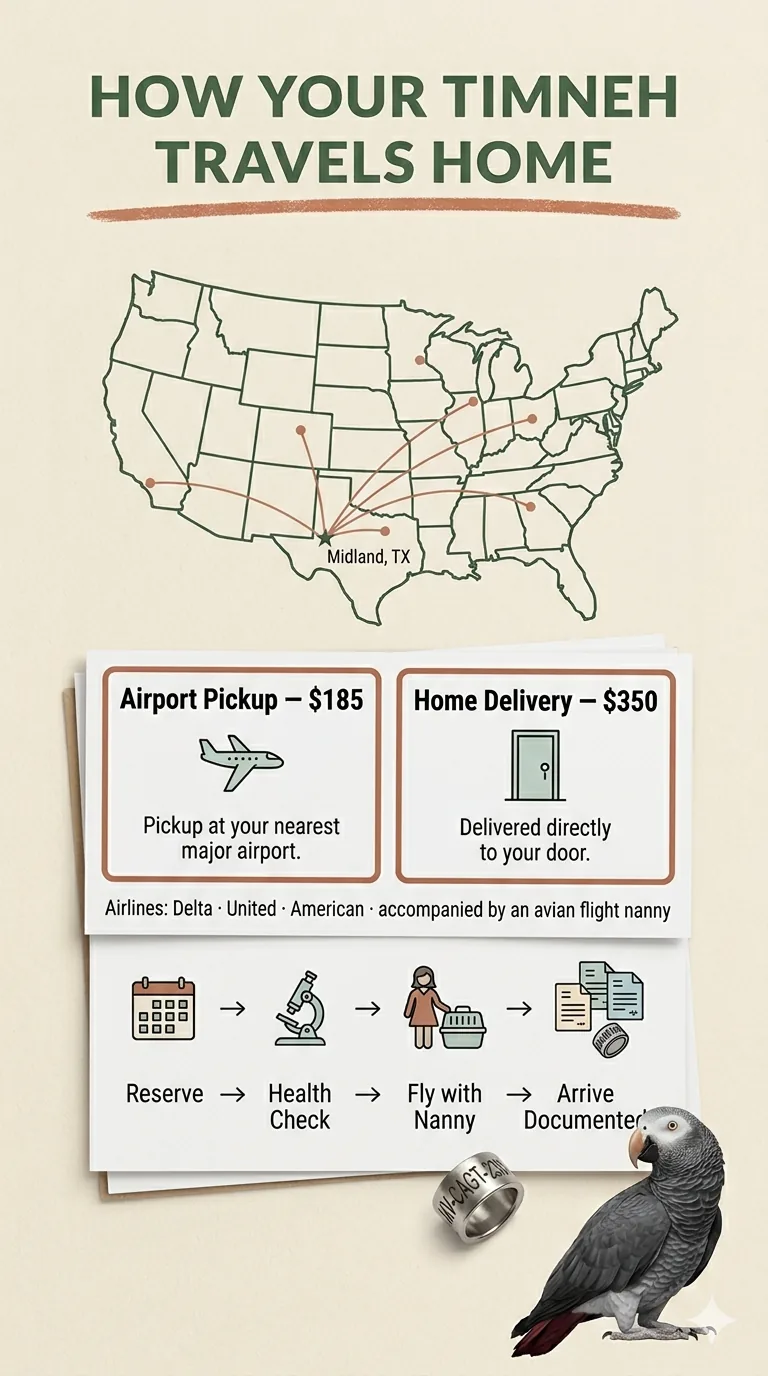
Evie ships in an IATA LAR-approved carrier · $185 airport · $350 home
Straight answers
Evie — frequently asked questions
Six questions that come up every time we talk to a buyer interested in Evie — answered plainly.
Is Evie DNA-sexed and documented?
Yes. Evie goes home with her DNA sex certificate confirming she is female, her avian-vet health certificate, her hatch certificate with closed leg-band number, and her CITES captive-bred documentation. Here at C.A.Gs, every grey is captive-bred in the USA and leaves with the full paperwork set.
How old is Evie and what is her temperament?
Evie is 6 months old. We hand-raised her ourselves, and she has grown into an energetic, playful young grey who thrives on activity and does beautifully with a lively household. She is a confident bird who loves toys, foraging, and an engaged family around her.
How much is Evie and how do I reserve her?
Evie is $1,500. A $200 deposit reserves her and pauses her listing for you. The balance is due before she travels. Reach out through our contact form and we reply within 24 hours.
Can Evie be shipped to me?
Yes — Evie ships nationwide. Airport Pickup is $185, where you collect her at your nearest major airport via IATA-compliant live-animal cargo (IATA code LAR) on Delta, United, or American. Home Delivery is door-to-door for $350. An Avian Flight Nanny who carries her in-cabin is available too, quoted per route from about $750.
Do female Timneh African Greys learn to talk well?
Timneh African Greys of either sex are among the most capable talking parrots, and Timnehs are reputed to start talking earlier than Congos — sometimes around 6–12 months. Sex is not a reliable predictor of how much an individual will say. Evie is developing at 6 months; what shapes her eventual vocabulary most is daily interaction in the home, not whether she is female.
Why is Evie priced at $1,500 when listings show $600 Timnehs?
A $600 'Timneh' is the price of a bird with no verifiable paperwork — no DNA certificate, no CITES documentation, no avian-vet health check, and often no breeder you can actually hold accountable. Evie is $1,500 — reduced from a $2,200 Timneh starting price — because that figure covers hand-rearing, her full documentation set, and a USDA AWA licensed aviary standing behind her. A documented hand-raised Timneh honestly cannot be produced for $600.
Have a question that isn't here? Ask us directly — we reply within 24 hours and are happy to answer anything before you decide.
Care Guides & Resources
Timneh care guides for Evie's family
Still doing your homework on Evie? These are the same guides we send every new C.A.Gs family — written from raising greys ourselves, not rewritten from somewhere else.
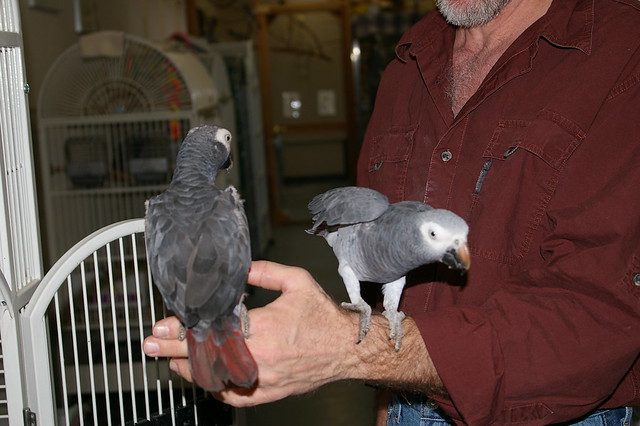
The Complete African Grey Care Guide
Diet, enrichment, sleep, and what to expect decade by decade.
Read the guide →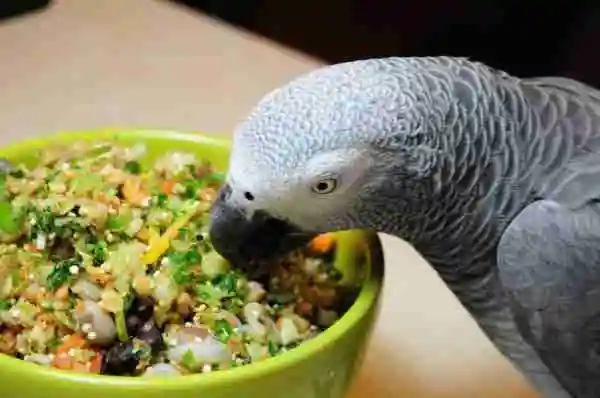
What to Feed an African Grey
The pellet base, fresh foods, and the calcium/UV-B greys specifically need.
Read the guide →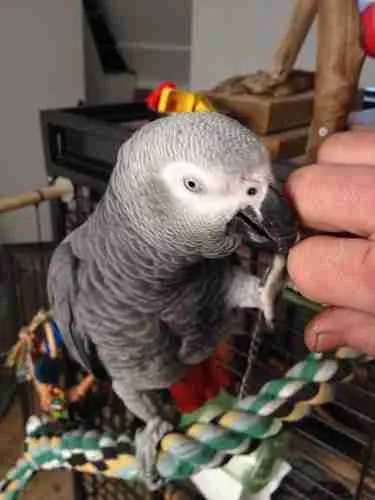
How African Greys Learn to Talk
Vocabulary, timeline, and how to help Evie find her voice.
Read the guide →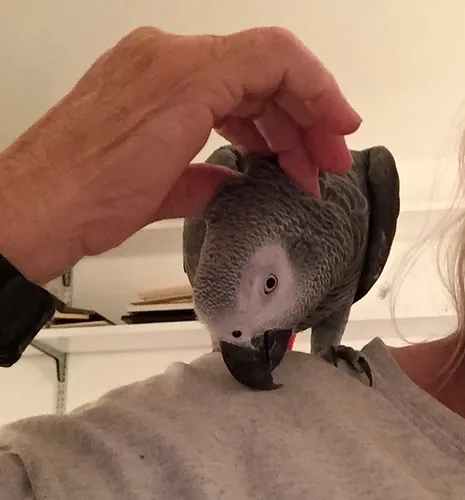
How to Tame & Bond With Your Grey
The patient, positive step-up method we use on every bird.
Read the guide →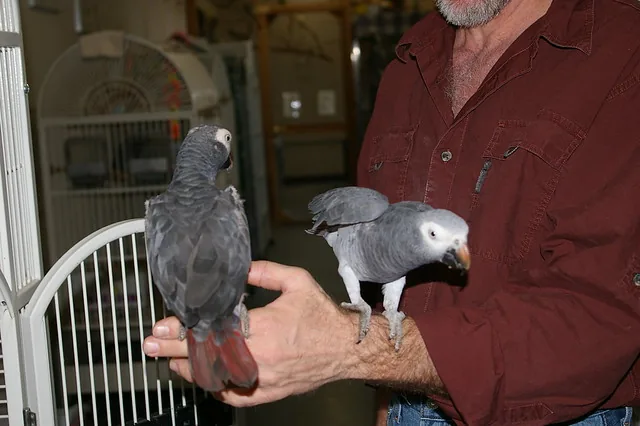
What an African Grey Really Costs
The full breakdown behind a documented grey's price — and lifetime spend.
Read the guide →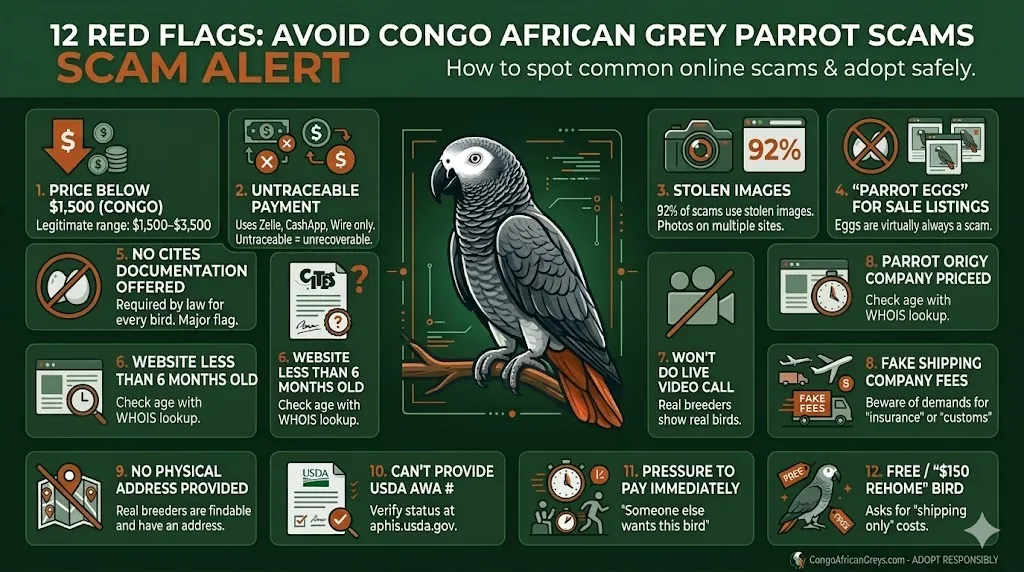
How to Avoid African Grey Scams
The documentation and breeder checks that separate real birds from bait listings.
Read the guide →Why reserve Evie with C.A.Gs rather than a marketplace?
Here is the honest side-by-side. Marketplace listings for African Greys can run to $4,000 or more — and even at that price, you are often buying from an anonymous seller whose information disappears the moment the payment clears. The evidence below is not an attack on any platform; it is what the structure of that kind of listing cannot give you.
Buying from C.A.Gs
- ✔ USDA AWA license you can verify independently at the federal portal
- ✔ Real physical location in Midland, TX — no PO box, no anonymous address
- ✔ Full CITES Appendix I captive-bred paperwork included
- ✔ DNA sex certificate from a named, verifiable lab
- ✔ AAV avian-vet health certificate — bird examined before travel
- ✔ Teri answers follow-up questions for as long as it takes, after the bird is home
Anonymous marketplace listing
- ✗ Seller identity often unverifiable — no license number, no address
- ✗ CITES documentation may be missing, photocopied, or falsified
- ✗ DNA sexing unconfirmed — "we think it's a female" is not a certificate
- ✗ No post-sale support — the seller is unreachable in week two
- ✗ Price advantage (if any) comes from cuts you cannot see until the bird is sick
The benefit we offer is not a different product — it is accountability. We are the same breeders Mark & Teri Benjamin, the same address in Midland, TX, the same USDA license number — findable before you pay, reachable after the bird lands. That is the proof behind the price.
On price — why C.A.Gs won't list Evie at $4,000
We price our birds to reflect the real cost of raising them properly, not what the market can bear. $1,500 for Evie covers hand-rearing, full documentation, and the aviary infrastructure that produced her. Our full price breakdown shows exactly where that figure comes from. We would rather be the breeder you tell people about than the one who extracted maximum margin from a 40-year decision.
She is available right now
Ready to welcome Evie home?
Fill in the form below and we will reply within 24 hours with fresh dated photos of Evie and answers to anything you want to know. No pressure, no commitment — just a conversation. A $200 deposit locks her in whenever you are ready.
Ships nationwide · $185 airport · $350 home
Evie is one of several hand-raised greys currently available at C.A.Gs. Visit our homepage to meet all available African Greys →
Or browse our full available birds hub to compare Evie with Amie, Bery, Evie, Evie, and the Jins & Jeni pair.