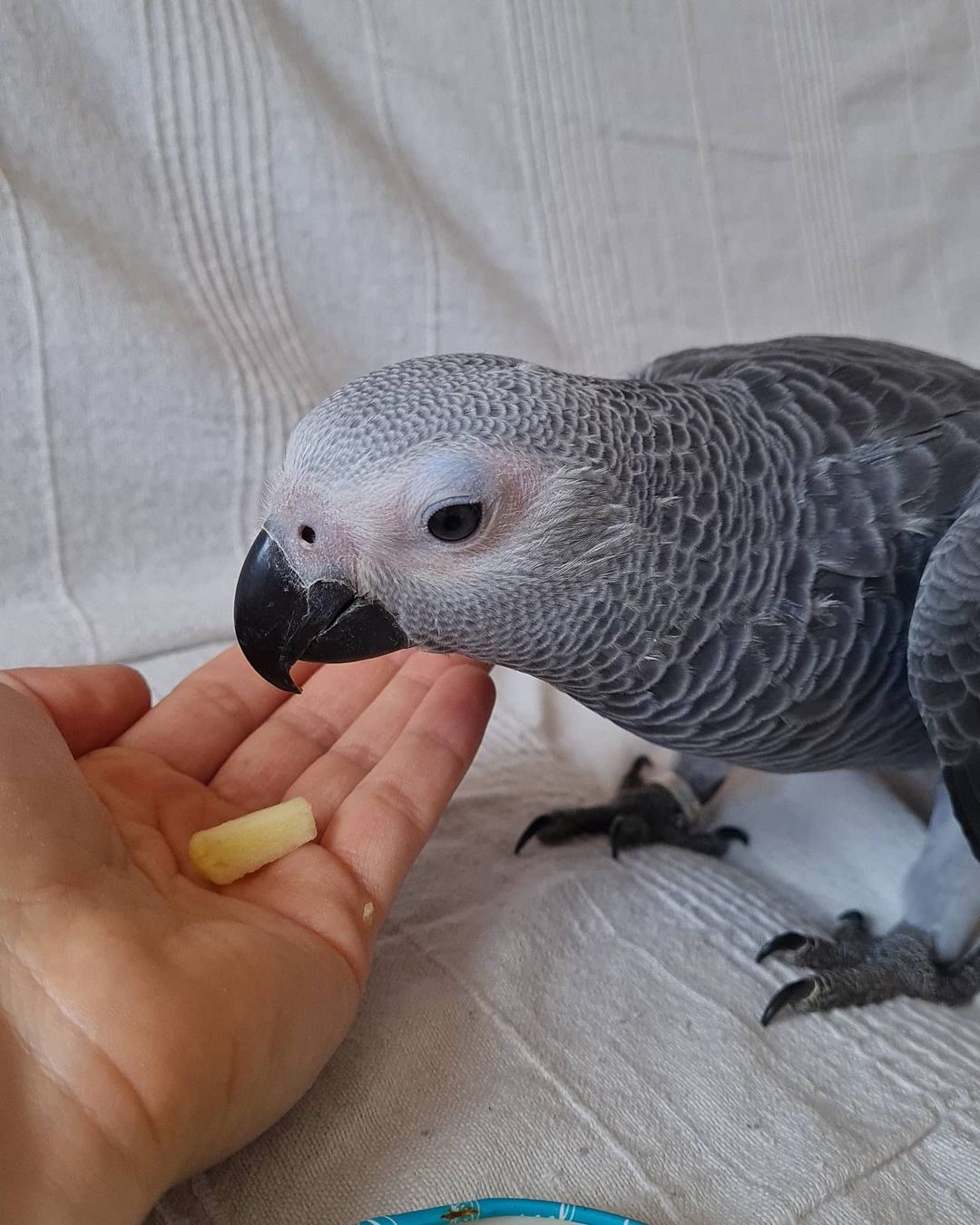
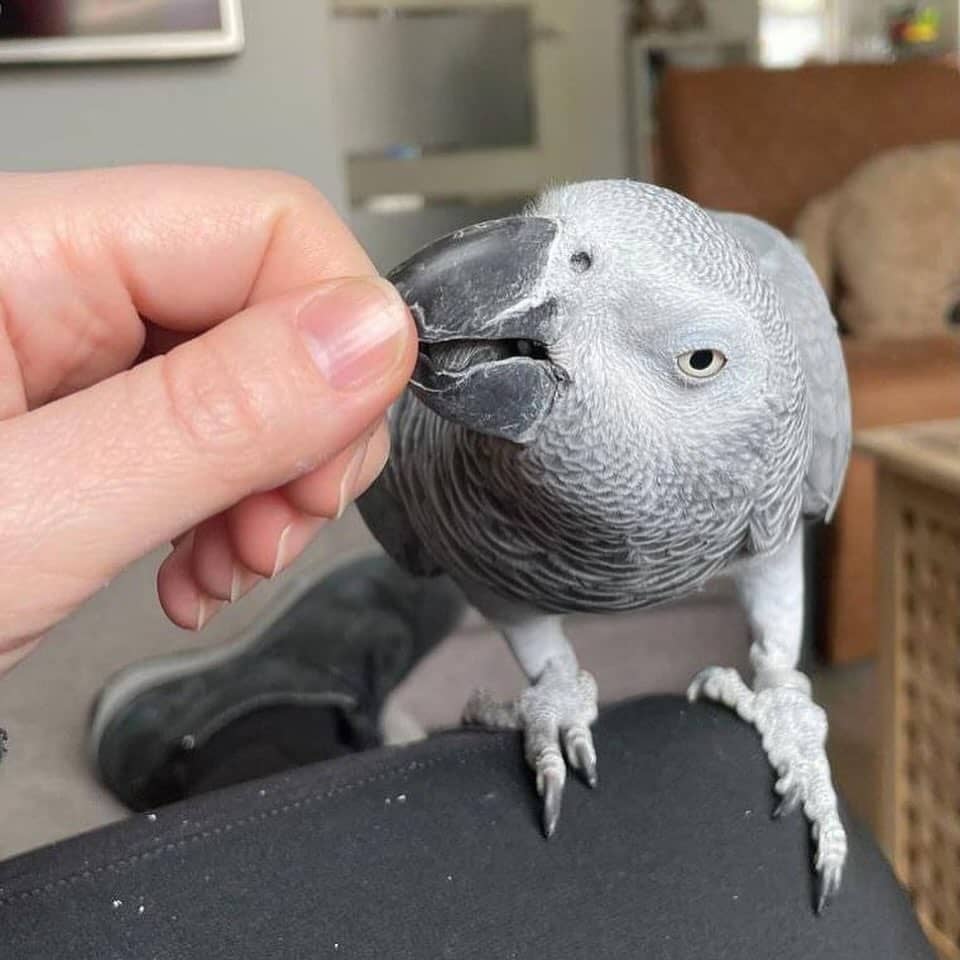
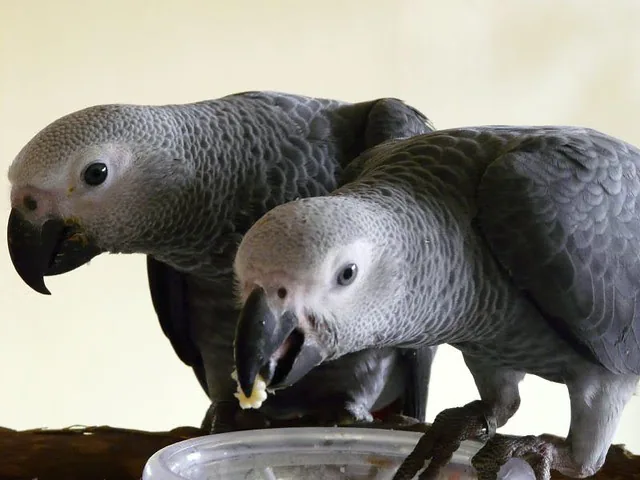
They use words in context, read your moods, can live past 60, and once helped rewrite the science of animal minds. Here are 25 breeder-verified, science-backed facts about the African Grey.
Written by Mark & Teri Benjamin · C.A.Gs African Grey breeders, Midland TX · USDA-licensed since 2014
The African Grey — famous for what's happening behind the eyes.
40–60
Year lifespan
1,000+
Words possible
CITES
Appendix I
USDA
Licensed breeders
Fascinated by African Greys?
Tell us what you're curious about and we'll send live video, care info and the hand-raised Greys available now — no pressure.
✓ USDA AWA Licensed✓ CITES Appendix I✓ DNA Sexed✓ Avian Vet Certified✓ Ships Nationwide
On This Page
The short version
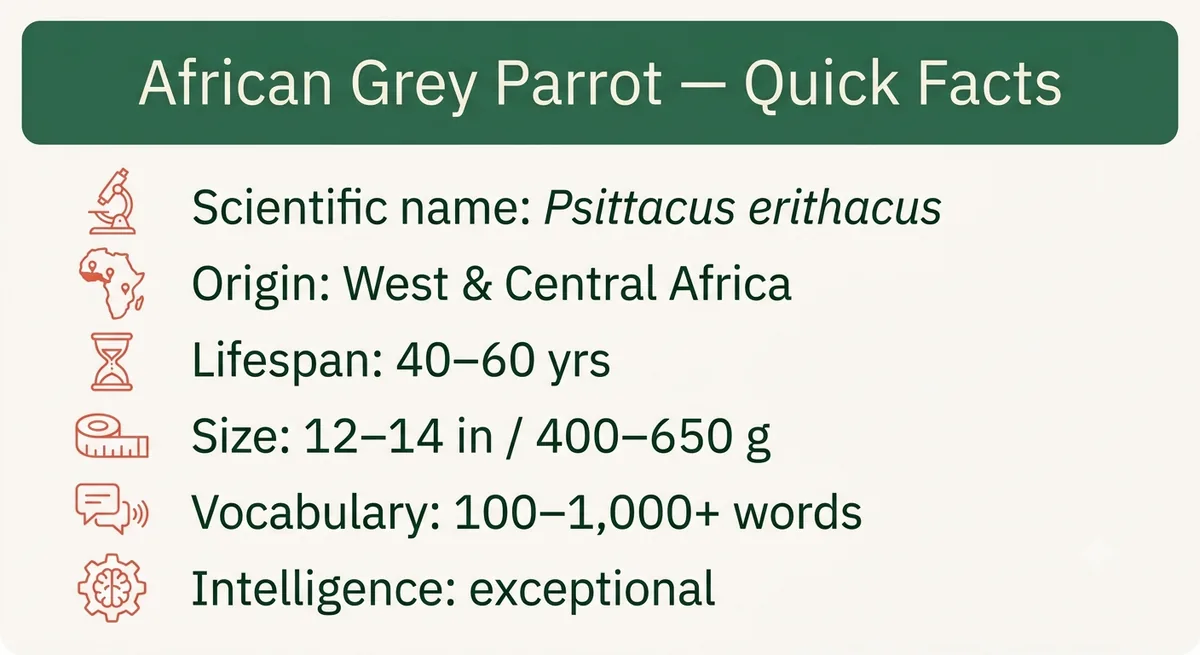
African Grey Parrot Quick Facts
The African Grey (Psittacus erithacus) is widely considered the most intelligent parrot in the world — capable of a 1,000-word vocabulary used in context, a 40–60 year lifespan, and cognition compared to a five-year-old child. It's native to West and Central Africa, listed as Endangered, and CITES Appendix I, so every legal US bird is captive-bred and documented.
Scientific namePsittacus erithacus
OriginWest & Central Africa
Lifespan40–60 years
Size12–14 in · 400–650 g
Vocabulary100–1,000+ words
IntelligenceExceptional
The African Grey at a glance — the facts every owner starts with.
How Smart Is an African Grey, Really? (Intelligence Facts)
If you only remember one thing about African Greys, make it this: their intelligence is not a marketing line, it's peer-reviewed science. This is the group of facts that made the species famous — and the part competitors' generic lists skate over.
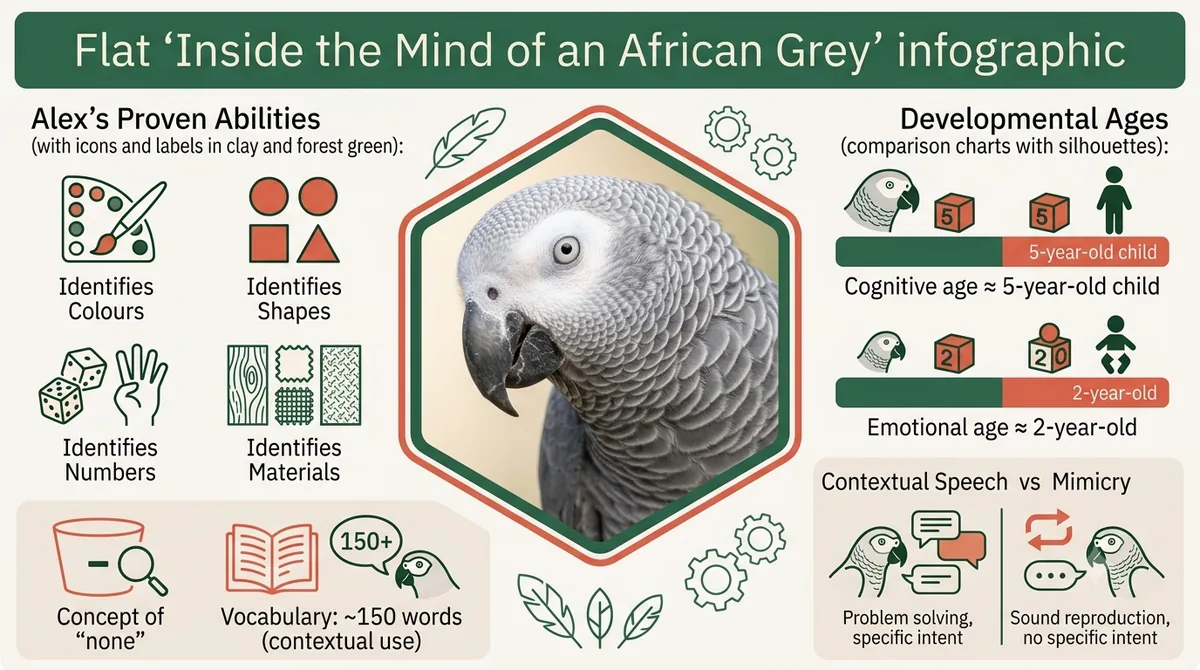
Inside the mind of an African Grey — the cognition that rewrote the textbooks.
1. They're Among the Smartest Birds on Earth
African Greys sit at the very top of avian intelligence rankings, alongside corvids like crows and ravens. Their problem-solving, memory and communication put them in a cognitive class most people simply don't expect from a bird — which is exactly why they've become the species scientists reach for when studying animal minds.
2. They Learn Hundreds of Words — and Use Them in Context
A well-raised Grey can build a vocabulary of several hundred to over a thousand words. But the headline isn't the number — it's that they use words meaningfully, a distinction university speech research ↗ has documented, not just as random mimicry. We cover this in depth in our guide to African Grey talking ability.
Mimicry vs. Genuine Understanding
Most talking birds mimic; the African Grey crosses into something closer to comprehension. The difference is whether a word is a copied sound or a label the bird attaches to a real thing — and Greys, uniquely, do the latter routinely.
How a Grey associates a word with an object
Through repetition tied to context — hearing "grape" every time a grape appears — a Grey links the sound to the object, then produces it to request that object. It's the same associative learning that underpins early human language, running in a bird the size of a pigeon.
Breeder note: the first time one of ours "asked" for something by name
You never forget the first time a chick you raised looks at the fruit bowl and clearly says "apple" — not on cue, but because it wants one. That moment, which every long-time Grey owner has, is the difference between a parrot that talks and a parrot that means it.
3. Alex the Grey Changed Science
No single bird did more for the species' reputation than Alex, the Congo African Grey studied for three decades by Dr. Irene Pepperberg. Alex didn't just talk — he demonstrated the kind of reasoning that, alongside modern parrot-brain research ↗, forced scientists to rethink what "bird brain" means.
What Alex Could Actually Do
Alex could identify around 50 objects, seven colours and five shapes, count small quantities, and answer questions about the attributes of things he'd never been tested on before. His last word to Pepperberg each night was "You be good, I love you."
Colors, shapes, numbers — and the concept of "none"
Most strikingly, Alex grasped the abstract concept of zero or "none" — spontaneously using it to describe the absence of a difference between two objects. That's a level of abstraction once thought impossible outside primates.
Citation: the Pepperberg / Alex research
These findings are documented across decades of peer-reviewed work by Dr. Irene Pepperberg and The Alex Foundation ↗. When people ask why African Greys command respect (and their price), this body of science is a large part of the answer.
4. Their Minds Rival a Young Child's
Researchers often place the African Grey's cognitive ability at roughly that of a five-year-old child, with the emotional development of a two-year-old. That combination — clever enough to reason, sensitive enough to sulk — is exactly what makes them so rewarding, and so demanding, to live with.
What Are African Greys Like to Live With? (Behavior Facts)
Intelligence shapes personality. These behaviour facts explain both the joy and the responsibility of sharing a home with a bird this bright.
5. They Bond Deeply — Sometimes to One Person
Greys form intense attachments. Raised and handled by the whole family, a Grey usually bonds with several people; handled by only one, it can become a classic "one-person bird." Broad early socialisation — which is how we raise ours — is what keeps them friendly with everyone.
6. They Read Your Routine and Your Mood
Owners consistently report that their Grey seems to know what's coming — greeting them before they're visible, or going quiet when the house is tense. This isn't imagination; it's a socially intelligent animal reading patterns.
The Emotional-Intelligence Side
Beyond routines, Greys appear to pick up on emotional tone. Many will change their behaviour around an upset owner — a reminder that you're not just keeping a pet, you're living with a sensitive companion that notices you.
Why they seem to "know" when you're leaving
They're reading your cues — keys, shoes, the bag by the door — and predicting the outcome. It's the same pattern-learning behind their speech, applied to your daily life.
The routine-reading examples owners report most
The classics we hear again and again: a Grey that announces "bye!" the moment you pick up your keys, one that mimics the microwave beep at dinnertime, and one that calls the dog by name to stir up trouble. Living with that much awareness is the whole appeal.
7. They Need Hours of Daily Interaction
A Grey isn't a decorative bird you admire from across the room. It needs several hours a day of interaction and enrichment — conversation, foraging, training, out-of-cage time. Give it that and it thrives; withhold it and problems follow.
8. Boredom Can Lead to Feather-Plucking
One of the most important facts on this page: a bored, understimulated Grey can begin plucking its own feathers. It's usually a stress and boredom response, not a medical mystery — and it's the clearest reason not to buy a Grey for its brains and then fail to feed them.
How Do African Greys Talk? (Talking Facts)
Speech is the Grey's superpower, and it's stranger and more impressive than most people realise.
9. They Mimic Household Sounds Perfectly
Beyond words, Greys reproduce microwaves, phone ringtones, smoke alarms and squeaky doors with unnerving accuracy — often at the least convenient moment. Many owners have "answered" a phone that was actually their bird.
10. They Recognise and Imitate Specific Voices
A Grey can imitate not just words but who says them — copying one family member's laugh or another's cough. They map sounds to individuals, which is why yours may only say certain phrases in a particular person's voice.
11. Timneh vs Congo: Who Talks Sooner?
The Timneh African Grey often starts talking a little earlier (around 9–14 months) than the Congo (12–18 months), though the Congo tends toward the larger vocabulary and the classic clear voice. Both are exceptional — see how they stack up against another species in our African Grey vs Eclectus comparison.
12. Some Invent Their Own Words and Sounds
Greys don't only copy — some combine sounds into new "words" or apply a phrase in a novel situation, a small but real flash of creativity. It's another sign the species is doing more than parroting.
Quick Quiz: How Well Do You Know African Greys?
Five questions, sixty seconds. Pick an answer for each, then check your score.
1. Which scientist spent 30 years studying Alex, the famous African Grey?
2. How long can an African Grey typically live in captivity?
3. What makes an African Grey's speech special compared to most parrots?
4. Under CITES, wild African Greys are protected as which appendix?
5. How can you tell a male African Grey from a female by sight?
Myth
African Greys are just clever mimics — they don't really understand the words they say.
Fact
Mimicry is only part of the story. Decades of research, most famously the Alex studies, show African Greys use words in context — labelling objects, colours and quantities, and even grasping the concept of 'none'. They're the strongest evidence we have that a bird can genuinely understand language, not just repeat it.
Where Do African Greys Come From? (Wild & Origin Facts)
Before they were the world's favourite talking companion, African Greys were — and still are — wild rainforest birds with a story that shapes how you can legally own one.
In the wild they flock in the thousands; ours are hand-raised and documented.
13. They're Native to Central African Rainforests
As the Cornell Birds of the World profile ↗ maps out, African Greys come from the equatorial rainforests of West and Central Africa — Cameroon, the Congo Basin, Ghana and Ivory Coast among them — where they forage across the canopy and can travel miles a day between roosting and feeding sites.
14. Wild Flocks Number in the Thousands
In the wild, Greys are intensely social, gathering at night in roosts that can number in the thousands. That flock instinct is exactly why a lone, under-socialised Grey struggles — your household becomes its flock.
15. They're Endangered and CITES Appendix I
Heavy trapping for the pet trade and habitat loss have pushed the wild African Grey onto the IUCN Endangered list ↗, and in 2017 it was uplisted to CITES Appendix I — the highest level of international protection.
What CITES Appendix I Means for Owners
Appendix I does not make owning a Grey illegal — it means a captive-bred bird must come with documentation proving it wasn't taken from the wild. As the CITES appendices ↗ set out, that paperwork is what keeps ownership and transport legal.
Why captive-bred documentation is the whole point
The document trail is the line between an ethical, legal companion and a laundered wild bird. It's the single most important fact a buyer can act on: no papers, no purchase.
Breeder note: the paperwork every one of our chicks carries
Every C.A.Gs Grey goes home with CITES Appendix I captive-bred documentation, a PCR DNA-sexing certificate and an avian-vet health certificate. It's how we prove, not just promise, that our birds are exactly what we say they are.
What About Their Health and Lifespan? (Health Facts)
A Grey's long life is a gift and a responsibility. These are the health facts every prospective owner should know before, not after, they commit.
16. They Can Live 60+ Years — and Outlive Their Owners
With good care an African Grey commonly reaches 40–60 years, and some pass 70. That means a Grey bought by a 40-year-old may well outlive them — which is why responsible owners plan for the bird's whole life, including who inherits its care.
17. They're Prone to Calcium Deficiency
African Greys are unusually susceptible to hypocalcemia — low blood calcium — more so than most parrots. Left unmanaged it can cause weakness and even seizures, which is why calcium and vitamin D3 are a real part of Grey care.
The UV-B and Calcium Connection
Calcium is only useful if the bird can absorb it, and that requires vitamin D3 — which Greys make with exposure to UV-B light. Adequate lighting or supplementation is therefore central to preventing deficiency. Our full African Grey health-problems guide covers the wider list.
Warning signs of hypocalcemia
Watch for weakness, unsteadiness, clenching toes or, in severe cases, seizures. Any of these warrant an urgent avian-vet visit — calcium issues are very manageable when caught early.
Breeder note: the calcium foundation we set early
We start our chicks on a calcium-aware diet with proper lighting from the beginning, so the foundation is in place before a bird ever reaches its new home. Prevention on day one beats treatment in year five, every time.
18. Stress Shows Up in Their Feathers
Because Greys are so sensitive, chronic stress, boredom or illness often surfaces first as feather-plucking. Healthy feathers are, in a real sense, a visible readout of a Grey's mental and physical wellbeing.
19. They Need a Specialist Avian Vet
A dog-and-cat vet usually isn't equipped for a parrot. Greys need an avian vet for annual wellness exams and any illness — and finding one before you bring a bird home is part of responsible ownership, not an afterthought.
Fun African Grey Facts (Just for Delight)
Not every fact has to be a responsibility. Here are the ones that just make people grin — and the reason Greys are as beloved as they are impressive.
20. They Dance to Music
Many Greys genuinely move to a beat — bobbing, swaying and stepping in time. Rhythmic entrainment like this was long thought uniquely human; parrots are one of the few animals that share it.
21. Males and Females Look Identical
Unlike a peacock or an Eclectus, you cannot sex an African Grey by sight — males and females are visually identical. That's why reputable breeders DNA-test, and why every one of ours comes with a PCR sexing certificate.
22. They Can Learn to Count
Alex could count small quantities and even answer "how many?" about sets he'd never seen — numerical reasoning that stunned researchers. Your Grey may not do formal math, but the capacity is genuinely there.
23. They Have Regional "Dialects" in the Wild
Wild Grey flocks develop local calls — effectively regional dialects — that young birds learn from their neighbours. Their famous vocal flexibility starts long before any human teaches them a word.
24. They Hold Grudges — and Favourites
A Grey remembers who was kind and who wasn't. Many pick a favourite person and stay a little wary of someone who once startled them — a long memory that's equal parts charming and humbling.
25. A Well-Raised Grey Becomes Part of the Family
The final and most important fact: a hand-raised, well-socialised African Grey doesn't just live in your home, it joins your family — greeting you, learning your names, and sharing decades of your life. That's the whole reason we do this.
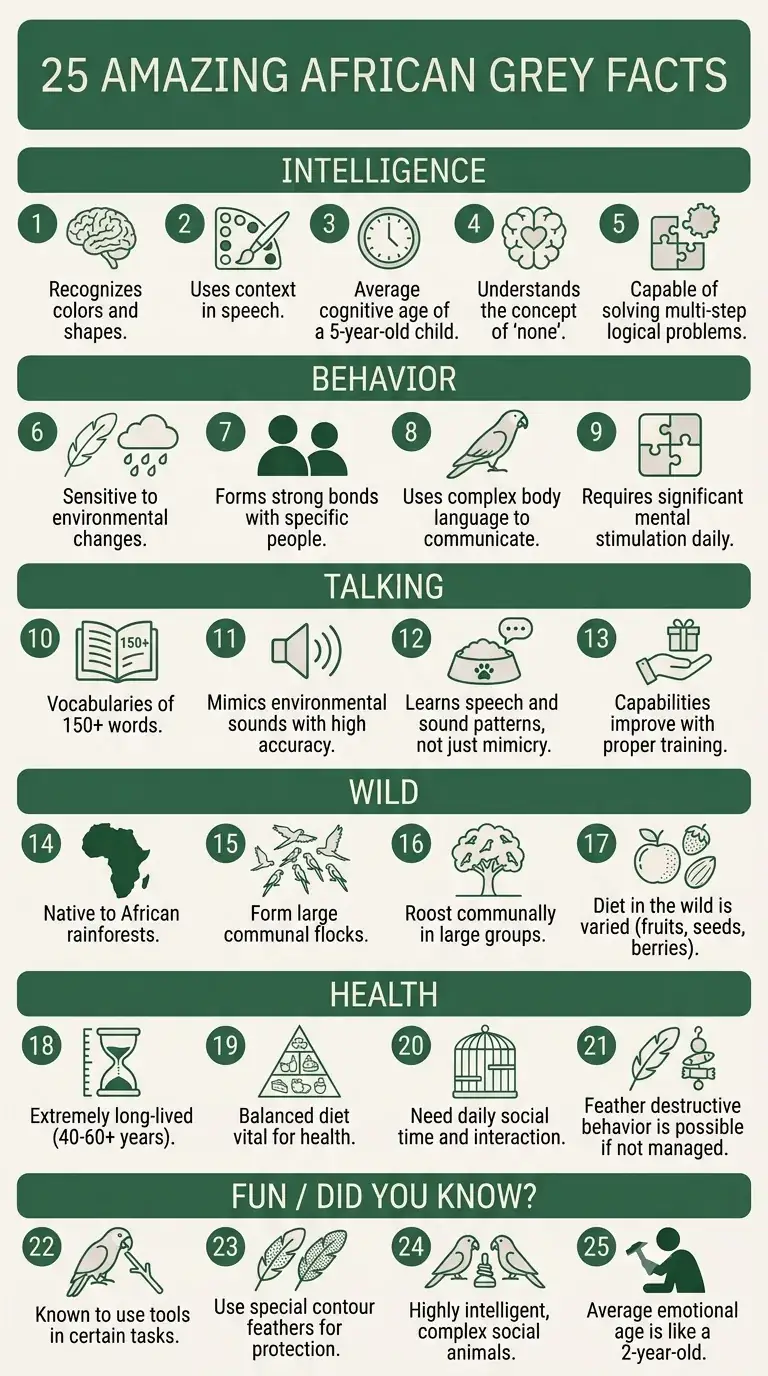
Save or share the full 25-fact sheet — free to repost with a link back.
See Our Hand-Raised African Greys
If these facts have you picturing a Grey of your own, here are the hand-raised African Greys available now — each PCR DNA-sexed, vet-checked and CITES-documented, at one fair, fixed price. No pressure; we're happy to just answer your questions on a live video call.
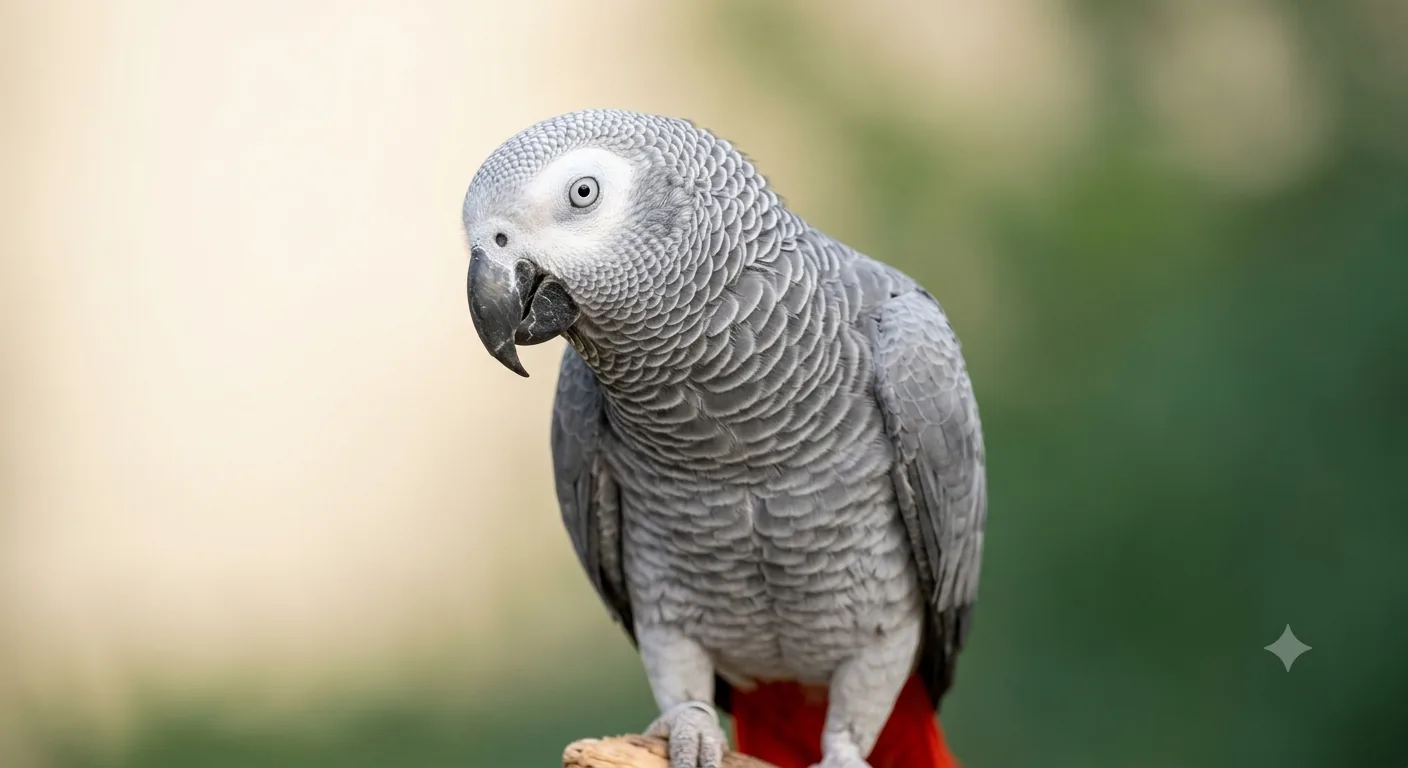
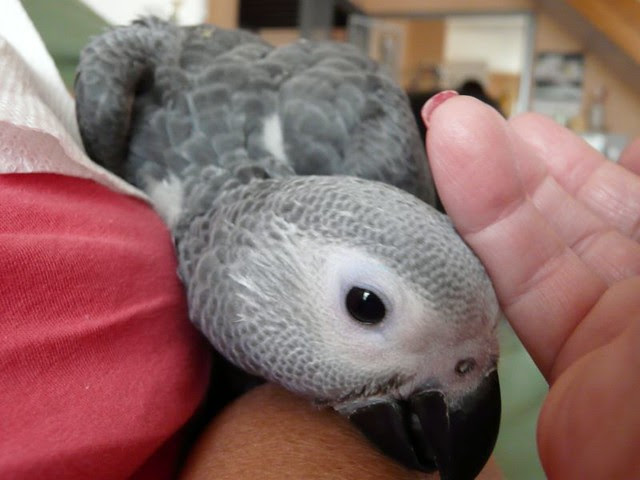
New Arrival Midland, TX
Amie
Female · 3 mo · Congo African Grey
"Hand-raised, fully documented, ready to reserve."
Premium hand-raised female, 3 months old. PCR DNA-sexed, vet-checked, CITES-documented — captive-bred in the USA with the full paper trail.
— Written by Mark & Teri Benjamin, the breeders behind C.A.Gs · USDA-licensed African Grey aviary, Midland, TX
African Grey Facts: Frequently Asked Questions
Are African Grey parrots intelligent?
African Grey parrots are considered among the most intelligent birds in the world. Dr. Irene Pepperberg's 30-year study of Alex, a Congo African Grey, demonstrated problem-solving, counting, colour and shape recognition, and contextual language use comparable to a young child — abilities far beyond simple mimicry.
How many words can an African Grey parrot learn?
African Greys can learn anywhere from 100 to over 1,000 words. What sets them apart is that they don't just mimic — they use many words in context, associating them with objects, actions and requests. Alex, the most-studied African Grey, worked with a vocabulary of around 150 words and used them meaningfully.
How long do African Grey parrots live?
African Greys typically live 40–60 years in captivity, with some reaching 70 or more. Wild birds average 20–25 years. That long lifespan means they can genuinely outlive their owners, which is why serious buyers plan for the bird's whole life — including who cares for it if they can't.
Can African Greys really understand what they say?
To a meaningful degree, yes. While much parrot speech is mimicry, African Greys demonstrably use words in context — asking for specific foods, naming colours and objects, and even grasping the concept of 'none'. The famous Alex studies documented this contextual understanding scientifically, which is why the species is a landmark in animal-cognition research.
Do African Greys recognise their owners?
Yes. African Greys bond deeply and recognise individual people by voice and appearance, often reacting differently to family members versus strangers. Many owners report their Grey reads daily routines and moods closely — greeting them at the same time each day or reacting when the household is tense.
Where do African Grey parrots come from?
African Greys are native to the rainforests of West and Central Africa, including Cameroon, the Congo Basin, Ghana and Ivory Coast, where they live in large flocks. They are listed as Endangered on the IUCN Red List and are CITES Appendix I, so every legally sold bird in the US is captive-bred with documentation — never wild-caught.
What is the difference between a Congo and a Timneh African Grey?
The Congo African Grey is larger (12–14 inches, silver body, bright red tail); the Timneh is smaller (9–11 inches, darker, with a maroon tail) and often starts talking a little earlier. Both are exceptional talkers and highly intelligent — the Congo tends to develop the larger vocabulary and the clearer 'classic' voice.
Are African Greys good pets for everyone?
No — and that's an honest fact worth stating. Their intelligence means they need hours of daily interaction and enrichment, they're emotionally sensitive, and a bored Grey can start feather-plucking. For the right, committed owner they're extraordinary companions; for someone away all day, they're the wrong bird. Match the bird to your life before you fall for the facts.
African Grey facts, care tips and new hand-raised clutches — straight to your inbox.


 New Arrival Midland, TX