
 Congo
Congo Bery
$1,700A grown hen who has already done her settling here, so a longer flight day costs her less than it would a chick.
Congo Hen Papers travel with it
Ships nationwide · $185 airport · $350 home
Ask about BeryC.A.Gs, one USDA-licensed family aviary in west Texas · 25 states and 15 metros with their own page · every captive-bred bird flies with its CITES papers
If you typed African Grey parrots for sale near me, here is what near means for a bird that hatched in one house in Texas: you are close enough to drive here, or your bird flies to your nearest cargo counter. Pick your state below and the page you land on is written for where you live. Everything else on this page is why that beats the listing sites your search showed you first.
Near, or Reachable — the Five Lines That Decide It
A near-me search returns whoever has a pin in your town: bird shops, rescues and classified ads, in that order. A breeder who hatched the bird is usually hours away, so a page like this one exists to hand you to the state page that fits, then get out of the way.
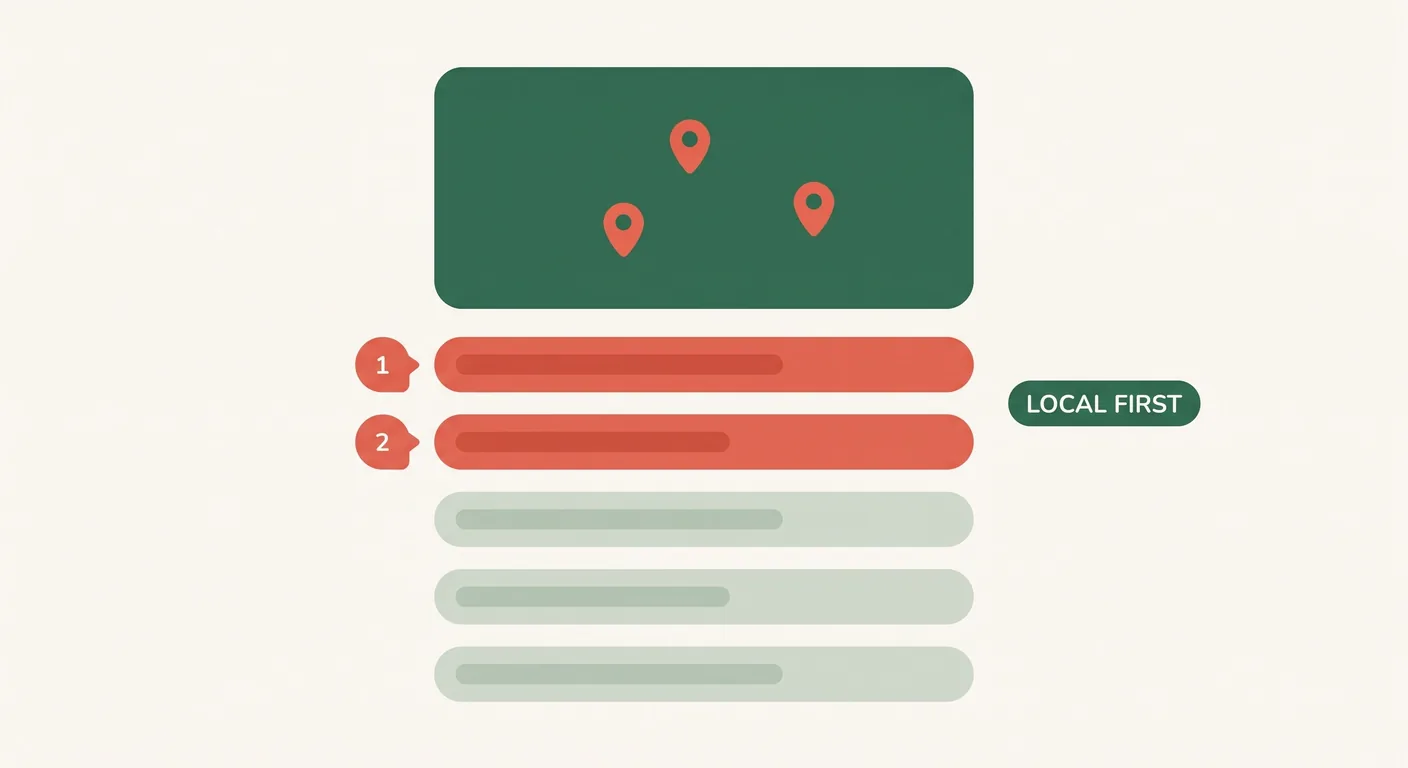
We measured it on a Maryland search: the map pack held three retail bird shops and no breeder at all, and seven of the nine organic results named a state or a city in their address. That is not a flaw in the search. It is the search doing exactly what you asked, which is why the answer for a buyer is a state page, not a national one.
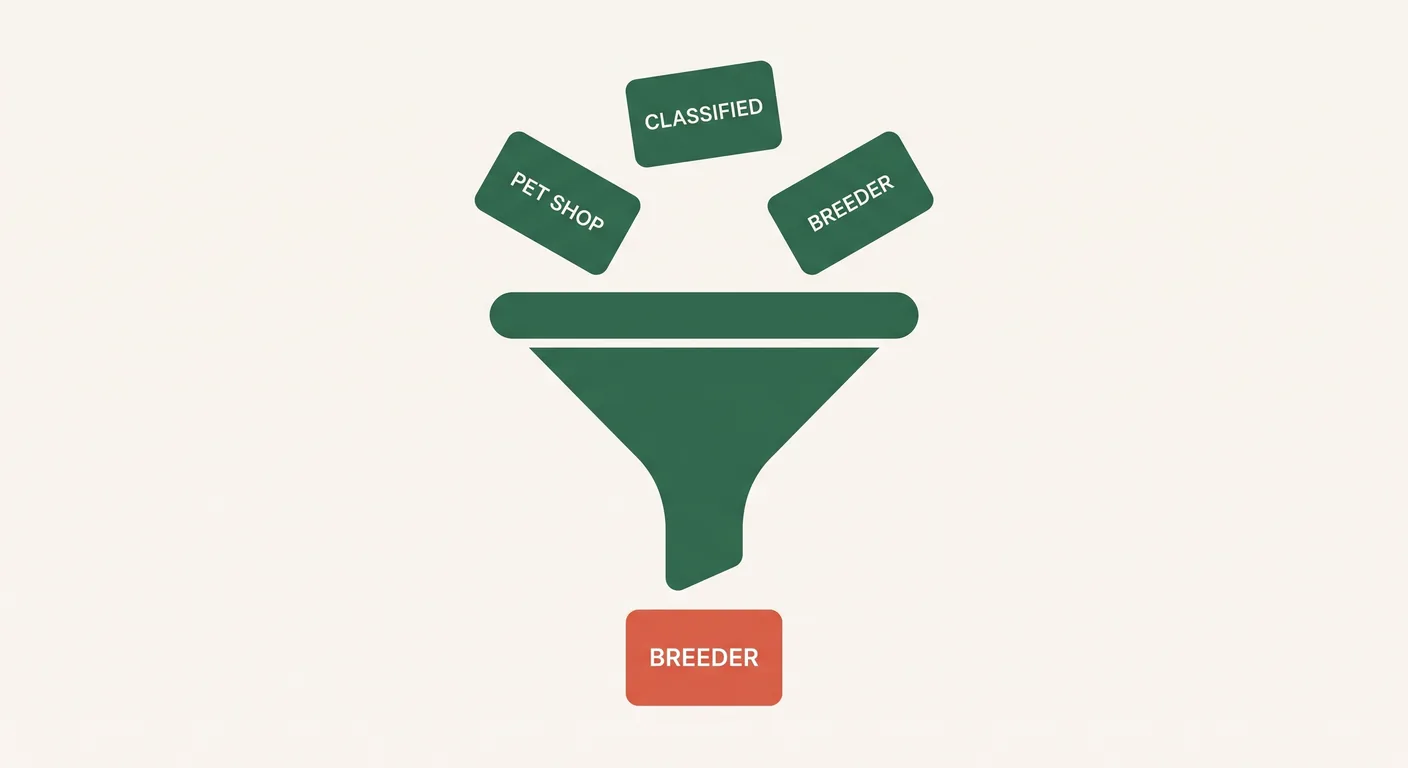
Shops have a storefront, a phone number and a few hundred reviews, so the map trusts them. Classified sites have a page for every metro in the country, so the organic results trust them. A family aviary has one address, and ours is in a town most buyers will never drive through. We do not compete for the pin. We compete on what happens after you click.
No, and the difference is who was awake for the night feeds. A shop buys weaned birds in from wherever it can and sells them on; the person behind the counter may never have seen the parents. We hatched every bird on this page, and the answer to “what does she do at dusk” comes from the people who watched her do it. A good shop is a fine place to buy a cage. It is a second-hand place to buy a bird.
Ask any retailer three questions: who were the parents, who did the hand-feeding, and what did the bird weigh at weaning. A breeder answers all three from memory. A shop reads you the supplier's invoice, if it has one. The gap between those two answers is the whole reason people search for a breeder in the first place, and it does not close because the shop is closer.
Because we are in one place and you are in another, and no amount of writing changes the map. What we can change is the page you reach: one written for your state, with the route, the cost and the birds already worked out. That is what the grid below is for.
Buyers type African gray parrot for sale near me about as often as they type grey, and more of the gray spellers click through, so we use both on purpose. Parrot or parrots, African Grey breeders near me or African grey for sale near me, where to buy or who sells: every one of those phrasings is the same person asking the same thing. One bird, two spellings, and a page that answers all of them rather than pretending the spelling picks a species. The bird has never corrected anyone's spelling. It corrects most other things.

Every tile below is a page we wrote for that state or metro: the route from here, the cost of getting a bird there, and the birds available as it stands. Tap yours. If it is not here, we still ship to it, and the form at the bottom takes your city.
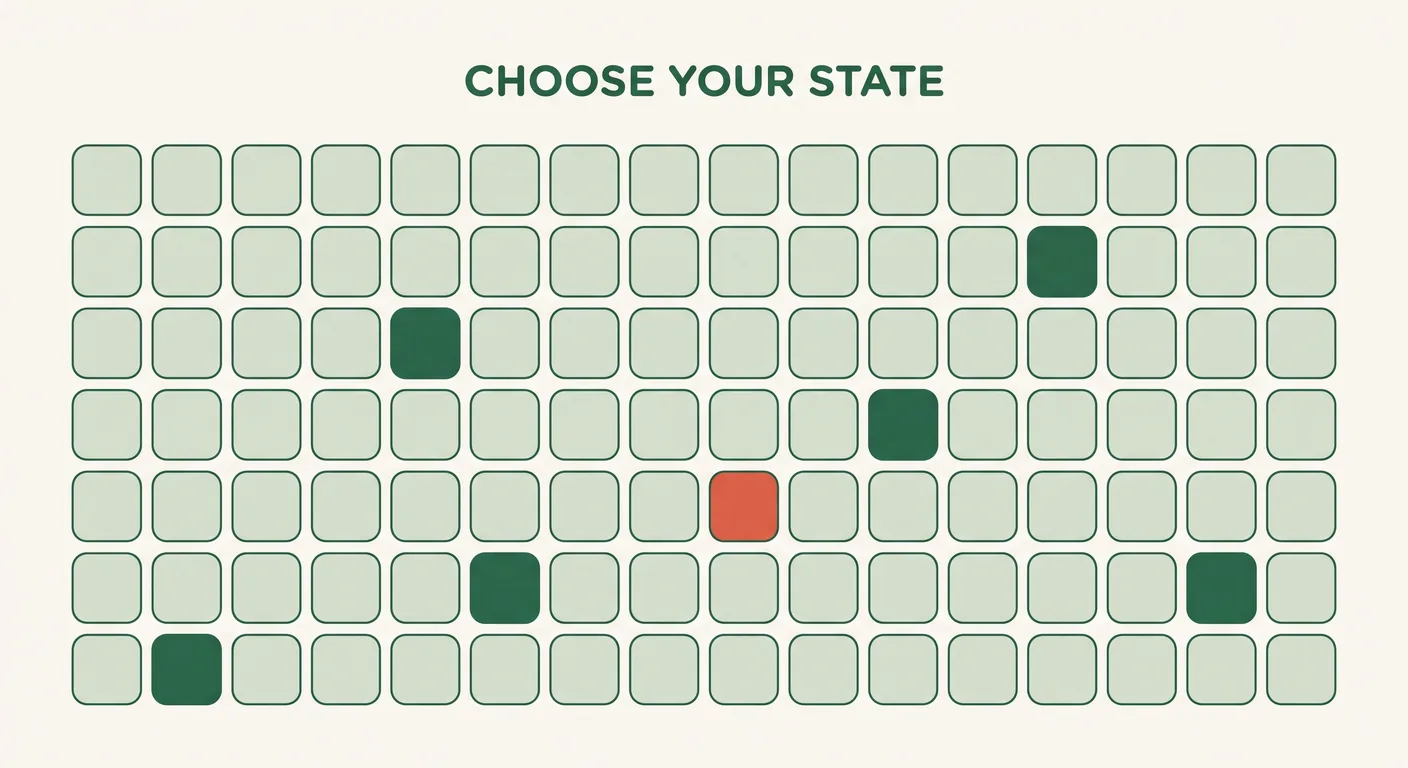

Twenty-four state pages plus California, grouped by region so you can find yours without reading an alphabet. Texas is the only tile where the answer can be a drive; every other state's page opens with the flight.
South
West
Midwest
Northeast

Fifteen metros have a page of their own because the airport, the traffic and the avian vets differ inside a big state more than they do between two small ones. A buyer in Miami and a buyer in Jacksonville share a state and not much else.

Then you skip the grid and use the form. The list above is the set of states we have written a page for, not the set we fly to. A bird bound for Montana costs the same to send as one bound for Michigan, and the paperwork is identical.
Airline live-animal cargo reaches every state in the country, and so do we. The only thing a missing tile changes is that you tell us your city in a sentence instead of clicking it.
Flight time first, then handling. A direct flight to a bigger airport two hours from you beats a connection into the airport across town, because every connection is another hour on a warm ramp. We book the shortest day for the bird and tell you where that lands.
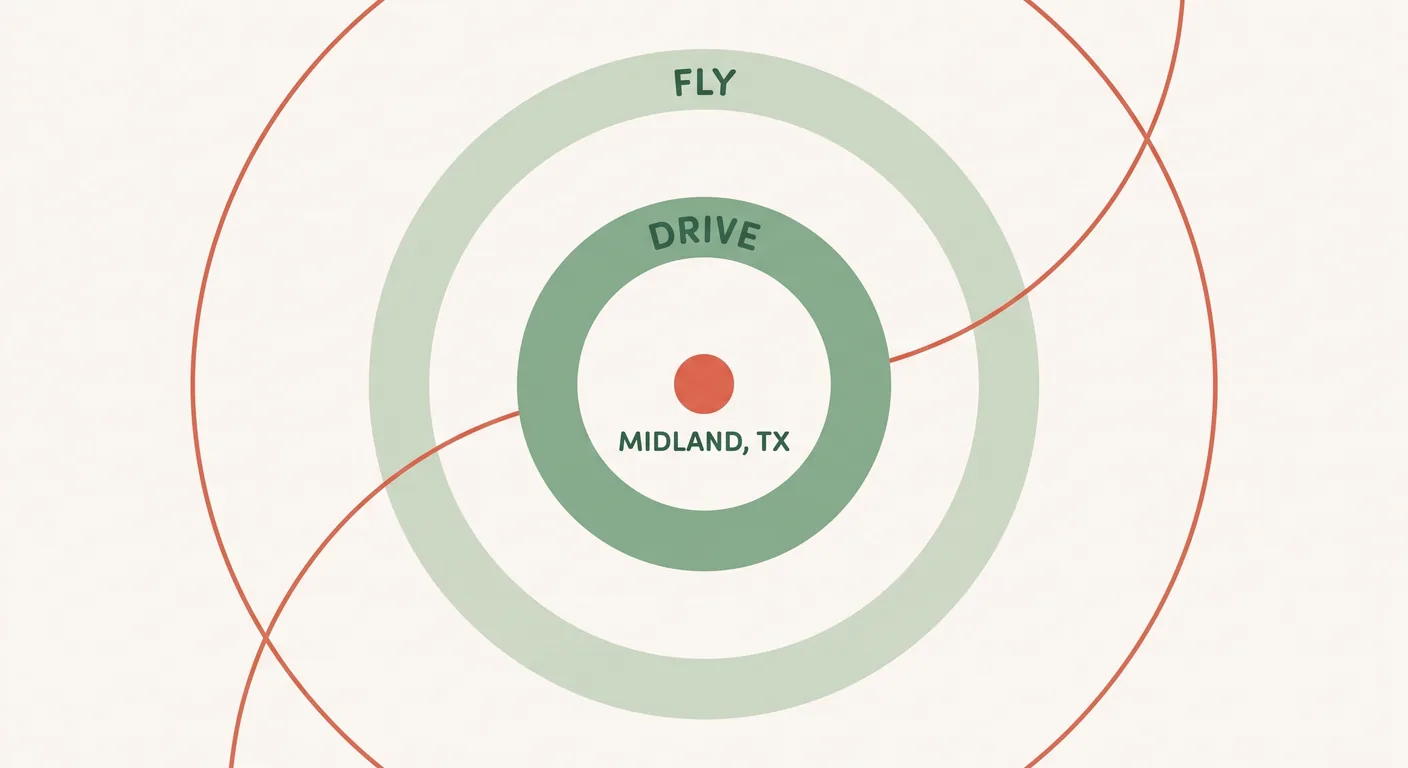
Close enough to drive if you live within two or three hours of west Texas; a flight away for everyone else. We would rather say that on the first screen than let a “near me” phrase imply a bird shop on your corner.
| State | Route from us | Cargo counter named on that page | What it costs |
|---|---|---|---|
| Texas | Drive to us, or fly from Midland International Air and Space Port (MAF) | Collect here; DFW, IAH and AUS by air | Free pickup within 2–3 h · $185 · $350 |
| Arizona | Flies from MAF, our airport | Named when you ask | $185 airport · $350 home |
| California | Flies from MAF, our airport | LAX · SFO · SAN · SMF | $185 airport · $350 home |
| Colorado | Flies from MAF, our airport | Named when you ask | $185 airport · $350 home |
| Florida | Flies from MAF, our airport | Named when you ask | $185 airport · $350 home |
| Georgia | Flies from MAF, our airport | Named when you ask | $185 airport · $350 home |
| Illinois | Flies from MAF, our airport | ORD · MDW | $185 airport · $350 home |
| Indiana | Flies from MAF, our airport | IND | $185 airport · $350 home |
| Iowa | Flies from MAF, our airport | DSM | $185 airport · $350 home |
| Kentucky | Flies from MAF, our airport | SDF | $185 airport · $350 home |
| Maryland | Flies from MAF, our airport | BWI | $185 airport · $350 home |
| Massachusetts | Flies from MAF, our airport | BOS | $185 airport · $350 home |
| Michigan | Flies from MAF, our airport | DTW · GRR | $185 airport · $350 home |
| Minnesota | Flies from MAF, our airport | MSP | $185 airport · $350 home |
| Missouri | Flies from MAF, our airport | STL · MCI | $185 airport · $350 home |
| New Jersey | Flies from MAF, our airport | Named when you ask | $185 airport · $350 home |
| New York | Flies from MAF, our airport | JFK · LGA | $185 airport · $350 home |
| North Carolina | Flies from MAF, our airport | Named when you ask | $185 airport · $350 home |
| Ohio | Flies from MAF, our airport | CVG · CMH · CLE | $185 airport · $350 home |
| Oregon | Flies from MAF, our airport | Named when you ask | $185 airport · $350 home |
| Pennsylvania | Flies from MAF, our airport | PHL · PIT | $185 airport · $350 home |
| Tennessee | Flies from MAF, our airport | Named when you ask | $185 airport · $350 home |
| Virginia | Flies from MAF, our airport | Named when you ask | $185 airport · $350 home |
| Washington | Flies from MAF, our airport | Named when you ask | $185 airport · $350 home |
| Wisconsin | Flies from MAF, our airport | Named when you ask | $185 airport · $350 home |
Where a state page does not yet name a cargo counter we say so rather than guess; we confirm the airport when you tell us your city.
Route finder
Where Will Your Bird Be Going?
The Texas page is written for buyers in your state.
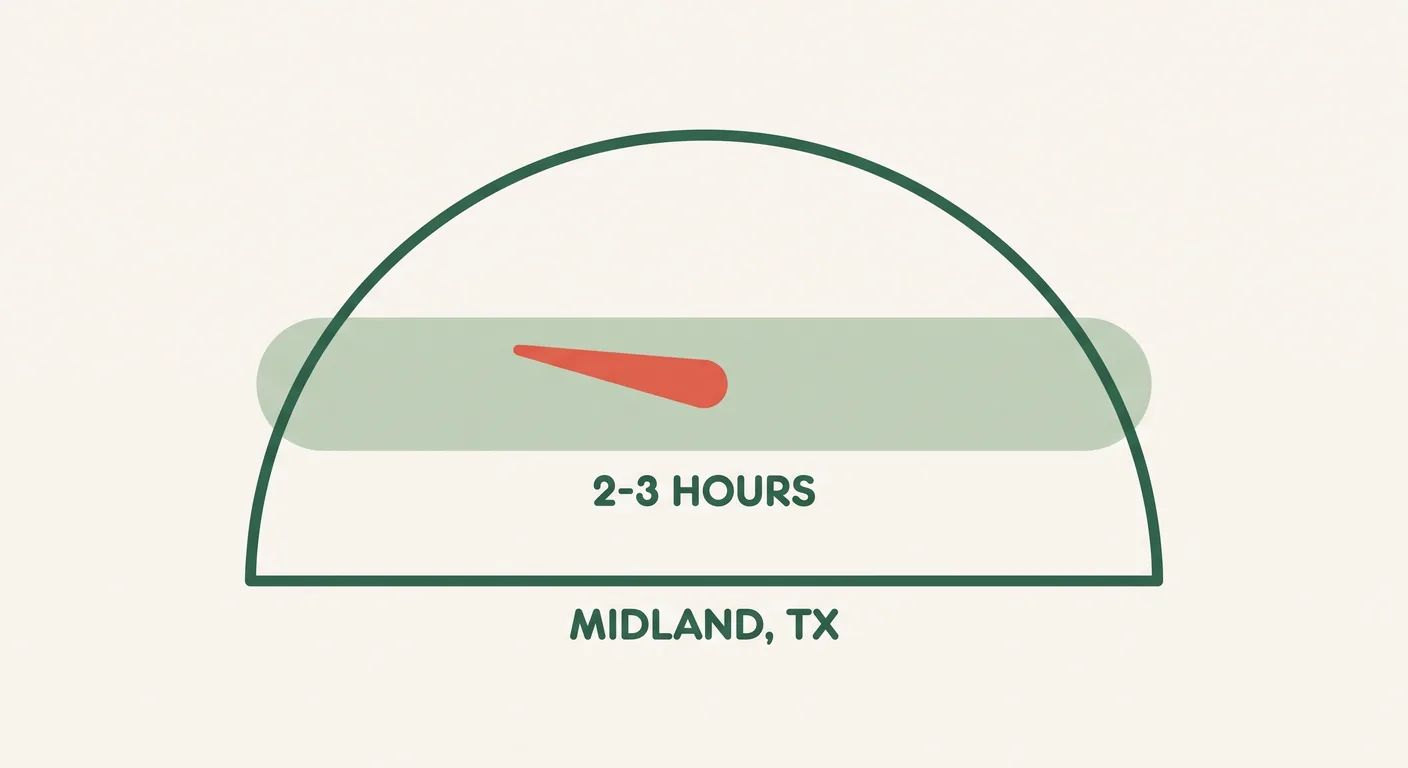
Collecting in person costs nothing and it is the way we would buy a bird ourselves. You meet the parents, you see the room the chick was weaned in, and the bird rides home in your car in a carrier on the passenger seat. Buyers inside that radius collect in person, and the drive home with the carrier belted in is the first hour of the bird's new life with you.
Past the drive line the bird flies as manifested live-animal cargo on the shortest route we can book. The IATA Live Animals Regulations ↗ set the crate standard, and the crate is built to them. Delta Cargo, United Cargo and American Airlines Cargo all carry them; which one we use depends on your city. Total transit is usually under eight hours, and the bird is fully weaned and vet-cleared before it is booked, never the other way round.
Ships nationwide · $185 airport cargo · $350 home delivery · a cabin seat with a flight nanny is quoted per route, from $750 · collection here is free within a two to three hour drive.
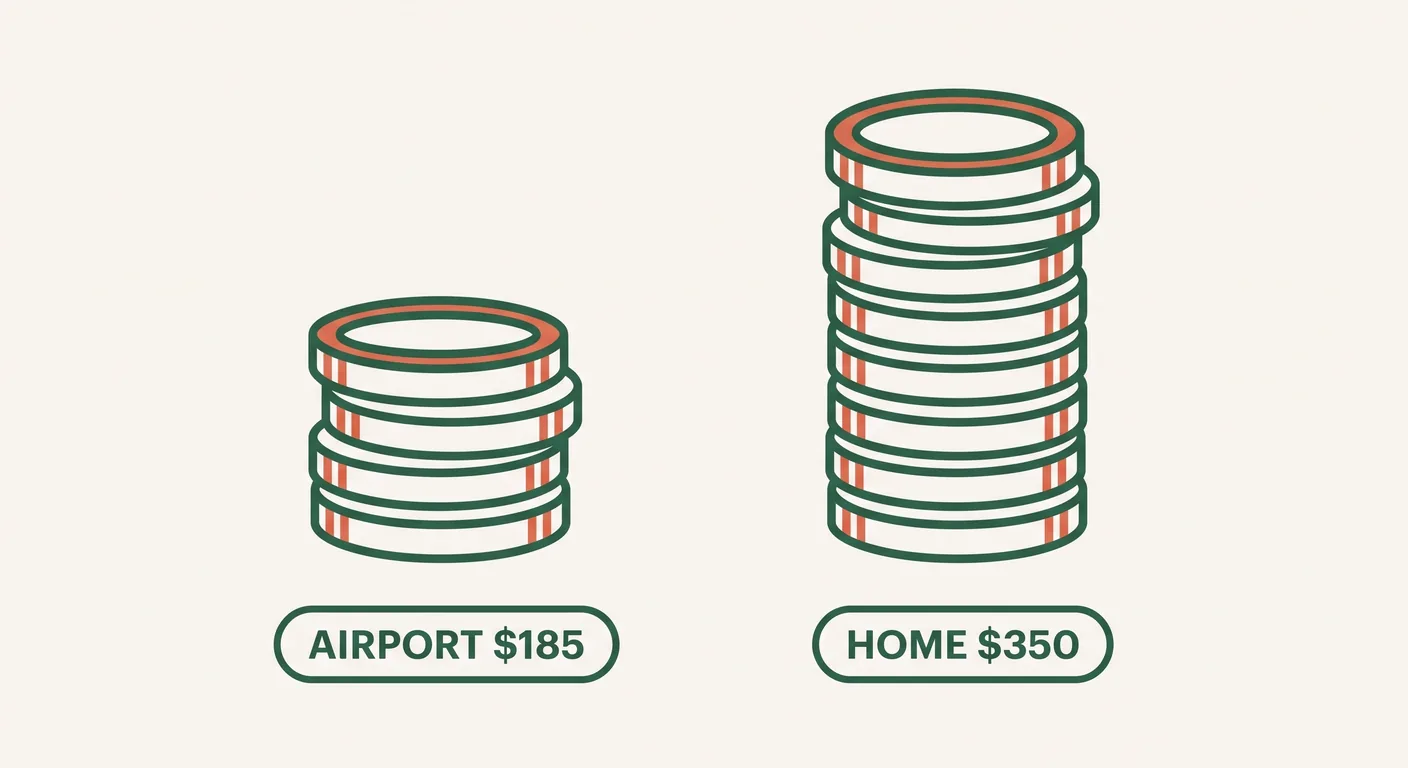
$350, flat, anywhere in the country, on a date we agree with you first. It is the airport route plus the last leg to your door, and it suits buyers who cannot get to a cargo desk on a weekday afternoon. Most people choose the airport and save the difference; a pair of birds and anyone more than an hour from the counter are the two cases where we suggest the door.
Two numbers, printed here and on every bird card, and the same in Maine as in Arizona. There is no surcharge for a “remote” state and no fee added after you reserve. If you ever see a delivery figure from us that is not one of those two, it is a cabin seat, and we will have said so in writing.
Roughly three hours by car in any direction. Inside it, come and get your bird. Outside it, we do not drive, because a bird in a car for nine hours has had a worse day than a bird in a crate for four. The flight is kinder, and it is what we would choose for our own.
Six birds live here at C.A.Gs today, each with a name, a price on the card and a line about which kind of journey suits it. Every photograph was taken in this house. Once a bird has a deposit on it, its card comes down.
 Congo
Congo A grown hen who has already done her settling here, so a longer flight day costs her less than it would a chick.
Ships nationwide · $185 airport · $350 home
Ask about Bery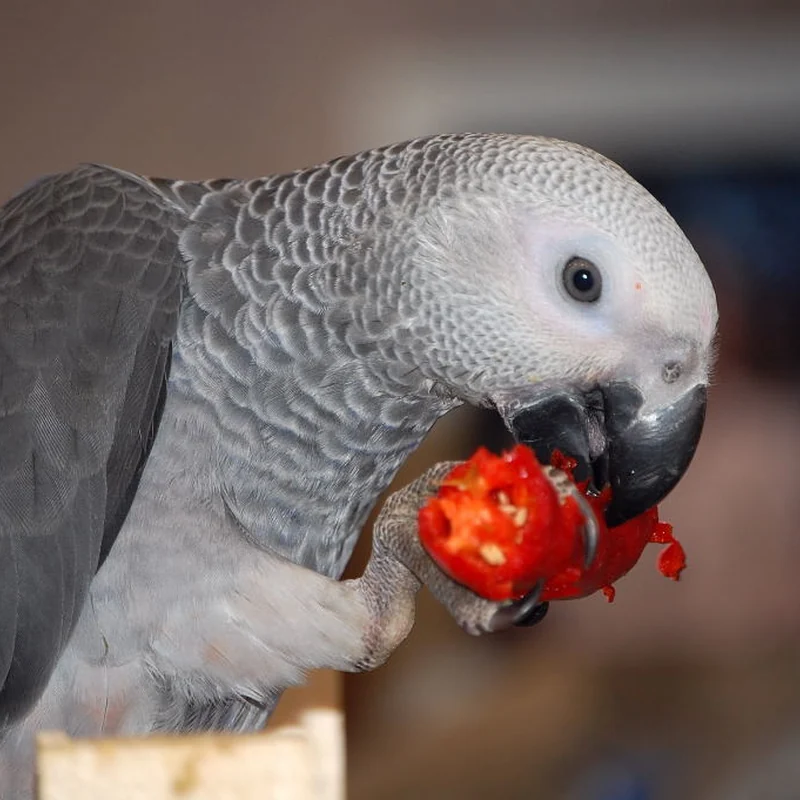 Congo
Congo Still finishing weaning in our kitchen; she flies once she eats on her own, whichever state that turns out to be.
Ships nationwide · $185 airport · $350 home
Ask about Amie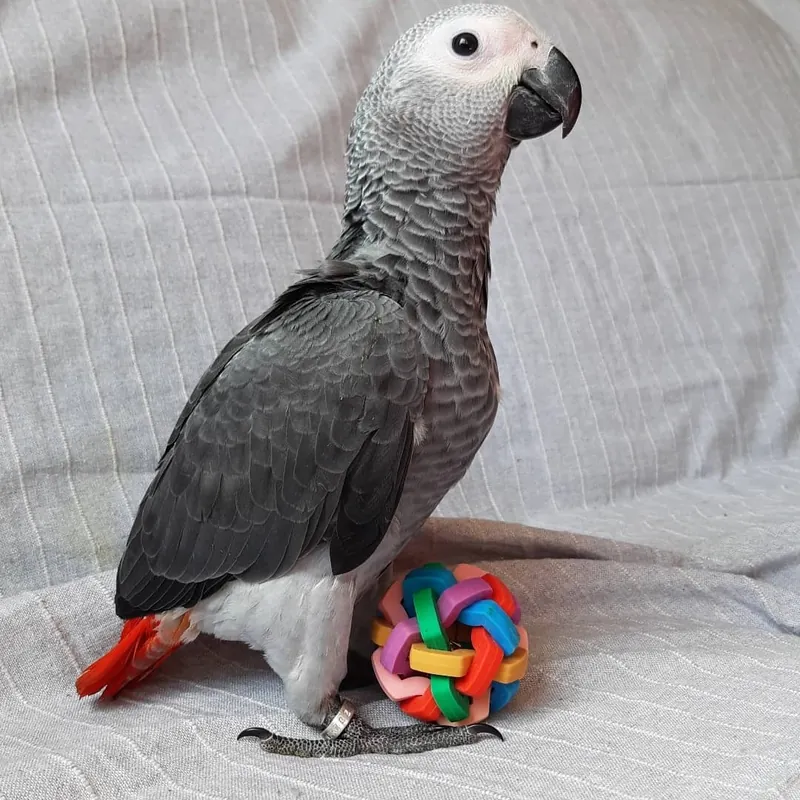 Congo
Congo A bold cock who treats a travel crate as one more thing to investigate. Direct-flight cities suit him best.
Ships nationwide · $185 airport · $350 home
Ask about Roys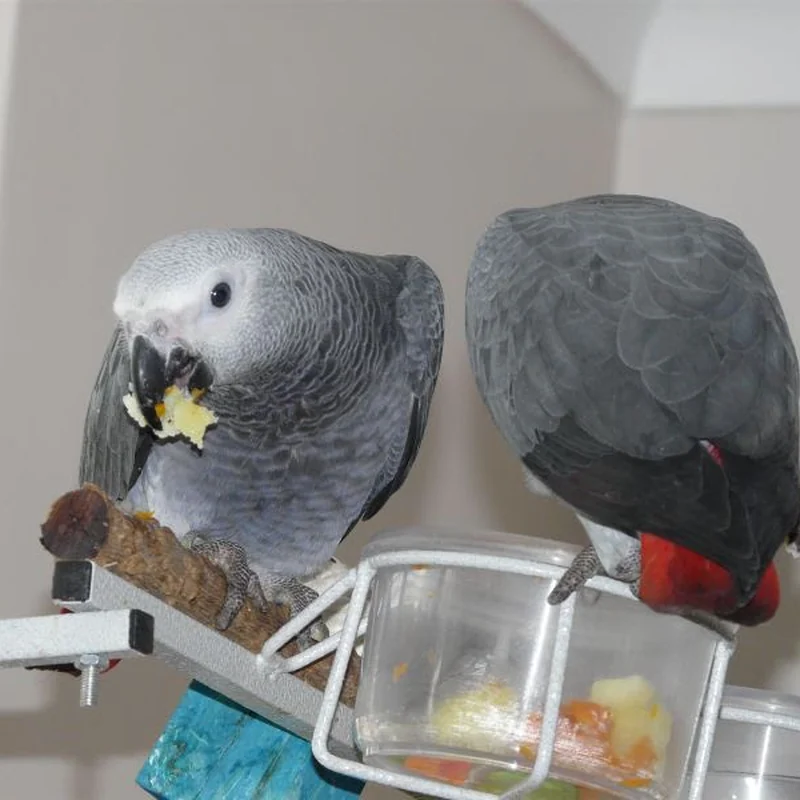 Companion pair
 A companion pair, unrelated, offered together. For two birds we suggest the door, not the cargo desk.
Ships nationwide · $185 airport · $350 home
Ask about Jins & Jeni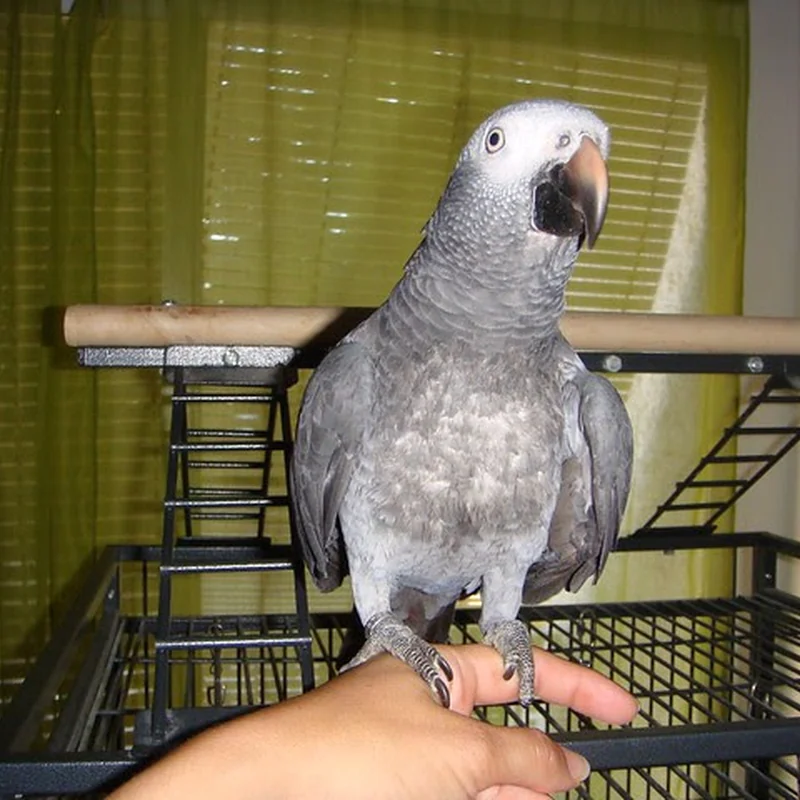 Timneh
 Weaned Timneh cock, small enough that most cargo counters have handled a crate his size that week.
Ships nationwide · $185 airport · $350 home
Ask about Elad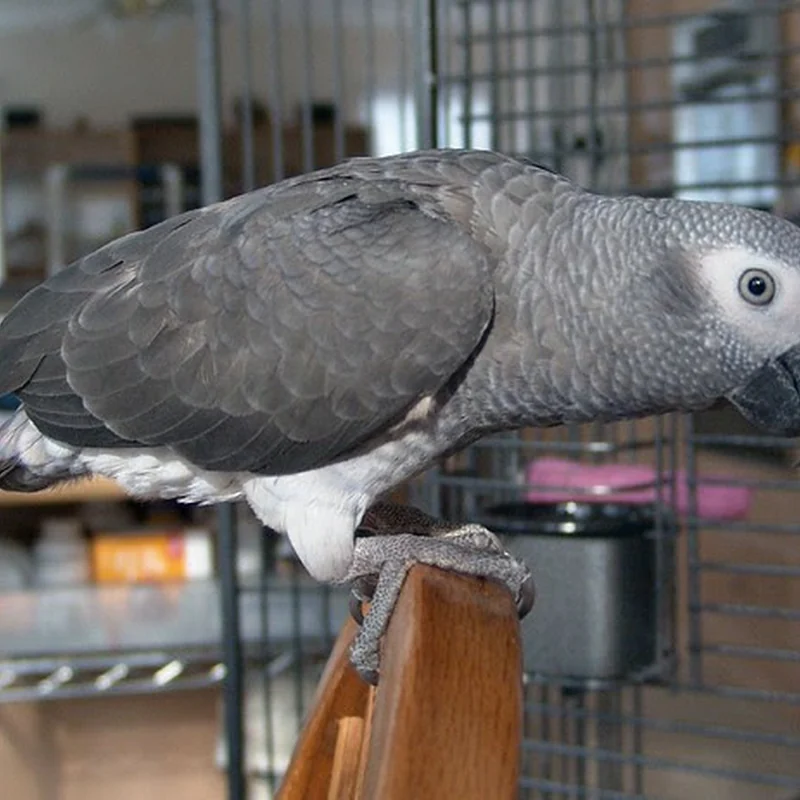 Timneh
 A watchful Timneh hen who prefers a quiet collection. An early airport pickup beats a doorstep crowd.
Ships nationwide · $185 airport · $350 home
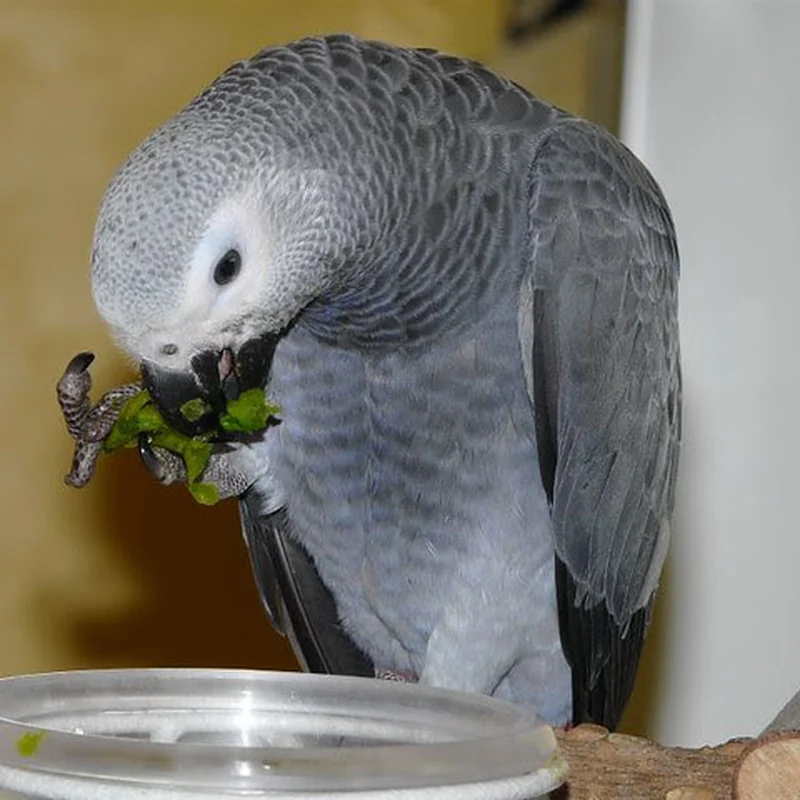
Ask about EvieThe Congos, Psittacus erithacus, are the larger birds with the scarlet tail, and we have 4 on the page counting the pair. Bery has done her growing and takes a long flight day well. Amie is still on formula, so her state is whichever one you are in by the time she eats on her own. Roys would fly anywhere and inspect the crate on the way; a city with a direct flight from here suits him best because he is the one who will be awake for all of it.
Elad and Evie are Psittacus timneh, the smaller species, darker in the body with a maroon tail, and both are weaned and priced in the $1,500–$1,600 band. They weigh 275–375 grams against a Congo's 400–600, so they ride in the smaller crate at the same $185. Evie prefers a quiet handover, so an early airport collection beats a doorstep with the whole family waiting; Elad is easier about it and steps onto a hand the moment the crate door opens.
Jins and Jeni are two unrelated hand-raised Congos we place together as a companion pair, $3,500 for both, one crate, one destination. For a pair we point buyers at home delivery rather than the cargo desk, because two birds and a double crate in the back of a car at the end of a long day is one thing more than most people planned for. They are the birds we would least like to see in a hurried handover.
Whichever bird it is, it was raised under what we call The Benjamin Home-Raising Protocol: hand-fed in our kitchen on a schedule we keep ourselves, and held here until it is weaned and eating unaided between twelve and sixteen weeks. Its manners around people come from The Midland Socialization Method, which is our name for the family handling and daily out-of-cage routine every chick gets before it is ever listed. Both are our names for our own practice, not certificates anyone issued us.
Fact ↗An African Grey lives 40 to 60 years in a home, so a bird matched to your household this year may still be in it in the 2070s. That is the reason we would rather you took a week over the choice than an afternoon.
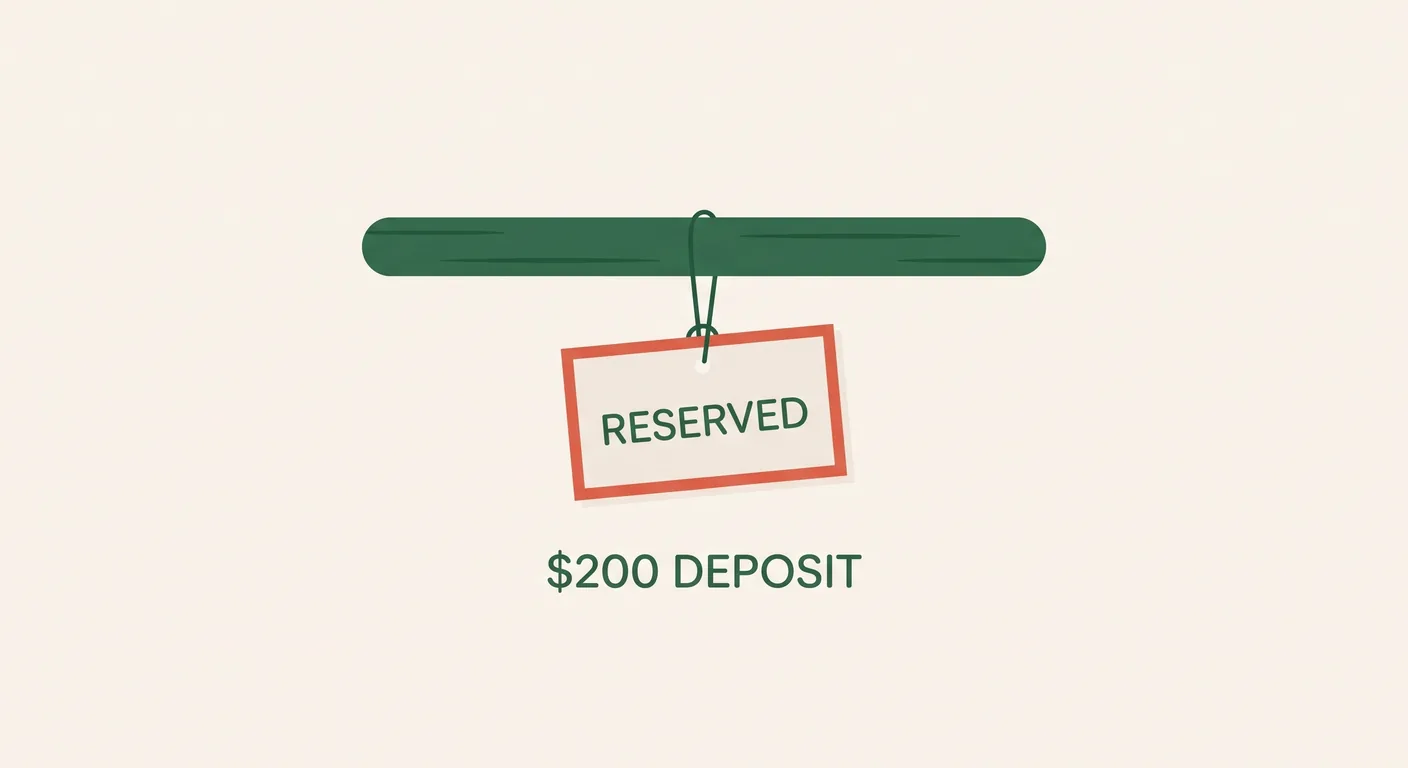
Yes, after a video call. A $200 deposit holds a named bird while you sort out a flight date or a weekend to drive down, and it comes off the balance. We will not take one from somebody who has only seen a photograph, because a photograph is the one thing every fake listing in the country also has.
The distinction matters more for a buyer at a distance than for one who can drive here. When you cannot walk into the room, the live call is the room: you watch the bird step up, you ask it something it has to answer today, and you see the band on its leg. Then the deposit means something. Before that, it only means you trust a picture.
Every one of those has a plain answer from us, and the answers are the same whether you are collecting in person or meeting a crate. A seller who cannot give them is not ready to place a bird, however near they are.
Because the cheapest thing in this trade to produce is a listing, and the most expensive is a weaned bird. The word cheap sits on every near-me search suggestion we measured, and a classified site sits fourth in the results. Those two facts are related.
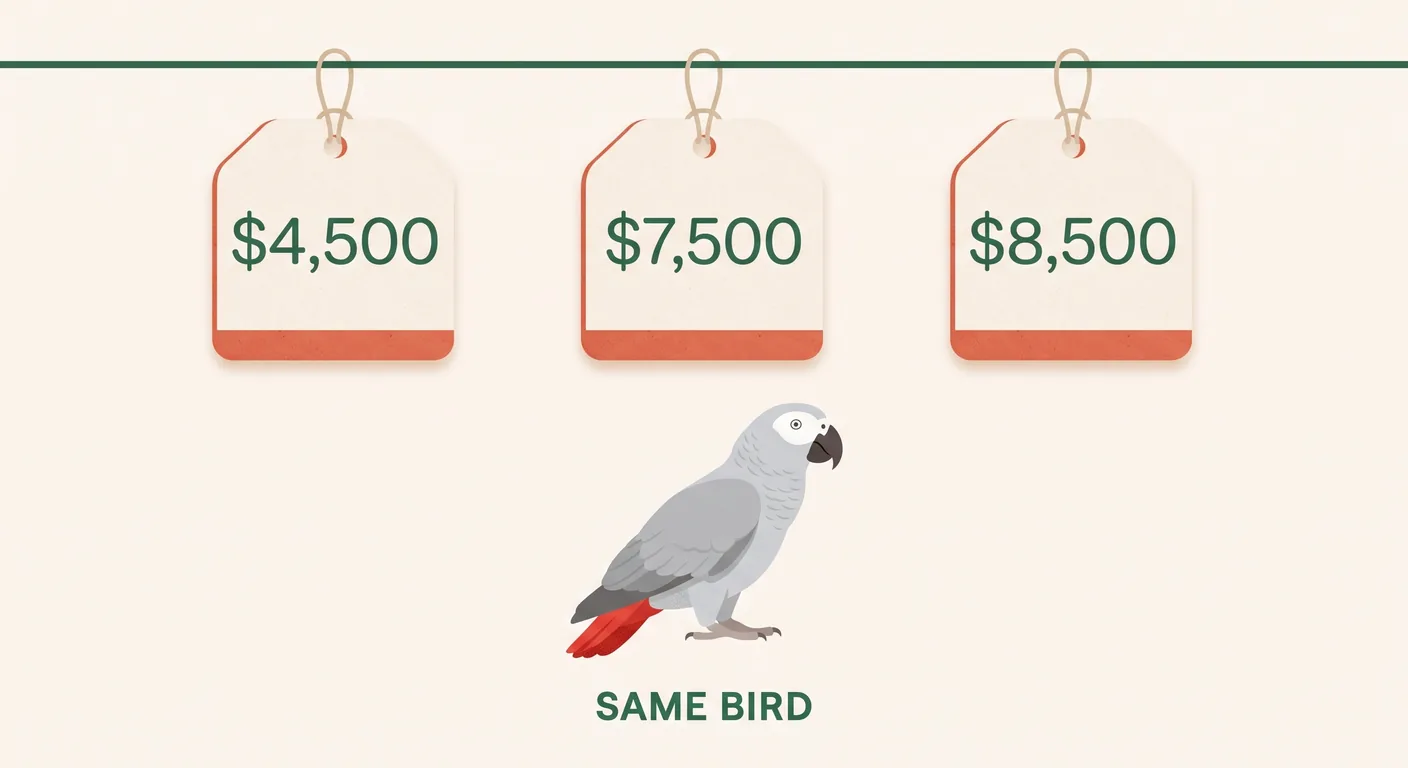
On one Maryland results page we saw the species offered at $800 and at $5,555 within a few lines of each other. Neither number described a bird we could examine. Our floor is $1,500 because hand-feeding, the pre-sale avian examination, the screening panel, the sexing assay and the paperwork cost what they cost, and a listing that undercuts that has left something out. Our full guide to fake listings goes through the payment routes and pressure lines; this section covers only what the near-me searcher runs into.
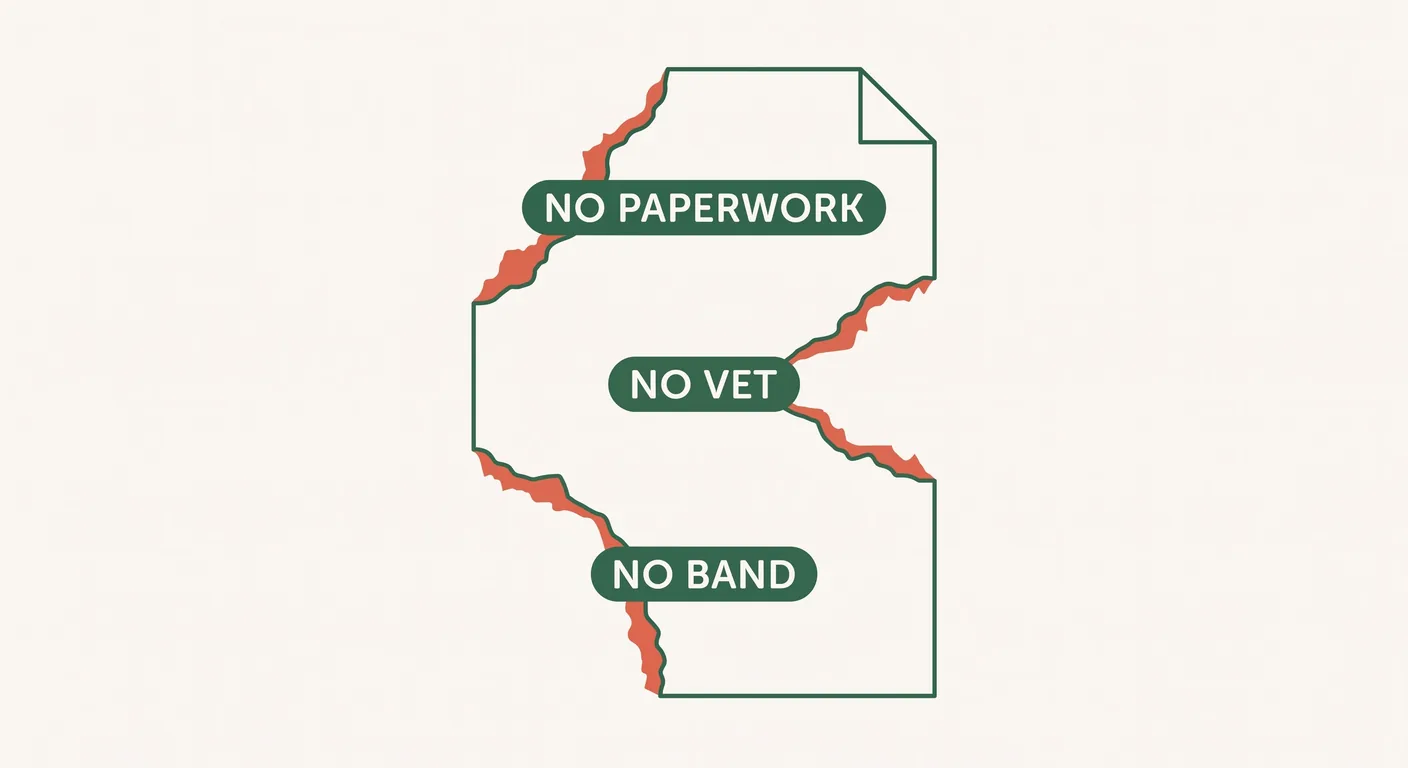
The parents, the weaning weight, the veterinarian's name, the band number and an address. A classified ad has a photo, a price and a phone number, and the photo often belongs to someone else's bird; run it through a reverse image search and see how many other listings it appears on. That is not always fraud; sometimes it is a shop reselling without records. The result for you is the same: nothing to check.
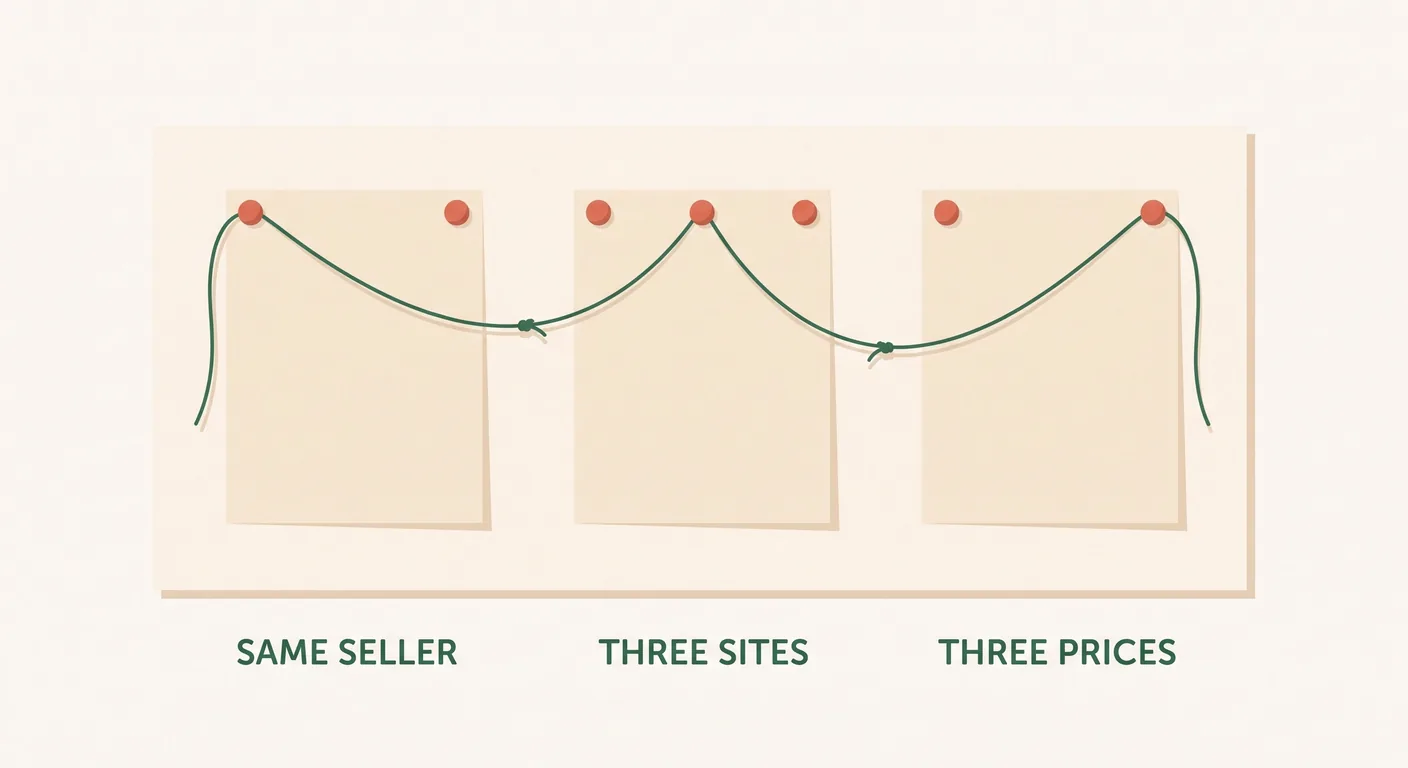
We followed one seller's birds across three sites on a single August afternoon and wrote down the asking price on each. The photographs matched. The prices did not, by thousands of dollars, and none of the three listings named a vet, a lab or a band. We did not average the three, because an average of three numbers for the same bird is still not a price.
A classified ad at the bottom of the spread, the seller's own site in the middle, an aggregator at the top, all live at once. The buyer who found the cheap one thought they had found a bargain. They had found the same bird, priced for the audience the platform attracts.
What number is on the leg band, which avian veterinarian examined the bird, and can we see it move on a call right now. A real seller answers all three inside a minute. A fake one has a reason, and the reason is usually that the bird is travelling, or that the seller is deployed overseas, or that a courier is standing by. Do not drive to a listing that fails those three. Do not wire money to one either.

A real breeder lets you check, see, read and dispute before you pay. Run all four on us: the licence is on the federal public search, the video call comes before the $200 deposit, the folder opens on that call, and the deposit goes by a method you can dispute. The one sentence you will not hear from a real breeder is any version of “you need to decide today”. A bird that may live sixty years can wait for a phone call.
A bird in its closed leg band and a folder of five documents: the written health guarantee, the avian veterinary certificate, the sexing certificate, the captive-bred treaty paperwork and the hatch record. The folder is the same whether the bird is collected in Texas or lands in Oregon.
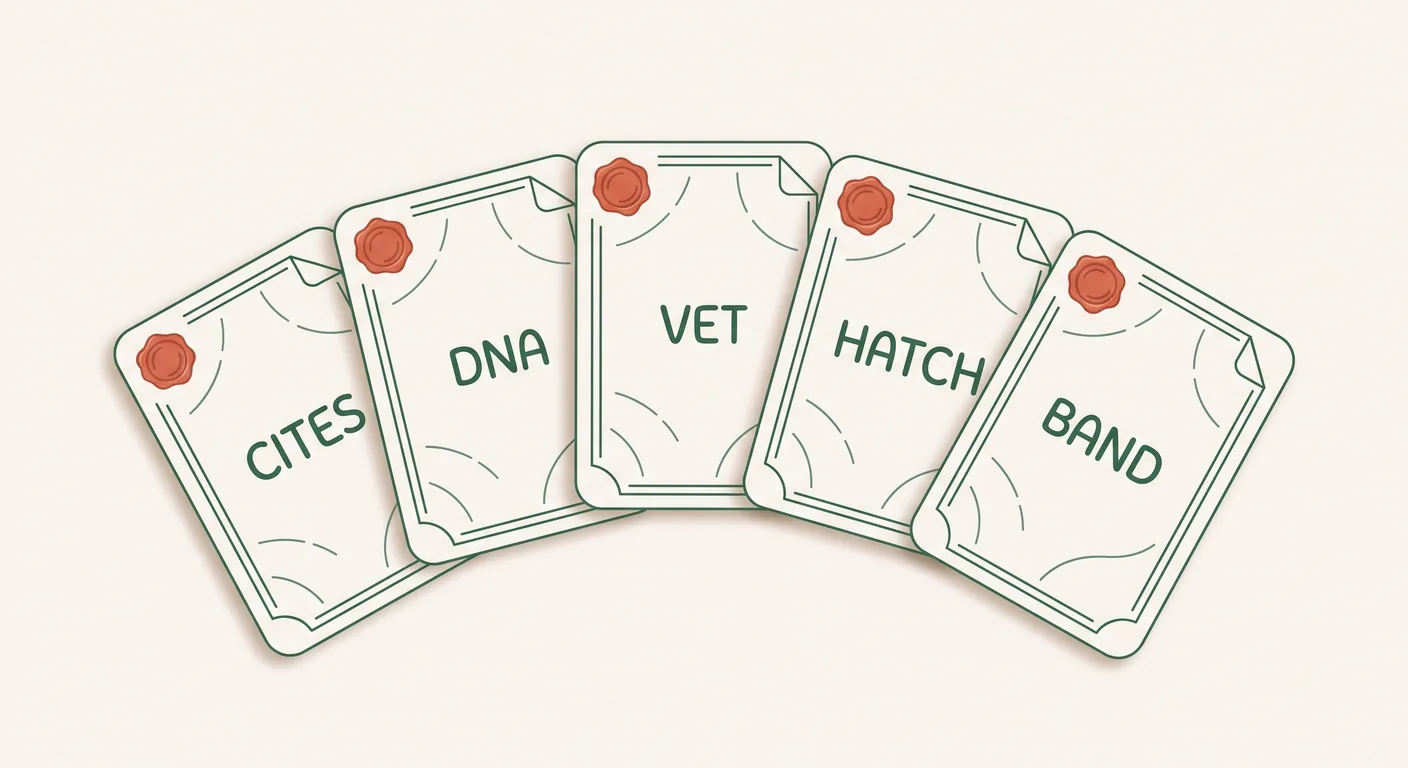

Fact ↗African Greys have sat on Appendix I of the CITES treaty since January 2017, which restricts international commercial trade in wild-caught birds. The captive-bred certificate in your folder records that your bird was hatched here, in this country, from our own pairs, which is what makes owning it and moving it between states an ordinary thing to do.
No. The folder is the folder. What changes at a state line is only who asks to see it: the airline wants the veterinary certificate on the crate, and a new avian vet in your city will want the whole set at the first visit. Keep it somewhere you can find it in the 2060s, because the bird will still be with you.
Observed here · since 2014Every bird we have flown has left with its veterinary certificate fixed to the crate, because the cargo counter asks for it before the crate is accepted, and the rest of the folder rides in the document pouch. We have never posted paperwork separately and we would not: a bird and its papers should arrive together, so that on day one you can match the band on the leg to the number on the page.
All five, with every bird, single or pair. Jins and Jeni leave with two of everything except the guarantee, which is written for the pair. Nothing is “available on request” after the sale, because the request is the sale.
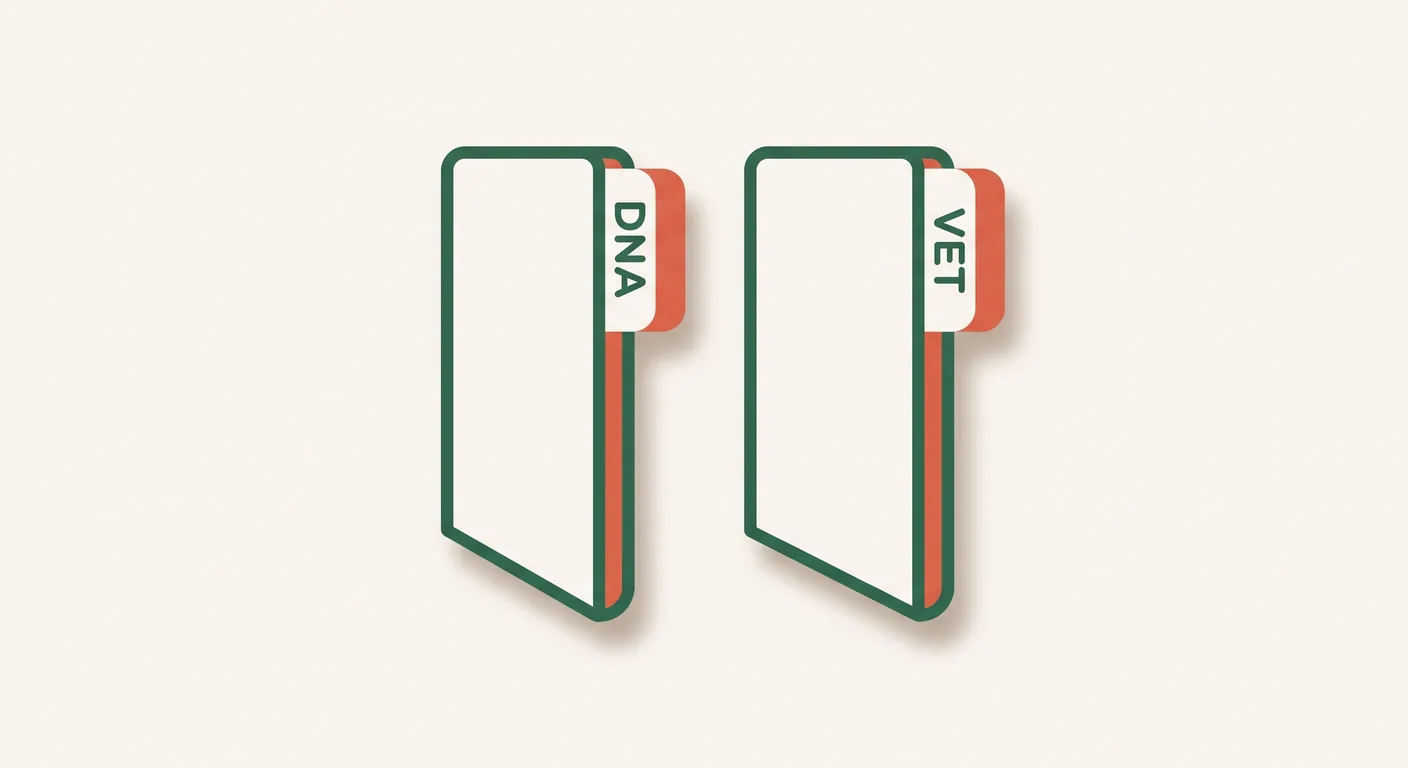
Every bird here is DNA-sexed by a laboratory before it is listed, because a cock and a hen look identical for life. The sample is a feather or a drop of blood, and the same kind of sample carries the PCR panel for PBFD, avian polyomavirus and psittacosis. Our written guarantee sets out each screen. The board-certified avian veterinarian's certificate comes from an examination in the days before travel, not from a form filled in at hatch. You get the lab's paper and the vet's paper, with the bird's band written on both.
The APHIS Animal Care public search ↗ lists our federal Animal Welfare Act licence, so look it up before you send a deposit. It is in Mark & Teri Benjamin's names, and it means an inspector can and does walk through the aviary. The documentation page shows what each certificate looks like and how to read it against your own bird. Look first, then reserve.
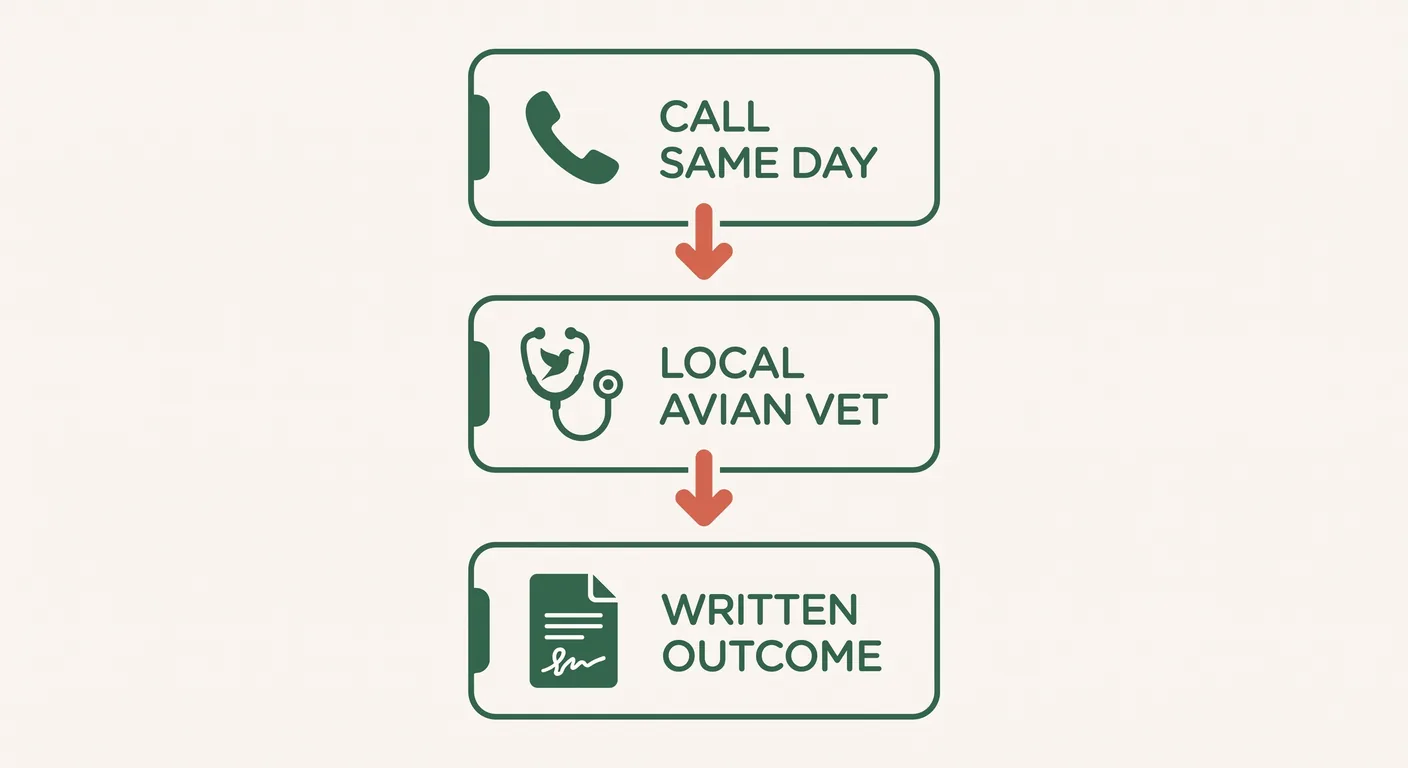
You call us the same day, we arrange an avian veterinary visit near you, and the 72-hour written term does what it says. The term has an address behind it, which is the part a classified listing cannot offer at any distance.
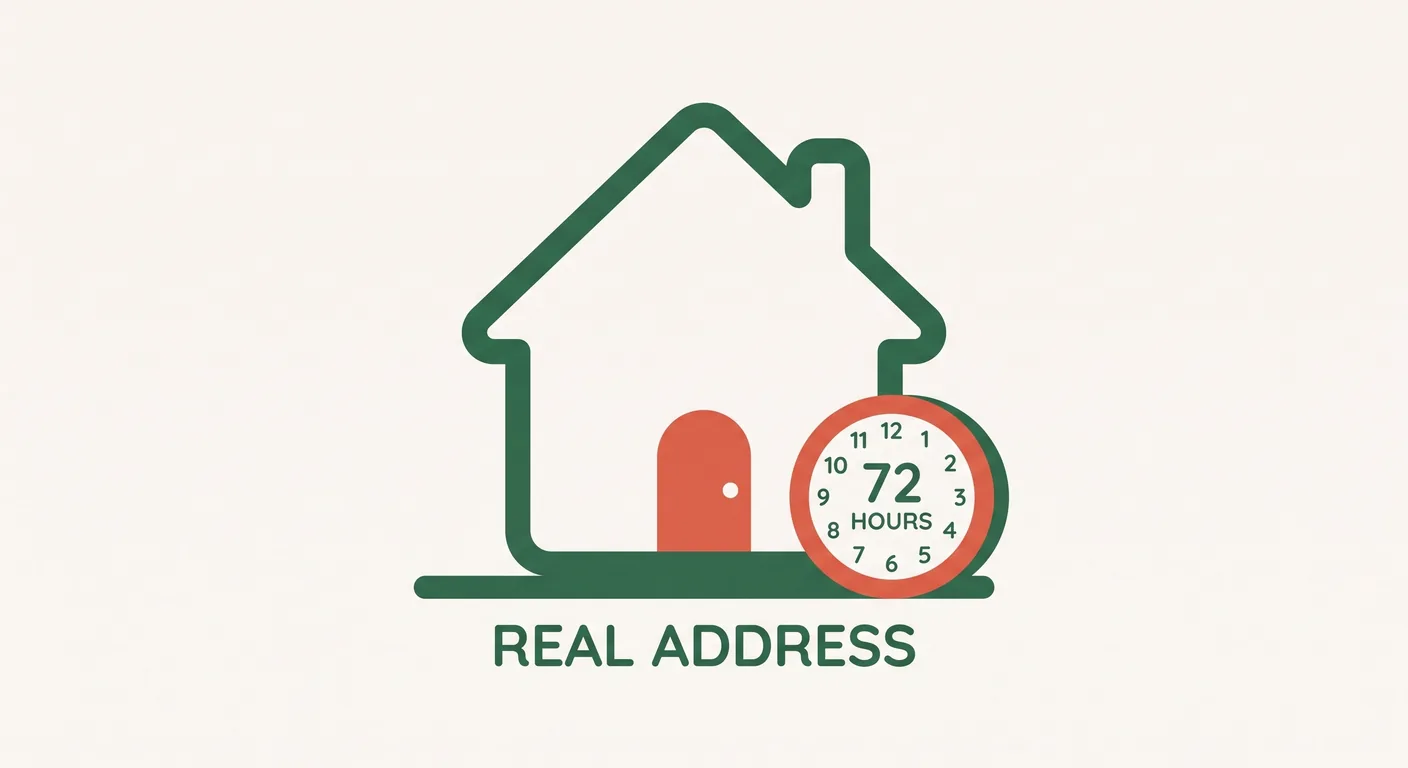
Seventy-two hours from the moment you take possession, in writing, plus twenty-four hours on anything transit-related. A longer promise from a seller with no address is worth exactly the paper it is not printed on. Ours is short because it is meant to be used, and it is usable because there is a licensed aviary at the other end of the phone. The guarantee page carries the wording in full.
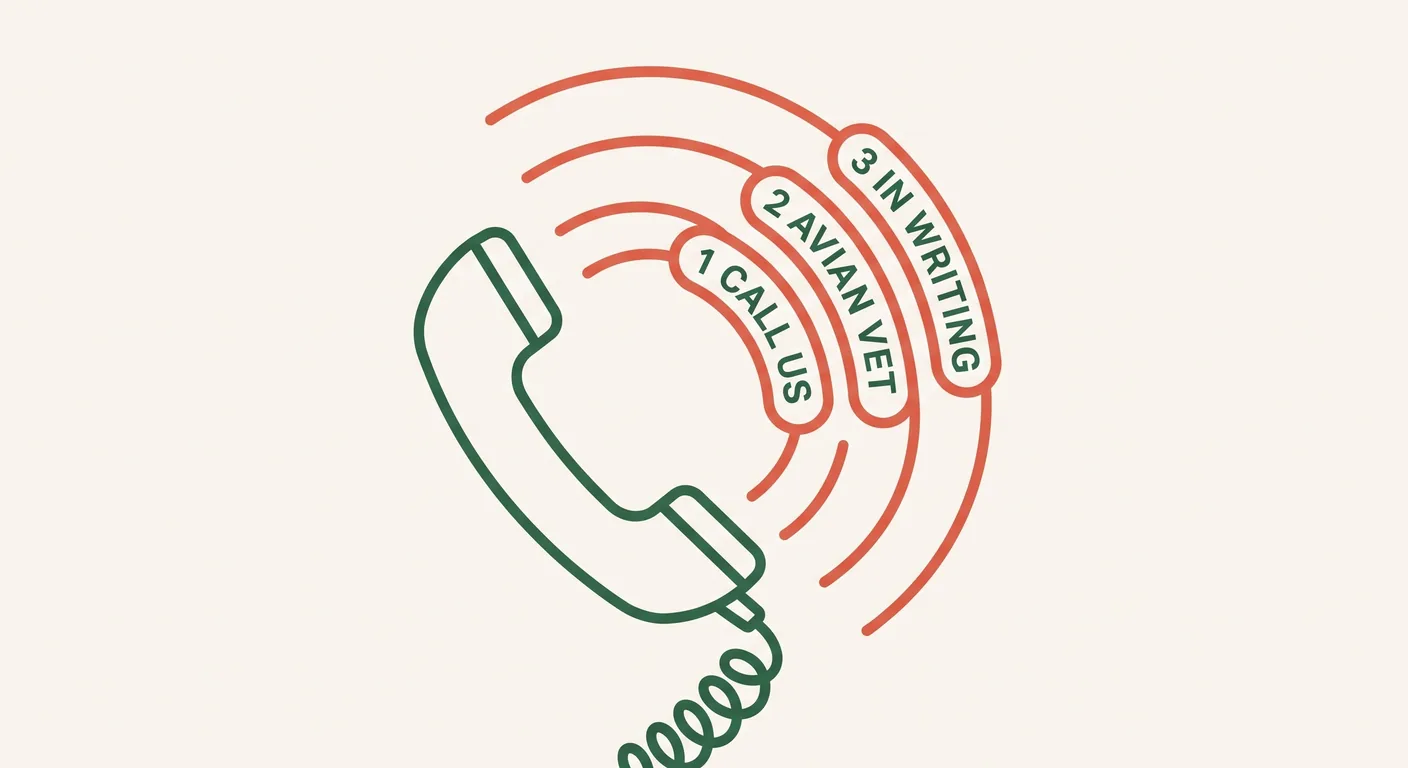
Us, then the vet, in that order, on the day. The first call is not about blame; it is so we can help you find an avian practice that can see the bird inside the window, because a general clinic that has never held a parrot is not the visit the term is written for. If it is late and you are worried, call anyway. Mark or Teri answers.
A term with a clock on it is only as good as the moment the clock starts, and it starts when you take the bird, not when you get round to emailing. Buyers who call on arrival day, even to say the bird looks fine, are the ones for whom the guarantee has never needed to become an argument.
The Association of Avian Veterinarians' find-a-vet search ↗ lists member practices by city. Book one before the bird lands, because our 72-hour term only works if a vet who handles parrots sees the bird inside the window. Bring the folder; the leg band gets matched to the lab paper at that first visit.
Twelve questions, the ones that arrive from every state in roughly the same words. Each answer is the one we would give on the phone; the figures come from the same data file as the prices on the cards.
Probably not from a breeder, and that is the honest answer for most of the country. A search for a Grey near you returns bird shops, rescues and classified ads because those are the businesses with a pin in your town. We are one aviary in west Texas. What we can offer instead is a page written for your state or your metro, a real bird with a price beside it, and a route that gets the bird to you inside a day. Start with the grid on this page.
Yes. Gray is the American spelling and grey is the British one, and the bird does not mind which you use. Both spellings, and both parrot and parrots, land buyers on this page, which is why we say it plainly here rather than pretending there are two species. The two birds that do differ are Congo and Timneh, and the cards further down show which of ours is which.
From a seller with an address you can visit, a licence you can look up and a bird you can see move on a live video call today. Those three tests remove nearly every fake listing on their own. Run them on us first: the C.A.Gs licence is searchable on the USDA public database, our address is on the contact page, and we do video calls on request before any deposit.
Between $1,500 and $3,500 here, with the low end a Timneh hen and the top the two-bird companion pair, and every figure is printed on its card rather than quoted after you enquire. Local classifieds will show you anything from a few hundred dollars to several thousand for what looks like the same bird, and the section on cheap listings explains why the low end is usually not a bird at all.
As a pet owner in the United States, yes. The international treaty listing for this species restricts commercial trade in wild-caught birds; it does not stop you owning a captive-bred bird with its paperwork in order, which is what every bird here is. A few cities and homeowner associations have rules about the number of birds or about noise, so check locally if you plan to keep several.
We do not drive deliveries beyond our own area. Inside a two to three hour radius of us you come to the aviary, meet the bird, and take it home in your own car, which costs nothing. Beyond that the bird flies, either to your nearest cargo airport at $185 or to your door at $350. The drive-or-fly line is explained in the distance section above.
The nearest major airport with a live-animal cargo counter served by a direct or single-connection flight from here. For most states that is the obvious one, and the Distance Ledger on this page lists the counters our state pages already name. Where a state has more than one option we choose by flight time, not by which is closest on a map, because a shorter day matters more to the bird than fewer miles to you.
Yes, with a video call first. A $200 deposit holds a named bird while you arrange travel or a flight date, and it comes off the balance. What a deposit never does is buy a photograph: you are reserving a specific bird you have watched move, on a call we set up with you, not a listing image that could belong to anyone.
No. The same folder leaves with the bird whether it is collected here in Texas or lands in Massachusetts: the written health guarantee, the avian veterinary certificate, the sexing certificate, the captive-bred treaty paperwork and the hatch record. The health certificate is the one document the airline asks to see, so it travels on the crate rather than in the post.
Call us the same day. The 72-hour written term starts when you take possession, and the first call is what makes it usable, because it lets us arrange an avian veterinary visit near you while the window is open. We also cover anything transit-related for the first 24 hours. Our address and our licence stand behind that term, which is more than a classified listing can say.
No. We are a home aviary, not a shop, and that is the difference this whole page is about. A shop resells birds it did not hatch; we hatched, hand-fed and weaned every bird on this page in our house. You are welcome to visit by appointment if you are within driving distance; the showroom is our living room, and the floor model talks back.
Yes. We ship to all fifty states. The grid lists the states and metros that have their own page on this site, not the limit of where a bird can fly. Use the form at the bottom, tell us your city, and we will reply with the route and the cost, which is the same $185 or $350 everywhere in the country.
Half of these come down to two printed numbers, $185 to a cargo counter or $350 to your door, and one three-hour drive line. If your city is missing, the form takes it and we name your airport in the reply.
The other half are about whether a bird bred in Texas is legal to own in your state and what proves it. It is, and the folder proves it. The documentation page linked above goes through each certificate if you want to read them before you ask.
Your city and the bird you are asking about are enough for a proper answer: the city decides the route and the cost, the bird decides the price and the paperwork. Mark or Teri replies within the day. Holding a bird takes a $200 deposit later, by arrangement; this form takes nothing but your questions.
Every bird below is here at C.A.Gs now, with its folder already started.
Ships nationwide · $185 airport · $350 home · pick up here for nothing inside a two-to-three-hour drive.